
Turn Technical Documentation into RAG Markdown Chunks

Arezdev

Convert public technical documentation into clean Markdown chunks with source URLs, section context, estimated token counts and SHA-256 hashes. Preserve code blocks and tables for your retrieval pipeline. Start with the Apify Actors documentation page, then enable sitemap or llms.txt discovery to expand coverage.

Input
Output fields
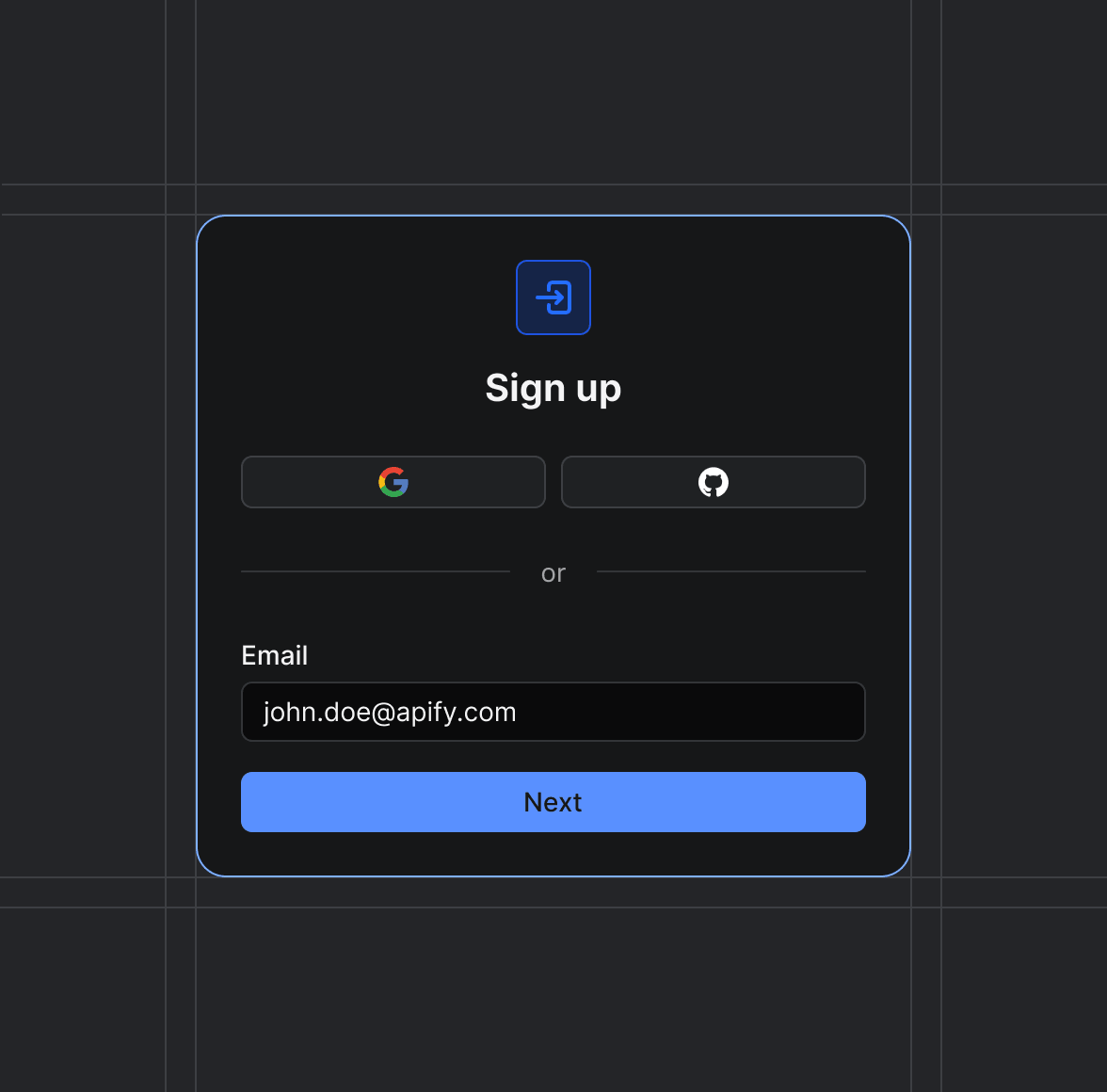
Sign up on Apify or log in
The Technical Docs To Rag Markdown Chunker Actor is ready to run with the inputs already set for "Turn Technical Documentation into RAG Markdown Chunks". Sign up or log in and you'll land in Apify Console with a copy of this exact task.
Start the "Turn Technical Documentation into RAG Markdown Chunks" task
The Technical Docs To Rag Markdown Chunker Actor will start running based on the input automatically. You can also change all the input fields, like documentation urls, discover documentation pages, and more, to match your specific use case.
Receive the "Turn Technical Documentation into RAG Markdown Chunks" output
Monitor the progress in real time. You will be notified as soon as your dataset is complete and ready for review. Each result includes data such as source url, status, page title, and more.
Integrate into your workflow
The final output is delivered in JSON, CSV, or Excel format, ready to be plugged into your workflow. You can also run the "Turn Technical Documentation into RAG Markdown Chunks" task via API.
Integrate "Turn Technical Documentation into RAG Markdown Chunks" into your workflow
Connect "Turn Technical Documentation into RAG Markdown Chunks" with 100+ integrations, or run it via API or MCP.

Webhook

n8n

Make

Zapier

Airbyte

Keboola

IFTTT

Hubspot

GDrive

Gmail

Apify MCP

GitHub

Slack

LangChain

LlamaIndex

Flowise

Pinecone

OpenAI

Mastra

Clay
It produces Markdown chunks and metadata for your ingestion pipeline. Your own embedding model and database handle vector generation, indexing and retrieval.
Enable discovery to check llms-full.txt, llms.txt and sitemap.xml, including supported nested indexes. Candidates must stay on the allowed origin and documentation path prefix. Without usable discovery data, only the supplied page is processed.
The Actor keeps complete fenced code blocks and indivisible table rows. It removes common navigation and page furniture while retaining supported headings, lists, links and content structure.
Token counts are estimated from UTF-8 byte length. Complete code blocks and table rows can exceed the target. Prose overlap is bounded, must be smaller than the chunk target, and is included only when space permits.
Maximum pages limits unique attempted documentation pages. Maximum output rows limits saved chunks and error records; one page can produce several rows. Client-only, protected or unreadable documentation can return errors instead of content.