
![Google Ads Scraper [NO COOKIES] [NO LOGIN] ✅ avatar](https://images.apifyusercontent.com/9IbpO7bH_6BgzAot0nhPDvrv2e_k1fGWNVm3lY6eqYM/rs:fill:250:250/cb:1/aHR0cHM6Ly9hcGlmeS1pbWFnZS11cGxvYWRzLXByb2QuczMudXMtZWFzdC0xLmFtYXpvbmF3cy5jb20vc0NDU2R3bm1LTUoxUTJzVG4tYWN0b3ItcGtKbVNWQkk4M3ZGeXkycjUtVmp6Tm44SzRHVi1wbmctY2xpcGFydC1nb29nbGUtbG9nby1nb29nbGUtbG9nby1nLXN1aXRlLWNocm9tZS10ZXh0LWxvZ28tdGh1.webp)
Google Ads Scraper [NO COOKIES] [NO LOGIN] ✅
Under maintenancePricing
$5.00 / 1,000 results
Google Ads Scraper [NO COOKIES] [NO LOGIN] ✅
Under maintenanceExtract every ad an advertiser ran on Google - Search, YouTube, Display, Shopping - from Google's official Ads Transparency Center. Get creatives, formats, run dates, and targeting regions. No Google Ads account or API key required. Built for paid media analysts and agencies.
Pricing
$5.00 / 1,000 results
Rating
5.0
(3)
Developer

Unseen User
Maintained by CommunityActor stats
8
Bookmarked
106
Total users
15
Monthly active users
5 days ago
Last modified
Categories
Share
See every Google ad your competitor has ever run — across every Google surface. The full Google Ad Library scraper for Google's Ads Transparency Center: pull every public creative in seconds, no login, no cookies, no proxy.
A no-code Google Ads Transparency Center scraper for Apify. Paste a brand, a domain, or a Google advertiser ID and pull every public ad the advertiser is running on Search, Display, YouTube, and Shopping — with full headlines, descriptions, creative images, video URLs, landing pages, regions, and run-dates exported as a clean table.
Watch it in action
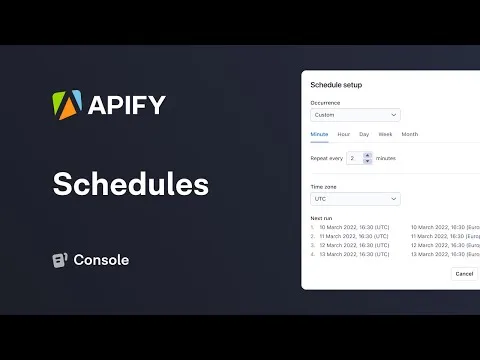
New to Apify? These two short videos show the actor end-to-end - scheduling and integrations.
| Schedule this actor to run automatically | Connect this actor to your stack |
|---|---|
 |  |
Free plan limit
Free Apify users get up to 5 results per run. Paying users are not affected and receive results normally.
This limit was set by the Actor developer, not by Apify. To remove it and receive unlimited results, upgrade to any paid Apify plan: https://apify.com/pricing
When a free plan run hits the cap, the Actor finishes successfully (status SUCCEEDED) and the run's status message explains what happened. No error is raised, so the first 5 results are fully usable as normal.
Changelog
Latest at the top. Only user-visible changes are listed.
- 2026-09-23 — Free-plan cap reduced from 50 to 5 results per run. Paying-plan users are not affected. Existing saved Tasks, Schedules, and API callers continue to run exactly as before; only the free-tier evaluation cap changed.
- 2026-09-13 — Added
platforminput filter andplatformoutput field (Google Search / Display / YouTube). Backward compatible: existing saved Tasks default to "all platforms" and return the same rows as before. - 2026-09 — Streaming pipeline: ads land in the dataset as they are scraped, first row appears within seconds. Default
Max ads per advertiserset to 200. Regions input became a multi-select country dropdown. Free-plan cap of 50 results per run with clear status message. - 2026-08 — Full ad text (
adText) and per-variation image collection (imagesarray) added. YouTube ad metadata (videoUrl,videoDuration) surfaced. Actor hardened against upstream nulls: one bad ad can no longer kill the run. - 2026-07 — Multi-region support with automatic dedupe by
creativeId. ExplicitadvertiserIdinput mode. - 2026-06 — Initial public release. No cookies, no login, no proxy required.
Quick start
Get your first result in under 60 seconds.
- Click Try for free at the top of this page. You do not need a Google account, a paid Apify plan, or any cookies.
- Leave the prefilled input as is (or replace
lululemon.comwith any brand name, domain, or Google advertiser ID). Click Start. - Watch rows appear in the Output tab in real time. The first ad usually lands within 2-3 seconds. When the run finishes, export the dataset as CSV, JSON, Excel, XML, or HTML from the same tab.
Example input:
{ "advertisers": ["nike.com"], "maxAdsPerAdvertiser": 50 }
That run pulls the last 50 public ads Nike is running on Google (across Search, Display, YouTube) and returns each with its headline, description, destination URL, images, video URL if any, first-and-last-shown dates, and the countries it ran in.
Total cost for 50 results: $0.25 at the $5 / 1,000 rate. Free-plan users receive the first 5 rows at no charge; upgrade to any paid Apify plan to receive the full 50.
You can also mix multiple advertisers in one run: ["nike.com", "adidas.com", "AR01614014350098432001"] returns ads for all three in a single dataset.
What you get
- Every ad format Google indexes: text (Search), image (Display), video (YouTube), and image-style Shopping ads.
- Full creative copy: headlines, descriptions, destination URLs, OCR'd ad text from images and videos.
- Run intelligence: first-shown, last-shown, days active, regions where the ad ran.
- Multiple variations per ad: every A/B headline + description combination Google records.
- Auto-classified input: mix brand names, domains, and advertiser IDs in one input — the actor figures out which is which and resolves brand names to advertiser IDs automatically via search.
- Native Apify exports: JSON, CSV, Excel, XML, HTML, RSS — straight from the dataset.
- Programmatic access: call this actor from any backend via the Apify API; integrate with Sheets, BigQuery, Slack, Make, Zapier, or your own webhook.
Use cases
- PPC competitive intelligence — see exactly which Google search ads, display banners, and YouTube ads your competitors run, and which ones they keep alive long-term (high
daysActive= winning creatives). - Agency competitor reports — pull a complete ad inventory for any client's competitor list and turn it into a deck in minutes.
- E-commerce ad benchmarking — compare creative angles, value props, and landing pages across an entire category (e.g. all DTC athleisure brands).
- YouTube ad research — extract direct creative URLs and landing pages for every YouTube video ad an advertiser has published.
- Brand-safety / reputation monitoring — detect unauthorised ads using your trademark, off-brand ads, or affiliates running against your name.
- Ad-spend reverse-engineering — long-running ads with many variations are a strong proxy for paid-media investment level.
- Trademark enforcement — find competitors bidding on your brand name in Google Search ads.
- Investor research — gauge which startups are scaling paid acquisition by tracking ad volume and creative diversity over time.
- Academic / journalistic research — political ad transparency, election-integrity audits, and cross-platform disinformation studies.
- Google Ad Library research — treat this actor as a full-coverage Google Ad Library API. Pull the raw ad-transparency data straight into your dataset without clicking through Google's Transparency Center UI ad by ad.
- Cross-platform competitor ad audit — pair this actor with the Meta Ad Library Scraper and the LinkedIn Ad Library Scraper to see every ad your competitor runs across Google, Facebook, Instagram, and LinkedIn in one unified dataset. Ideal for full-funnel paid-media audits.
How this compares to SEMrush, SpyFu, and similar tools
| This actor | SEMrush / SpyFu / Similarweb | |
|---|---|---|
| Pricing model | Pay-per-run on Apify (no subscription) | $40–$500+/month subscription |
| Data source | Live from Google's Ads Transparency Center | Vendor's own crawl, often weeks stale |
| Google Surfaces | Search, Display, YouTube video, Shopping | Mostly Search; video ads usually missing |
| Raw data export | Full JSON / CSV / Excel — no row caps | Dashboard-first; export tiers behind paywalls |
| YouTube creative URLs | Direct video links to every ad | Rare or unavailable |
| Display banner creative | Direct image URLs | Mostly metadata, no images |
| Run on demand | One click, any advertiser, any time | Account-tier limits |
| Programmatic access | Native Apify API + webhooks included | Paid API add-on |
| Cross-platform | Pair with our Meta / LinkedIn / Reddit ad scrapers | Single-vendor lock-in |
If you live in a SEMrush dashboard, this is not a replacement — it's a deeper, raw-data complement. If you just need an ad library for one or two specific advertisers per project, this is dramatically cheaper and gives you everything Google publishes.
How it works
Straight-line explanation of what the actor does when you press Start.
- Input classification. Each entry in
advertisersis auto-detected: brand name → treated as a search query; domain (with or withouthttps://) → treated as a domain; string matchingAR\d+→ treated as an advertiser ID. Mix all three in one input. - Advertiser resolution. For each search query, the actor calls Google's Ads Transparency search endpoint (via the ScrapeCreators upstream) and takes up to 5 matching advertisers per query. Domains and advertiser IDs skip this step.
- Streaming pipeline. For each resolved advertiser, the actor opens a paginated list request and hands each ad to one of 10 parallel detail-fetch workers. As each worker finishes, it pushes one row to the dataset. Result: the first row appears within 2-3 seconds instead of after the entire list is walked. Backpressure is automatic - the list only advances as fast as workers can drain it, so memory stays bounded even for advertisers with thousands of ads.
- Region iteration and dedupe. If you selected multiple regions, the actor pulls each region's ad list separately and deduplicates by
creativeId. An ad shown in both US and GB appears exactly once. - Normalisation. Each ad's variations are inspected. The richest variation (most populated fields) supplies the top-level
headline/description/destinationUrl. All image URLs across all variations are collected and deduped intoimages. Video ads getvideoUrlandvideoDurationfrom the variation carrying the YouTube link. - No cookies, no login, no proxy. Auth is handled entirely between the actor and its upstream API. You bring no accounts, no cookies, no proxy plan.
Input
One required field, everything else optional:
| Field | Type | Default | What it does |
|---|---|---|---|
| Advertisers | list of strings | — | One per line. Accepts brand names (nike), domains (lululemon.com), full URLs (https://nike.com/...), or advertiser IDs (AR01614014350098432001). Mix freely — the actor classifies each entry automatically. |
Max ads per advertiser (0 = every ad) | integer | 200 | Cap per advertiser. Set to 0 to fetch every public ad Google has. Ads stream into the dataset as they are scraped, so results appear immediately even for large brands. |
| Start date (blank = no lower bound) | date | — | Earliest first_shown date for returned ads. |
| End date (blank = no upper bound) | date | — | Latest last_shown date for returned ads. |
| Regions (nothing selected = worldwide) | array | [] | Multi-select dropdown of country codes (US, GB, AU, …). Pick any number. Empty = worldwide. When multiple are selected the actor pulls ads per region and merges results (duplicates removed by creativeId). |
| Political ads only | boolean | false | Restrict to political ads. Region is required when enabled. |
Example input
Cost examples
Pay per result. $5.00 per 1,000 results. No per-run fee. No subscription. Platform usage is free.
| Result count | Cost |
|---|---|
| 10 | $0.05 |
| 5 (free-plan cap) | $0.00 (free) |
| 100 | $0.50 |
| 500 | $2.50 |
| 1,000 | $5.00 |
| 5,000 | $25.00 |
| 10,000 | $50.00 |
Free-plan users receive the first 5 results per run at no charge and the run finishes cleanly with a status message when the cap is reached. Upgrade to any paid Apify plan to remove the cap.
Failed ads are not charged. If an ad's detail fetch fails and it is skipped with an adsFailed warning, it is not counted toward the billable results.
Cap your bill. Set maxAdsPerAdvertiser to a specific number to control cost. Default 200 means at most $1.00 per advertiser you scrape.
Output
Each row of the dataset is one ad. Columns are ordered for the Apify table view — readable identifiers first, ad copy next, dates and stats in the middle, technical IDs and full nested data at the end.
| # | Column | Type | Notes |
|---|---|---|---|
| 1 | advertiserName | string | Brand the ad belongs to. |
| 2 | domain | string | Advertiser's website. |
| 3 | format | string | text (Search), image (Display / Shopping / carousel), or video (YouTube). |
| 4 | headline | string | Headline of the richest creative variation (we pick the most-populated one). |
| 5 | description | string | Description from the richest variation. |
| 6 | destinationUrl | string | Click-through URL. |
| 7 | adText | string | OCR'd full ad text. Mostly null for video and carousel image ads. |
| 8 | imageUrl | string | Primary creative image (first one we find across all variations). |
| 9 | images | array | All unique image URLs across variations — populated for carousel / multi-image ads. |
| 10 | videoUrl | string | Direct YouTube URL — populated for video ads. |
| 11 | videoDuration | string | e.g. "0:10" — populated for video ads. |
| 12 | firstShown | ISO date | First day the ad ran. |
| 13 | lastShown | ISO date | Last day the ad ran. |
| 14 | daysActive | integer | Computed from first/last shown — long-running ads are winning ads. |
| 15 | regions | string | Comma-separated region names (United States, Canada). |
| 16 | impressionsMin | number | Lower impression bound. Generally only populated for political ads. |
| 17 | impressionsMax | number | Upper impression bound. |
| 18 | variationsCount | integer | Number of creative variations the ad ran. |
| 19 | adTransparencyUrl | string | Direct link to inspect the ad on Google Ads Transparency Center. |
| 20 | advertiserId | string | Google's AR… ID. |
| 21 | creativeId | string | Google's CR… ID. |
| 22 | scrapedFrom | string | What input produced this row, e.g. "domain: lululemon.com" or "search \"nike\" (Nike Inc)". |
| 23 | variations | array | Full list of creative variations (each with headline/description/destinationUrl/imageUrl/allText, plus videoId/youtubeUrl/videoDuration for video). |
| 24 | creativeRegionsDetail | array | Raw creativeRegions array. |
| 25 | regionStats | array | Per-region first/last-shown and impression breakdown. |
Every column is present on every row. Individual fields are still null only when Google itself didn't publish that piece for that specific ad (text Search ads have no image, carousel image ads often have no copy OCR'd, commercial ads don't disclose impressions, and some programmatic Display Network ads come back with all-null content because nothing could be extracted upstream). The actor always tries to surface the richest variation it can find for a given ad; nothing is filtered out.
Sample outputs by ad format
Each Google surface uses the same record shape, but different fields are typically populated. Here's what each format looks like in the dataset:
📝 Text ad (Google Search)
🖼️ Image ad (Display Network / Shopping)
Google Shopping ads (PLAs) appear with
format: "image"— the product card image is inimageUrland the destination URL points to the product detail page.
🎥 Video ad (YouTube TrueView / Bumpers)
The video itself is hosted on Google's CDN. Open
adTransparencyUrlto play it; YouTube's video ID is embedded in the Transparency Center page.
🛒 Shopping ad (Google Shopping)
Run summary
A summary object is written to the default key-value store under the OUTPUT key:
Walkthrough
An end-to-end example of one real scrape, start to finish.
Goal: find every Google ad Nike is running in the United States and the United Kingdom right now, cap at 30 per country to control cost.
Step 1 - Input.
Step 2 - Run. Click Start. The log shows:
Wall-clock: about 8 seconds for 30 rows. First row appears at ~2 seconds.
Step 3 - Output. The dataset has 30 rows. Sample one row (video ad):
Step 4 - What to do with it.
- Export as CSV from the Storage → Dataset tab and open in Sheets/Excel.
- Sort by
daysActivedescending to find long-running "winning" creatives. - Filter
platform: youtubeto isolate YouTube ads. - Click each
videoUrlto watch the actual video ad. - Click
adTransparencyUrlto inspect the ad on Google's official site.
Total cost: 30 rows × $5/1,000 = $0.15.
Limitations
Being honest about what this actor cannot do so you can decide before you run it.
Only public ads. Google's Ads Transparency Center only publishes ads Google chooses to make public. Login-gated ads, ads restricted to specific audiences, and ads the advertiser marked private cannot be retrieved. This is Google's limitation, not the actor's.
Google Shopping vs Display cannot be perfectly separated. The platform filter classifies image ads as display. Google Shopping product ads currently appear in that same bucket because the upstream data does not carry a distinct platform signal for them. If you filter to display you get both.
OCR accuracy varies. Ad copy on image and video creatives comes from OCR performed by the upstream data provider. Text ads are always exact; image and video text can have minor transcription errors. If a field looks garbled, that is the OCR - the raw creative image URL is always returned in imageUrl so you can verify.
No political-ad spend data yet. Google publishes detailed spend and demographic targeting for political ads via its Transparency Center. This actor supports politicalOnly: true to filter to political ads but does not currently surface totalAmountSpent, demographics, or adFundedBy as top-level fields. On the roadmap.
No hosted media downloads. The actor returns image URLs and YouTube URLs, not the binary files. If you need the actual image bytes hosted in an Apify KVS, request it and we will add the toggle.
Rate limits. ScrapeCreators throttles heavy runs. The actor retries with exponential backoff up to 3 times per request; runs that hit sustained 429 responses will slow down rather than fail.
FAQ
Q: Is this a Google Ad Library scraper? Yes. This actor is the public-data scraper for Google's Ads Transparency Center - the official Google Ad Library. Every ad Google discloses publicly is fetchable here, across Search, Display, YouTube, and Shopping. No Google Ads account or API access required.
Q: What is the Google Ads Transparency Center? Google's Ads Transparency Center is a public disclosure tool that publishes every ad any verified advertiser is currently running or has recently run on Google Search, YouTube, Google Display Network, and Google Shopping. Launched in 2023 to comply with the EU Digital Services Act and similar regulations, it is Google's official ad library and is free to browse at adstransparency.google.com. This actor is a scraper for it - it turns the Center's data into a structured dataset you can query, filter, or feed into a BI tool.
Q: What is the difference between Google Ad Library and Google Ads Transparency Center? They are the same thing. "Google Ad Library" is the informal name most PPC teams use; "Ads Transparency Center" is Google's own official name for the tool. This actor scrapes the same underlying data whichever term you type into search - creatives, headlines, run dates, target regions, and platform classification for every ad Google publishes.
Q: What ads can I get from the Google Ads Transparency Center? Every public ad an advertiser has run that Google chose to publish — across Google Search, Display Network, YouTube (TrueView, bumpers, in-feed), and Shopping. The Transparency Center is Google's own disclosure tool, built to comply with the EU Digital Services Act and similar regulations.
Q: What ads CAN'T I get? Ads requiring authentication, age- or geo-restricted ads, ads removed before the Transparency Center indexed them, and any campaign Google has chosen not to publish. This is a Google-side limitation, not a limitation of this actor.
Q: Can I see how much an advertiser spent?
Spend ranges are only published by Google for political ads in the EU, US, India, and a handful of other regions — those appear in regionStats and overallImpressions when available. For commercial ads, Google does not publish spend, and no scraper can fabricate it.
Q: How much does it cost to scrape 1,000 Google ads? $5.00 at this actor's flat rate of $5 per 1,000 results, streamed live from the Ads Transparency Center. There is no minimum spend and no subscription - you pay per ad returned. Free-plan Apify users get their first 5 ads at no charge. AI enrichments (creative-angle classification, advertiser summaries) are optional add-ons priced separately and billed to your own Anthropic account.
Q: Can I see who Google targeted (age, gender, audiences)?
Targeting parameters are mostly redacted by Google. Region of where the ad ran is available (regions, regionStats); precise audience demographics generally aren't.
Q: Why are some imageUrl / headline fields blank for a particular ad?
Google itself didn't publish that field for that specific creative — text Search ads have no image, some image-only creatives weren't OCR'd cleanly, and commercial ads typically don't disclose impressions. The actor always asks ScrapeCreators for the full detail payload; we surface whatever Google has on file.
Q: How fresh is the data? Live. Every run hits the Transparency Center directly via the ScrapeCreators API. There is no cached or stale snapshot.
Q: Can I track new ads automatically? Yes — see Automation & integrations. Apify Schedules can run this actor daily or hourly, and webhooks fire when runs finish so you can diff against the previous dataset.
Q: Is this legal? The Ads Transparency Center is Google's own public-disclosure tool, intentionally built for third-party access. Your downstream use must independently comply with Google's Terms of Service, copyright on creative assets, and data-protection laws in your jurisdiction. Read the Disclaimer and full Terms of Service below before running.
Q: I'm using SEMrush / SpyFu / Similarweb already. Why add this? Three reasons: (1) it covers YouTube video ads and Display banner creatives that those tools usually miss; (2) it gives you the raw data as a flat dataset, not a dashboard; (3) it's pay-per-run, not subscription — fits one-off competitor audits without a recurring contract.
Q: Which countries does this work in?
Any country Google publishes ads for in its Ads Transparency Center. Fifty countries are pre-listed in the regions multi-select input (Argentina through Vietnam). Leaving the field empty returns worldwide ads. If a country you need isn't in the dropdown, the underlying API likely accepts its ISO 3166-1 alpha-2 code - file an issue and we will add it to the list.
Q: How fresh is the data?
Live. Every run queries Google's Ads Transparency Center via the upstream API at request time. There is no cache and no delayed refresh. The firstShown and lastShown fields reflect the current-moment values Google publishes. Ads that stopped running seconds before your run may already be flagged with a lastShown date.
Q: Can I use this to build a lead list or do cold outreach? No. This actor returns advertising data (creatives, run dates, formats) - not contact data (emails, phone numbers, decision-maker names). Nothing in the output is suitable for cold outreach on its own. Building lead lists from Google ad transparency data would also raise significant legal issues under CAN-SPAM, GDPR, PECR, and equivalent regulations. Use a proper lead-gen tool for that use case.
Q: How do I connect this to Google Sheets, BigQuery, or Airtable? Apify has native integrations for all three. In the actor's run configuration, under Integrations, connect a Sheets/BigQuery/Airtable destination and pick the dataset as the source. Data will sync on every run. For custom destinations, use the Apify webhook system to POST run summaries to your endpoint.
Q: How do I find an advertiser's Google advertiser ID? Open any Google search result that is a sponsored ad, click the three-dot menu next to the ad, and choose "See more ads from this advertiser." Google opens the Ads Transparency Center at a URL like adstransparency.google.com/advertiser/AR01614014350098432001 - the AR... string in the URL is the advertiser ID. Paste it directly into this actor's Advertisers input to skip the brand-name lookup step.
Q: What if my target advertiser has 10,000+ ads - will the run finish?
Yes, but streaming rather than in one batch. The actor's memory footprint stays bounded regardless of ad count because rows are pushed to the dataset as they are scraped, not buffered. Very large advertisers can take minutes to fully walk; the free-plan cap of 5 or your maxAdsPerAdvertiser cap will normally stop the run well before that.
Q: Does this cover Meta and LinkedIn ads too? No - this actor is Google-only (Search, Display, YouTube, Shopping). For Facebook and Instagram ads, use the Meta Ad Library Scraper. For LinkedIn ads, use the LinkedIn Ad Library Scraper. All three actors share the same input pattern and dataset shape, so you can run them together and merge the outputs in BigQuery, Sheets, or your BI tool.
Automation & integrations
- Schedule daily runs. Use Apify Schedules to run this actor on a cron expression. Diff
creativeIdvalues between consecutive datasets to detect newly launched ads. - Slack / Discord alerts. Add an Apify webhook on
ACTOR.RUN.SUCCEEDEDthat POSTs to your Slack/Discord incoming webhook with the run summary fields. - Google Sheets / BigQuery / Postgres. One-click integrations from the Apify dataset → Sheets / BigQuery / any database. Build a live competitor-ad dashboard with no glue code.
- Make / Zapier / n8n. All three platforms have first-party Apify integrations — wire this actor into any downstream automation (CRM, email alerts, AI summarisers, etc.).
- Direct API call. Call this actor synchronously or asynchronously from your backend via the Apify API. Run-Sync mode returns the dataset in a single HTTP request.
- AI / LLM analysis. Pipe the dataset into an LLM to auto-summarise creative themes, extract winning value props, or cluster ads by angle.
Example tasks
Ready-to-run examples on Apify, no input needed for the most common workflows:
- Track Every Google Ad a Competitor Is Running - see every active ad a brand runs across Google.
- Scrape Google Shopping Ads from E-commerce Brands - product cards, headlines, and landing pages from any retailer.
- Pull a Brand's YouTube Video Ads in Bulk - direct video URLs, durations, and landing pages.
- Mine SaaS Competitor Ad Copy from Google Search - live Search headlines and descriptions for B2B PPC research.
- Bulk Audit DTC Brand Google Ads from a List - many brands, one dataset, full creative detail.
- Scrape Google Ads Shown in the United Kingdom - region-restricted UK ad capture.
- Research Fintech Competitor Ads on Google - banks, neobanks, and payment apps in one pull.
- Track Google Ads Launched in 2026 - filter to ads first shown this year.
- Mine Fashion Brand Google Ad Creatives - apparel and trend research.
- Scrape Google Ads by Advertiser ID (No Lookup) - go straight to ads when you already have the AR ID.
- Research Auto Industry Google Ads - car brands and EV makers.
- Scrape Airline and Travel Brand Google Ads - airlines, hotel chains, and travel sites.
Schemas
This actor ships with the following Apify schema files so the Console can render results nicely:
| Schema | File | Purpose |
|---|---|---|
| Dataset schema | ./.actor/dataset_schema.json | Defines two views for the dataset — Overview (human-readable key columns with image previews and links) and Full detail (every field). The Apify Output tab uses these views to render results. |
| Key-value store schema | ./.actor/key_value_store_schema.json | Describes the OUTPUT summary key so users know what to look for in the key-value store. |
| Live-view OpenAPI schema | not applicable | This is a batch scraper — it does not run an HTTP server inside the actor, so no OpenAPI schema is provided. |
Related scrapers
Full cross-platform ad spy — track competitors everywhere they advertise:
- Meta Ad Library Scraper — Facebook, Instagram, Threads, WhatsApp
- LinkedIn Ad Library Scraper — B2B ad intelligence
- Reddit Scraper + Ads Library — Reddit content + ads
See all 16 scrapers by unseenuser →
Support
Report bugs, request features, or ask questions on the Issues tab of this actor.
Current stats: 0 open issues and 0 closed issues at time of last README update - this actor has not needed any bug reports yet. When you file one, expect an acknowledgement within a business day.
For urgent commercial questions (custom SLA, volume pricing, private features) contact through the publisher profile.
Apify platform support (billing, account, infrastructure) is not this actor's responsibility - contact support@apify.com.
Data provenance and compliance
Where the data comes from. Every field the actor returns originates from Google's own Ads Transparency Center - the public disclosure system Google operates to comply with EU DSA, US election law, and equivalent transparency regulations worldwide. This actor does not scrape any private surface, bypass any login wall, or evade any protection Google puts on the data.
The upstream. The data is retrieved via the ScrapeCreators API, an independent third-party service that maintains the actual scraping infrastructure against Google's public endpoints. This actor is a thin wrapper that queries ScrapeCreators, normalises the response, and streams it to your Apify dataset. See the Disclaimer and Terms of Service below for the full architectural breakdown.
Your compliance obligations. You are responsible for using the returned data in compliance with Google's Terms of Service, ScrapeCreators' Terms of Service, Apify's Acceptable Use Policy, and any applicable data-protection or copyright laws in your jurisdiction. See the ToS section below for the full list.
Disclaimer
Please read before using this Actor.
This Actor is an independent tool that retrieves publicly available advertising data from the Google Ads Transparency Center via the ScrapeCreators API. It is intended for legitimate purposes including competitive research, marketing analysis, brand safety monitoring, academic research, journalism, and ad transparency verification.
Independence & trademarks. This Actor is not affiliated with, endorsed by, sponsored by, or in any way officially connected to Google LLC, Alphabet Inc., Apify Technologies, ScrapeCreators, or any of the advertisers whose ads are returned. All product names, logos, brands, trademarks, and registered trademarks referenced by this Actor or its output are the property of their respective owners. Any use of these names is for identification purposes only and does not imply endorsement.
Data source & limitations. All data returned originates from Google's own public Ads Transparency Center. This Actor cannot retrieve ads that require authentication, are age/geo-restricted, or have been marked private by the advertiser — these are limitations of Google's disclosure system, not of this tool. Creative copy (headline, description, adText) is extracted via OCR for image and video creatives by the upstream ScrapeCreators API and may contain minor inaccuracies. Fields, availability, and structure may change without notice if Google or ScrapeCreators modify their services.
Your responsibility. You are solely responsible for ensuring your use of this Actor and any data it produces complies with:
- Google's Terms of Service and the terms of the Ads Transparency Center.
- ScrapeCreators' Terms of Service.
- Apify's Terms of Service and Acceptable Use Policy.
- All applicable data-protection, intellectual-property, consumer-protection, advertising, anti-competition, and other laws in your jurisdiction — including but not limited to GDPR, UK GDPR, CCPA/CPRA, LGPD, the DMCA, and any applicable copyright or trademark statutes.
By running this Actor you confirm that your intended use is lawful and that you hold any consents, licences, or authorisations required in your jurisdiction.
No personal data collection. The Google Ads Transparency Center publishes advertiser business entities and creative content, not end-user personal data. Political ads may, however, reference public figures — treat any such content with appropriate editorial and legal care.
No warranty. This Actor is provided "as is" and "as available", without warranties of any kind, whether express or implied — including but not limited to implied warranties of merchantability, fitness for a particular purpose, accuracy, completeness, reliability, availability, or non-infringement. No guarantee is made that the Actor will return every ad an advertiser has ever run, or that returned data is current as of any particular moment.
Limitation of liability. To the maximum extent permitted by applicable law, the Actor owner, contributors, Apify, and ScrapeCreators shall not be liable for any direct, indirect, incidental, special, consequential, exemplary, or punitive damages — including but not limited to loss of profits, revenue, data, goodwill, or business opportunities — arising out of or in connection with your use of, or inability to use, this Actor or the data it returns, even if advised of the possibility of such damages. In jurisdictions where limitation or exclusion of liability for consequential or incidental damages is not permitted, liability is limited to the fullest extent permitted by law.
Indemnification. You agree to indemnify and hold harmless the Actor owner, contributors, Apify, and ScrapeCreators from any claims, damages, liabilities, losses, costs, or expenses (including reasonable legal fees) arising out of your use of this Actor, your violation of these terms, or your violation of any applicable law or third-party right.
Report concerns. If you believe an ad has been returned in error, your trademarks are being misused in downstream output, or scraped data is being used in a way that violates these terms, contact the Actor owner through the Apify Console.
Apify Actor — Terms of Service
Version: 4.0 Effective Date: May 5, 2026
0. Acceptance by Use — Important
Read this section first.
These Terms of Service ("Terms") form a binding legal agreement between you ("User," "you," "your") and UnseenUser, the Publisher of this Apify actor ("UnseenUser," "the Publisher," "we," "us," "our").
0.1 How You Accept These Terms
You accept these Terms by any of the following actions, each of which constitutes a clear, affirmative act of acceptance:
- (a) Running the Actor — Initiating any execution of the Actor on the Apify platform
- (b) Using any output returned by the Actor for any purpose
- (c) Continuing to access the Actor's listing or documentation after these Terms are visible
0.2 Continuing Acceptance
Each time you run the Actor or use its outputs, you reaffirm your acceptance of the then-current Terms. If you do not agree to these Terms or any subsequent update, you must stop using the Actor immediately.
0.3 No Anonymous Acceptance
You cannot disclaim acceptance by:
- Failing to read these Terms before running the Actor
- Running the Actor through automated systems
- Sharing your Apify account with others who may not have read these Terms
By the act of running the Actor on Apify, you bind yourself, your organization (if applicable), and any individuals or systems acting on your behalf or under your authority.
0.4 If You Do Not Accept
If you do not agree to these Terms, you must not run the Actor. No use is authorized without acceptance.
Preamble — Understanding the Architecture
Before using the Actor, please understand the technical architecture of the service:
The data flow
What each party does
- You (the User): Run the Actor on the Apify platform with input parameters you choose.
- Apify: Operates the cloud infrastructure that hosts and executes Actors. Apify is a Czech-incorporated company (Apify Technologies s.r.o.) governed by its own Terms of Service.
- The Publisher (us): Publishes software code (the Actor) on Apify's platform. The Actor is a thin wrapper that translates your input into requests to a third-party API and returns the API's responses to you. The Publisher does not operate scraping infrastructure. The Publisher does not store or retain data returned by the Actor. The Publisher does not see, log, or process the personal data of any individuals returned in the Actor's outputs beyond what is incidental to passing the data through.
- Third-Party API Provider: HarvestAPI or Scrape Creators. These are independent third-party companies that operate scraping infrastructure and return data from source platforms.
- Source Platform: LinkedIn, TikTok, YouTube, Reddit, Linktree, etc. These are the platforms whose publicly visible data is accessed by the Third-Party API Providers.
Why this matters
Your relationship with the Publisher is that of a software user to a software vendor. The Publisher has the responsibilities of a software vendor (functional code, accurate documentation) and the limits of one (the Publisher is not responsible for how you use the data you obtain).
These Terms operate alongside but do not replace:
- Apify's Terms of Service and Acceptable Use Policy (governing your relationship with Apify)
- HarvestAPI Terms of Service and Scrape Creators Terms of Service (governing the underlying data infrastructure)
- Source Platform terms (LinkedIn, TikTok, etc.) governing the public data accessed
- Applicable law in your jurisdiction and the jurisdictions of data subjects
These Terms incorporate the actor-specific addendum published in each Actor's individual listing ("Addendum"). In the event of a conflict, the more restrictive provision applies.
1. Nature of the Service
1.1 What the Actor Is
The Actor is a software program published on the Apify platform. Each Actor:
- (a) Accepts structured input from you on the Apify platform
- (b) Translates that input into HTTP requests to a third-party API operated by HarvestAPI or Scrape Creators
- (c) Receives HTTP responses from that third-party API
- (d) Returns the response data to you in a structured format on the Apify platform
The Actor's source code is hosted on Apify's infrastructure. The Actor runs in Apify's cloud, not on the Publisher's servers. The Publisher operates no servers running the Actor.
1.2 What the Actor Is Not
The Actor is not:
- (a) A scraping tool — the Publisher does not operate scraping infrastructure, proxies, headless browsers, or fake accounts
- (b) A direct connection to any source platform — connections to source platforms are made by HarvestAPI / Scrape Creators
- (c) A data storage or data retention service — the Publisher does not maintain a database of any data the Actor returns
- (d) A licensed access channel to LinkedIn, TikTok, YouTube, Reddit, X (Twitter), Meta, Linktree, or any other source platform
- (e) Affiliated with, endorsed by, sponsored by, or authorized by any source platform
1.3 The Publisher's Limited Role
The Publisher's role is limited to:
- (a) Designing and writing the Actor's source code
- (b) Publishing the Actor on the Apify Store
- (c) Maintaining the Actor (updating it when API providers change schemas)
- (d) Providing documentation and customer support via Apify's contact mechanism
The Publisher is a software vendor, similar to a developer who publishes an app on the Apple App Store or Google Play Store. The Publisher is not a data provider, data broker, data processor, or data controller for purposes of GDPR, CCPA, Israel's Privacy Protection Law, or equivalent.
1.4 The Third-Party API Providers' Role
HarvestAPI and Scrape Creators are independent third-party companies. They:
- (a) Operate the actual data scraping infrastructure
- (b) Maintain relationships with source platforms (or accept the operational risk of accessing public data without such relationships)
- (c) Are themselves Apify publishers (HarvestAPI publishes 9+ actors directly; Scrape Creators publishes 10+)
- (d) Provide their own Terms of Service governing their operations
- (e) Are responsible for compliance obligations relating to the data collection itself
The Publisher is a customer of these providers. The Publisher is not their agent, partner, or representative.
2. Who May Use the Actor
2.1 Eligibility
You may use the Actor only if:
- (a) You are at least 18 years old or the age of majority in your jurisdiction
- (b) You have legal capacity to enter into binding contracts
- (c) You are not located in or resident of a country subject to comprehensive sanctions by the United States, European Union, United Kingdom, or Israel
- (d) You are not on any prohibited persons list
2.2 User Representations
By using any Actor, you represent and warrant that:
- (a) Truthful identity: Information you provide about your identity and intended use is accurate
- (b) Lawful intent: Your intended use complies with applicable law in your jurisdiction
- (c) Source platform compliance: You will independently comply with the Terms of Service of any source platform whose data you obtain through the Actor
- (d) Data subject rights: Where Actor outputs include personal data, you will respect data subject rights under applicable law
- (e) No prohibited use: You will not use the Actor for any of the purposes prohibited in Section 4
These representations are continuous — they must remain true throughout your use.
3. Permitted Uses
The Actor may be used for any lawful purpose, including:
- Market research and competitive analysis
- Academic research
- Journalism and investigative reporting
- Internal business intelligence
- Brand monitoring
- Recruitment research where consistent with applicable employment law
- Building products that further process publicly available information lawfully
Specific permitted uses for each Actor are described in that Actor's individual listing and Addendum.
4. Prohibited Uses
You may not use the Actor for any of the following:
4.1 Illegal Activity
Activity illegal under the law of your jurisdiction, the User's jurisdiction, or the jurisdiction of any data subjects.
4.2 Harassment, Stalking, and Personal Targeting
- Compiling profiles for harassment, stalking, or doxxing
- Tracking individuals' movements or activities without their knowledge
- Building profiles of journalists, activists, dissidents, or vulnerable populations for retaliatory purposes
4.3 Discrimination
- Using outputs for discriminatory employment, lending, housing, or insurance decisions based on protected characteristics
- Building lists for discriminatory purposes
4.4 Spam and Unsolicited Commercial Communication
- Sending unsolicited marketing in violation of CAN-SPAM, CASL, GDPR, PECR, Israeli Anti-Spam Law (סעיף 30א לחוק התקשורת), or equivalent laws
- Building "lead lists" from scraped contacts without proper consent infrastructure
- Reselling contact data for spam purposes
4.5 Fraud and Deception
- Identity theft or impersonation
- Generation of fake reviews, testimonials, or coordinated inauthentic behavior
- Election interference or political disinformation
- Securities fraud
4.6 Source Platform Abuse
- Using outputs to circumvent technical protection measures of source platforms
- Creating fake accounts on source platforms based on Actor outputs
- Vote manipulation, engagement manipulation, or platform algorithm gaming
- Building services that competitively substitute for source platforms
4.7 Reselling the Actor's Service
- Reselling raw Actor outputs as your own data product or scraping-as-a-service
- Sharing your Apify credentials to provide third parties indirect access
- Building competing API services using Actor outputs
4.8 AI Training Without Authorization
- Using Actor outputs as training data for commercial AI/ML models without separate licensing authority from the source platform
4.9 Sensitive Targeting
- Specifically targeting or profiling based on health conditions, sexual orientation, religious beliefs, political opinions, or other sensitive characteristics
- Targeting children under 16 (or local age of consent for data processing)
4.10 Privacy Law Violations
- Processing personal data of EU/UK/California/Israeli residents without complying with applicable privacy law
- Failing to honor data subject access, deletion, or objection requests
- Processing data for purposes incompatible with its publication context
5. Source Platform Terms — Your Responsibility
5.1 Acknowledgment
The Actor accesses publicly visible data on third-party platforms ("Source Platforms") through the Third-Party API Providers (HarvestAPI / Scrape Creators). Source Platforms include LinkedIn, TikTok, YouTube, Reddit, X (Twitter), Meta/Facebook, Linktree, Komi, Pillar, Linkbio, Linkme, and Amazon.
5.2 Your Sole Responsibility
You acknowledge:
- (a) You are solely responsible for ensuring your downstream use of data obtained through the Actor complies with the Source Platform's Terms of Service
- (b) The Publisher makes no representation that any specific use is permitted under any Source Platform's terms
- (c) The Third-Party API Providers, not the Publisher, bear responsibility for the lawfulness of the data collection itself
- (d) You should review Source Platform terms before commercial use:
- LinkedIn: https://www.linkedin.com/legal/user-agreement
- TikTok: https://www.tiktok.com/legal/page/global/terms-of-service/en
- YouTube: https://www.youtube.com/static?template=terms
- X: https://twitter.com/en/tos
- Reddit: https://www.redditinc.com/policies/user-agreement
- Meta: https://www.facebook.com/legal/terms
- Linktree: https://linktr.ee/s/terms/
5.3 Cease-and-Desist Compliance
If you receive a cease-and-desist letter or other legal demand from a Source Platform regarding your use of Actor outputs, you must:
- (a) Cease the contested use immediately
- (b) Notify UnseenUser within 48 hours via UnseenUser's Apify profile contact form (https://apify.com/UnseenUser)
- (c) Cooperate with the Publisher as needed to mitigate
- (d) Not assert against the Publisher any claim arising from your inability to use the Actor for that Source Platform
6. Data Protection — Reflecting Actual Architecture
6.1 Roles Under Privacy Law
For purposes of GDPR, UK GDPR, CCPA, Israel's Privacy Protection Law (PPL) including Amendment 13, and equivalents:
- You (the User) are the Data Controller of any personal data you obtain through the Actor and subsequently process for your own purposes
- HarvestAPI and Scrape Creators are the entities that collect data from source platforms — they bear the responsibilities of data processors or controllers (depending on context) for the collection itself
- The Publisher acts solely as a software vendor, not as a data controller or processor, because the Publisher does not store, retain, or substantively process personal data — the Actor merely passes API responses through
6.2 No Data Retention by the Publisher
The Publisher confirms:
- (a) The Publisher does not maintain a database of personal data obtained through the Actor
- (b) The Actor passes data from the Third-Party API directly to you on the Apify platform — data does not flow through the Publisher's infrastructure
- (c) Apify's standard execution and operational logging may include limited information about Actor runs (input parameters, run duration, data volume) — this is governed by Apify's own privacy practices
- (d) The Publisher does not access, view, or analyze your Actor outputs except as needed for technical support if you specifically share them with the Publisher
6.3 Your Obligations as Data Controller
Where your use of the Actor involves processing personal data, you are responsible for:
- (a) Establishing a lawful basis for your processing (consent, legitimate interest with documented balancing test, contract, etc.)
- (b) Providing transparent notice to data subjects as required by applicable law
- (c) Honoring data subject access, rectification, erasure, restriction, and portability requests
- (d) Implementing appropriate security measures
- (e) Conducting Data Protection Impact Assessments where required
- (f) Appointing a Data Protection Officer if your operations require one
- (g) Registering databases with applicable supervisory authorities
- (h) Honoring opt-out requests for direct marketing
- (i) Cross-border transfer safeguards where data crosses borders
6.4 Israel's Amendment 13 — User Compliance
If your use of the Actor involves Israeli residents' personal data, you must comply with the Privacy Protection Law as amended (Amendment 13, effective August 14, 2025). These obligations are yours as the data controller, not the Publisher's as the software vendor.
6.5 Sensitive Data Targeting Restrictions
You will not use the Actor to specifically target, profile, or build datasets focused on:
- Health or medical conditions
- Religious beliefs
- Political opinions
- Sexual orientation or gender identity
- Genetic or biometric data
- Criminal history
- Children under 16
7. Intellectual Property
7.1 Actor Code
The Actor's source code, schemas, documentation, and branding are owned by the Publisher. You receive a limited, non-exclusive, non-transferable, revocable license to use the Actor for permitted purposes during your active subscription/run with Apify.
7.2 Output Data
The Publisher claims no ownership over the public data the Actor returns. Source Platforms may have copyright, database rights, or other rights in their data; data subjects may have copyright in user-generated content. Your use of output data must respect these rights independently.
7.3 Restrictions
You may not reverse engineer, decompile, or reuse the Actor's code in a competing actor.
7.4 Feedback
Feedback you provide may be used by the Publisher to improve products without compensation to you.
8. Pricing and Payment
8.1 Apify Platform Billing
Pricing is administered through Apify's pricing models. Apify processes all payments. Apify's payment terms govern refunds and disputes.
8.2 Pricing Changes
The Publisher may change Actor pricing with at least 14 days' notice via the Actor's Apify listing.
8.3 No Refunds for Misuse
If your access is suspended or terminated for breach of these Terms, you forfeit any unused balance and are not entitled to refunds.
9. Service Availability and Changes
9.1 No Uptime Guarantee
The Actor depends on:
- (a) The Apify platform
- (b) Underlying API providers (HarvestAPI, Scrape Creators)
- (c) Source Platforms' continued public accessibility
Any of these may change behavior, restrict access, or become unavailable without notice. The Publisher makes no uptime guarantees.
9.2 Service Discontinuation
The Publisher may discontinue any Actor at any time. Reasonable notice will be provided when feasible.
10. Disclaimers
10.1 "As Is" Service
THE ACTOR IS PROVIDED "AS IS" AND "AS AVAILABLE" WITHOUT WARRANTIES OF ANY KIND, INCLUDING WARRANTIES OF MERCHANTABILITY, FITNESS FOR PURPOSE, NON-INFRINGEMENT, OR ACCURACY OF DATA.
10.2 No Representation of Lawfulness
The Publisher makes no representation that your specific use of the Actor or the data it returns is lawful in your jurisdiction or under any Source Platform's terms. The burden of determining lawfulness for your use case is yours.
10.3 No Endorsement of Source Content
Content returned by the Actor was created by third parties. The Publisher does not endorse, verify, or take responsibility for it.
11. Limitation of Liability
11.1 Aggregate Liability Cap
TO THE MAXIMUM EXTENT PERMITTED BY APPLICABLE LAW, IN NO EVENT SHALL THE AGGREGATE LIABILITY OF THE PUBLISHER FOR ALL CLAIMS RELATING TO THE ACTOR EXCEED THE GREATER OF:
- (a) ONE HUNDRED U.S. DOLLARS (US $100), OR
- (b) THE AMOUNTS YOU PAID THROUGH APIFY FOR USE OF THE ACTOR IN THE THREE (3) MONTHS IMMEDIATELY PRECEDING THE EVENT
11.2 Excluded Damages
THE PUBLISHER IS NOT LIABLE FOR INDIRECT, INCIDENTAL, SPECIAL, CONSEQUENTIAL, EXEMPLARY, OR PUNITIVE DAMAGES, OR FOR LOSS OF PROFITS, REVENUE, OR DATA, EVEN IF ADVISED OF THE POSSIBILITY.
11.3 Time Limit
Any claim must be brought within one (1) year of the event.
12. Indemnification
12.1 Your Indemnification of the Publisher
You agree to defend, indemnify, and hold harmless the Publisher from any:
- Claims arising from your use of the Actor
- Claims arising from your violation of these Terms
- Claims arising from your violation of any law (including privacy law)
- Claims arising from your violation of any Source Platform's Terms of Service
- Claims arising from your processing of personal data obtained through the Actor
- Reasonable attorneys' fees and costs of defending such claims
12.2 Defense
The Publisher may assume defense at your expense. You will cooperate with the Publisher's defense.
12.3 Scope
The indemnification covers reasonable, foreseeable third-party claims arising from your use. It does not extend to:
- Claims arising from the Publisher's gross negligence or willful misconduct
- Claims regarding the Actor's source code itself (those are the Publisher's responsibility)
- Claims regarding the Third-Party API Provider's data collection (those are their responsibility)
13. Suspension and Termination
13.1 Termination by the Publisher
The Publisher may terminate your access for material breach, illegal use, breach of warranty, or upon credible legal demand.
13.2 Effects of Termination
Your license ends, you must cease use, and applicable provisions survive.
13.3 Termination by You
You may stop using the Actor at any time on Apify.
14. Dispute Resolution
14.1 Informal Resolution First
Send a detailed written description of the dispute via UnseenUser's Apify profile contact form (https://apify.com/UnseenUser) and wait 60 days for resolution attempt before any formal claim.
14.2 Governing Law
These Terms are governed by the substantive laws of the State of Israel, without regard to conflict of law principles.
14.3 Exclusive Jurisdiction
Any dispute shall be brought exclusively in the competent civil courts of Tel Aviv-Jaffa, Israel.
14.4 No Class Actions
You agree to bring claims only in your individual capacity.
14.5 Attorneys' Fees
The prevailing party recovers reasonable attorneys' fees.
15. Miscellaneous
15.1 Entire Agreement
These Terms (with Addendum and incorporated documents) are the entire agreement.
15.2 Severability
Unenforceable provisions are reformed to the minimum extent or severed.
15.3 Assignment
You may not assign without the Publisher's consent. The Publisher may assign to affiliates, successors, or acquirers.
15.4 Force Majeure
Neither party is liable for failure due to events beyond reasonable control, including changes by Source Platforms or Third-Party API Providers, or actions by Apify.
15.5 Third-Party Beneficiaries
Apify, HarvestAPI, and Scrape Creators are intended third-party beneficiaries of Sections 4 (Prohibited Uses), 5 (Source Platform Compliance), and 12 (Indemnification).
15.6 Survival
Sections 0 (Acceptance), 4, 5, 6, 7, 10, 11, 12, 14, and 15 survive termination.
15.7 Language
English controls. Translations are for convenience only.
15.8 Publisher Identification for Legal Process
The Publisher operates on the Apify platform under the username UnseenUser (https://apify.com/UnseenUser). The Publisher is a registered legal entity. Upon receipt of valid legal process (subpoena, court order, or equivalent) directed through Apify's official channels, the Publisher's full legal identity may be disclosed as required by law. This Section ensures that you have a valid path to legal recourse if needed.
16. Acknowledgment
By using any Actor, you acknowledge that:
- (a) You have read these Terms
- (b) You understand the architecture: you are using software (the Actor) on Apify's platform that calls third-party APIs
- (c) You accept responsibility for your use, including for compliance with Source Platform terms
- (d) Your indemnification obligations cover third-party claims arising from your use
- (e) Disputes are resolved in Israeli courts
- (f) The Publisher's identity, while not publicly disclosed in this listing, can be obtained through valid legal process via Apify
For questions, use UnseenUser's Apify profile contact form (https://apify.com/UnseenUser) before running the Actor.
🛡️ Actor-Specific ToS Addendum — 🔎 Google Ads Transparency Scraper
This addendum supplements the Master Terms of Service V4.0 above. By running this Actor, you accept both the Master ToS and this addendum.
A. Architectural Disclosure
This Actor is a software wrapper. It accepts your input parameters, calls the Scrape Creators endpoints listed in the Output section above, and returns the response data to you on the Apify platform. UnseenUser does not store, log, or substantively process the data returned. The data flows from Scrape Creators through Apify's runtime directly to you.
B. Nature of Data Returned
This Actor returns: advertiser identity (verified company name, advertiser ID), ad creative (text, images, video URLs, landing pages), platforms (Search, Display, YouTube, Shopping), regions where ad was shown, dates the ad ran, ad formats.
Where the Actor's output includes individual people's names, photos, contact details, or content authored by them, that data constitutes personal data subject to GDPR, CCPA, Israeli Privacy Protection Law, and equivalent privacy laws in your downstream processing — but only in your hands as the data controller, not in UnseenUser's hands as the software vendor.
C. Permitted Use Cases
You may use this Actor for the following purposes (non-exhaustive list):
- PPC competitive intelligence — see exactly which ads your competitors run on Google
- YouTube ad research — extract video ads from any advertiser
- Brand-safety audits — check if your brand appears in unauthorized ads
- Agency proof-of-spend — show clients real competitor ad volume
- Investor research — gauge ad spend velocity of public/private companies
- Trademark enforcement — detect ads infringing on your brand
D. Specifically Prohibited Uses
In addition to Master ToS Section 4 prohibitions, you may NOT:
- Copy and republish competitor ad creative without licensing — copyright infringement
- Build databases of advertisers and resell as a substitute for Google's official Transparency Center
- Use ad targeting data to identify named individuals for harassment or discrimination
- Spam advertisers with cold outreach without complying with anti-spam laws
- Mass-clone competitor ads with cosmetic changes for trademark/brand confusion
E. Platform Terms of Service Considerations
Google's Ads Transparency Center is a transparency tool Google provides to comply with regulatory requirements (EU DSA, etc.). Google may restrict commercial reuse of transparency data. Your downstream use must independently comply with Google's Terms of Service and the Transparency Center's terms. If Google issues a cease-and-desist, notify UnseenUser within 48 hours via the Apify profile contact form (https://apify.com/UnseenUser).
F. Ad Creative Copyright
Ad creative (images, video, copy, landing page screenshots) is copyrighted by the advertiser. You may use for analysis (typically fair use) but may not republish substantial portions without licensing.
G. Verified vs. Unverified Advertisers
Google verifies the identity of political and ad-targeted advertisers in some categories. Other advertisers are unverified. Do not represent unverified advertiser data as authoritative; verification status is part of the data.
H. Cross-Platform Linking
Don't aggregate Google Ads data with Facebook/Instagram/LinkedIn ad data and personal data to build comprehensive cross-platform identity profiles of named individuals. This creates significant data protection exposure under GDPR/CCPA.
I. Political Ads — Special Care
Political ads are subject to specific regulations (US, EU, India, etc.). When researching political ads:
- Do not use the data to suppress voter turnout or organize disinformation
- Do not microtarget voters with deceptive content based on insights from this Actor
- Comply with election integrity laws in your jurisdiction
For maintainers — deploying & running locally
This section is for the actor owner. End users on Apify never need any of this.
Deploying
After the first push, set the SCRAPECREATORS_API_KEY secret in the actor's environment variables before running.
Running locally
Scraped ads appear under storage/datasets/default/.
Tests
Runs the full suite (client unit tests, 10 actor end-to-end scenarios against a local mock ScrapeCreators server, and a retry/backoff test).
![LinkedIn Ad Library Scraper [NO COOKIES] ✅ avatar](https://images.apifyusercontent.com/b-EEamuzq4m6vYFPC08m3s4pnfCs9LlPatL_X6rQ5qk/rs:fill:76:76/cb:1/aHR0cHM6Ly9hcGlmeS1pbWFnZS11cGxvYWRzLXByb2QuczMudXMtZWFzdC0xLmFtYXpvbmF3cy5jb20vc0NDU2R3bm1LTUoxUTJzVG4tYWN0b3ItcjlsRXNrczF4MVpJTG9RZWgtZXJGOHdUTEdHZy1TcGFyc2VfaW5zdHJ1bWVudGF0aW9uX19kaXJlY3RfbHlyaWNzX191cmJhbl9yZWFsaXNtX195b3V0aGZ1bF9y.webp)


![LinkedIn User Comments Scraper [NO COOKIES] ✅ avatar](https://images.apifyusercontent.com/MR9XzVxPkCVCzR05-ACBbsow9hh4dwqs8WQvByp3MN8/rs:fill:76:76/cb:1/aHR0cHM6Ly9hcGlmeS1pbWFnZS11cGxvYWRzLXByb2QuczMudXMtZWFzdC0xLmFtYXpvbmF3cy5jb20vc0NDU2R3bm1LTUoxUTJzVG4tYWN0b3ItNkE3dTJvZXFHMU1OYUp0R0wtSGxBa0FtWDJteC1TcGFyc2VfaW5zdHJ1bWVudGF0aW9uX19kaXJlY3RfbHlyaWNzX191cmJhbl9yZWFsaXNtX195b3V0aGZ1bF9y.webp)


![Meta Ad Library Scraper - Facebook & Instagram [NO COOKIES] ✅ avatar](https://images.apifyusercontent.com/c1QCW6w5RrBKptqcjtX-xKA1Sqh5a5naVqW9BCs58qU/rs:fill:76:76/cb:1/aHR0cHM6Ly9hcGlmeS1pbWFnZS11cGxvYWRzLXByb2QuczMudXMtZWFzdC0xLmFtYXpvbmF3cy5jb20vc0NDU2R3bm1LTUoxUTJzVG4tYWN0b3ItWXNtZEFOZ3d6ODFyNmZBWE8tQXZmYlEyTFo4ai04ODhhZDE0My01YTAyLTQ5Y2MtODY0Mi1mOTQyNDBiNjc1ODktY292ZXIucG5n.webp)


