
Best Crawl4AI alternatives
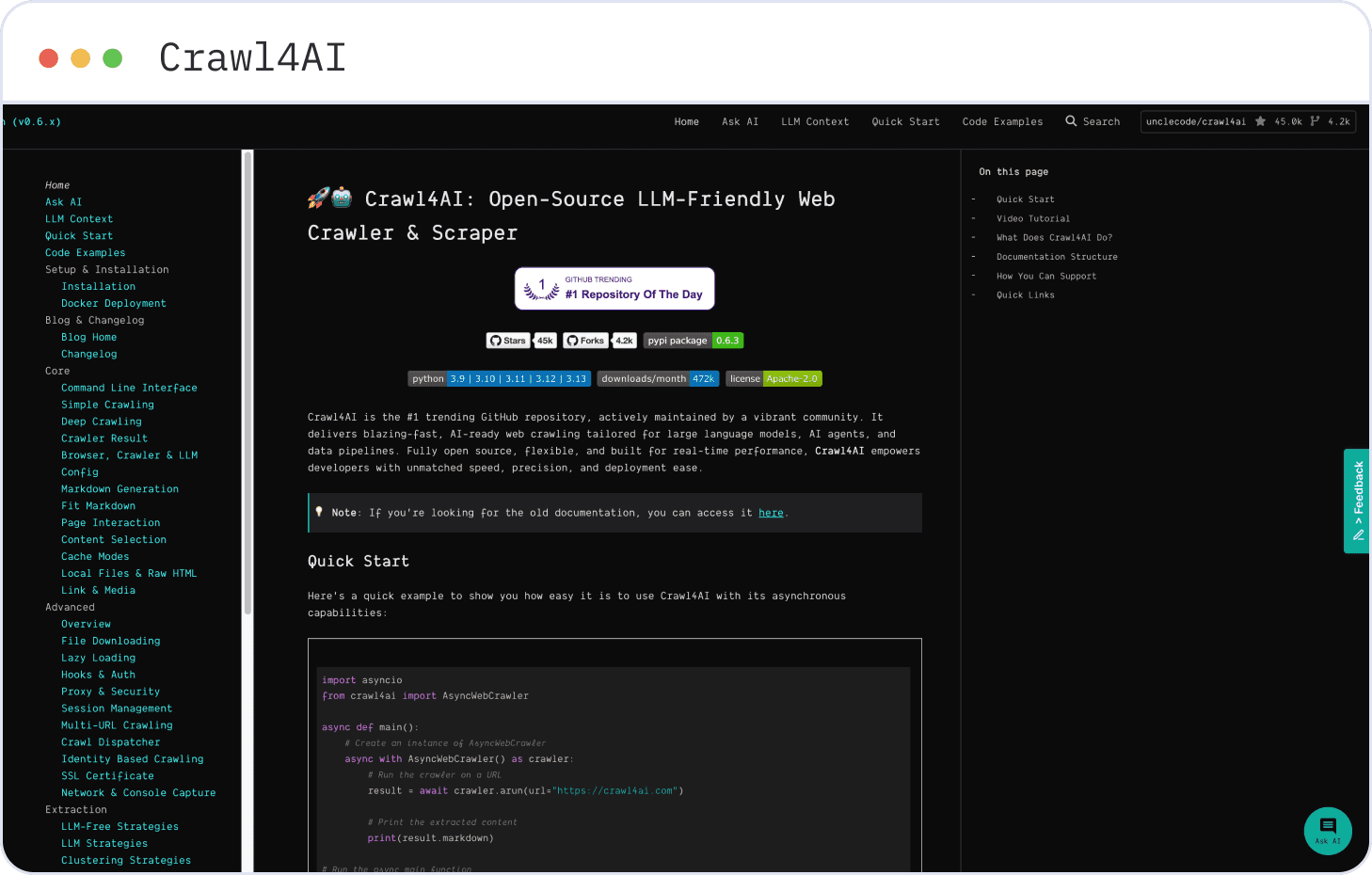
Crawl4AI is an open-source LLM-friendly web crawler and scraper: free, fast, built for clean Markdown, and backed by 68k+ GitHub stars. It’s also a library you run for yourself, so infrastructure, proxies, anti-bot defenses, and maintenance are on you.
Below are seven alternatives that keep the LLM-ready output, from managed crawlers to schema-first extraction libraries.
Website Content Crawler
Website Content Crawler is Apify’s flagship AI web data collection tool. It deep-crawls websites and docs, using browser fingerprinting and proxy rotation to get past anti-scraping protections. It strips headers, footers, ads, and cookie banners, and exports the rest as Markdown, plain text, or HTML. Integrations for LangChain, LlamaIndex, and vector databases like Pinecone let you stream the output straight into a RAG pipeline.


Firecrawl
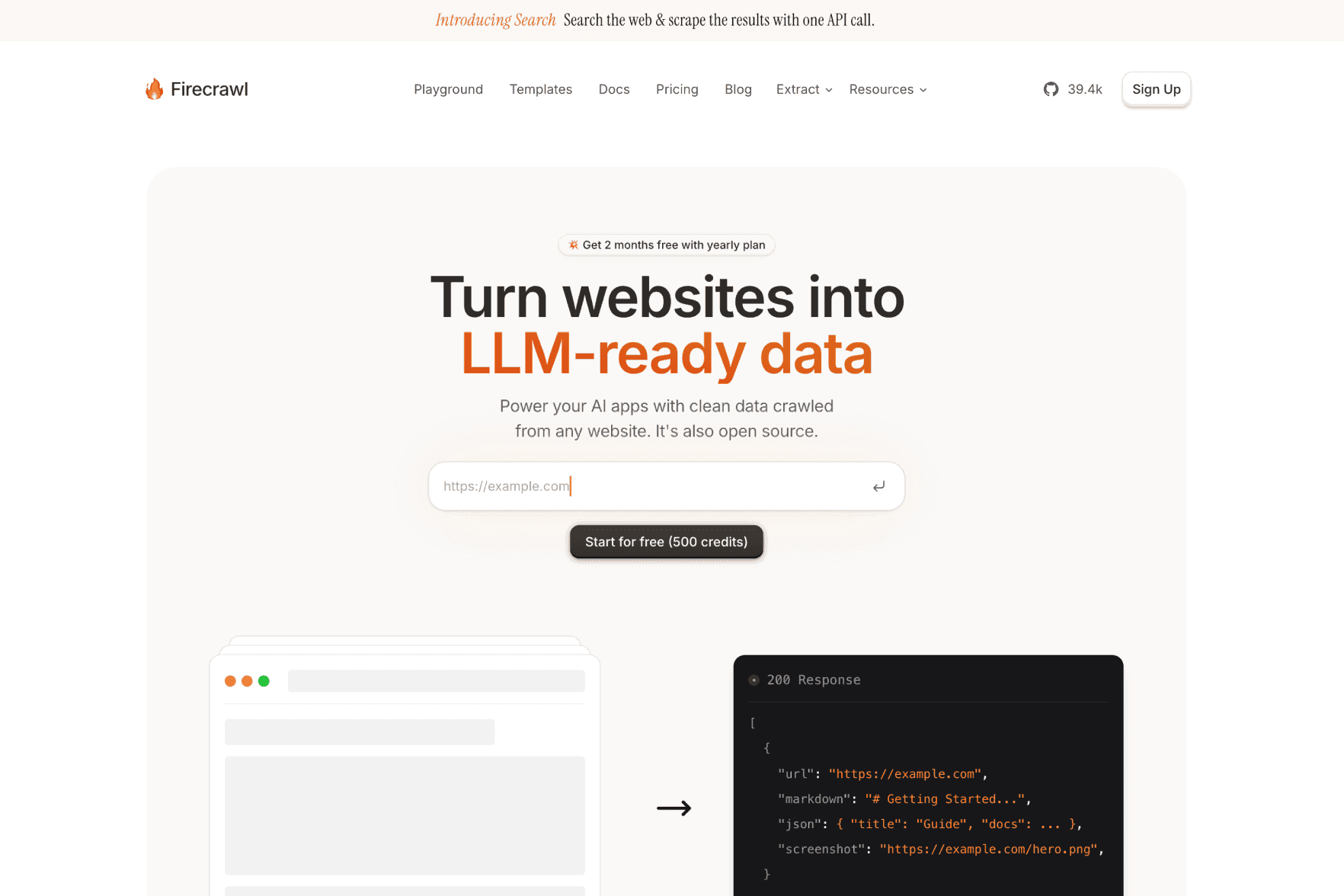
Firecrawl is a hosted API that turns any URL (and every internal link it finds) into clean Markdown, executing client-side JavaScript and deduplicating boilerplate along the way. Beyond crawling, it has grown into a broader web data API with search and page-interaction endpoints. The core is open source for self-hosting, but proxies and rendering run only in the hosted version.
LLM Scraper
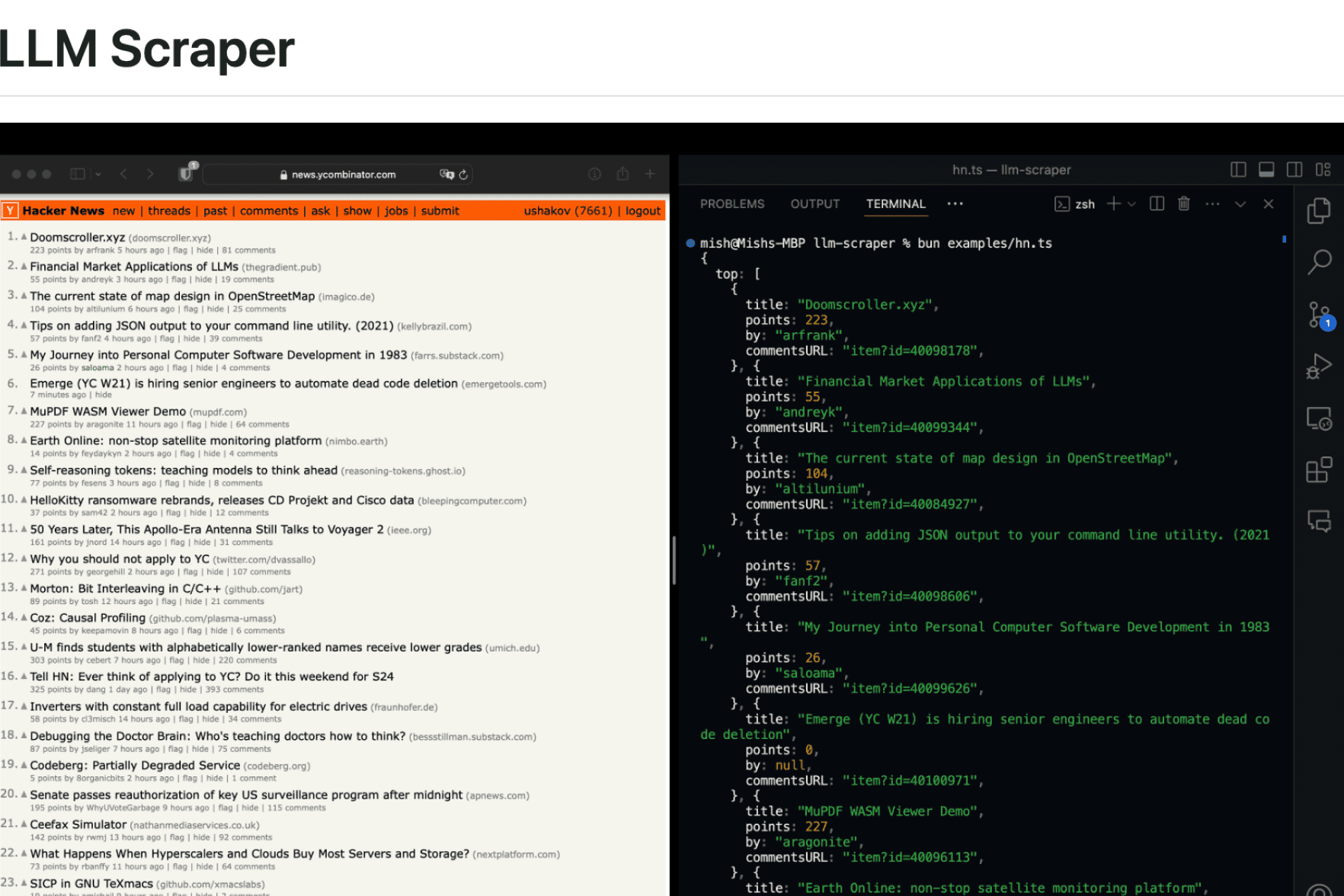
LLM Scraper is a TypeScript library that uses LLMs to extract structured data from any webpage into a schema you define (Zod or JSON Schema), giving you typed objects instead of free-form text. Version 2.0 adds Vercel AI SDK 6 support and works with GPT, Claude, Gemini, and local models.
GPT-Crawler
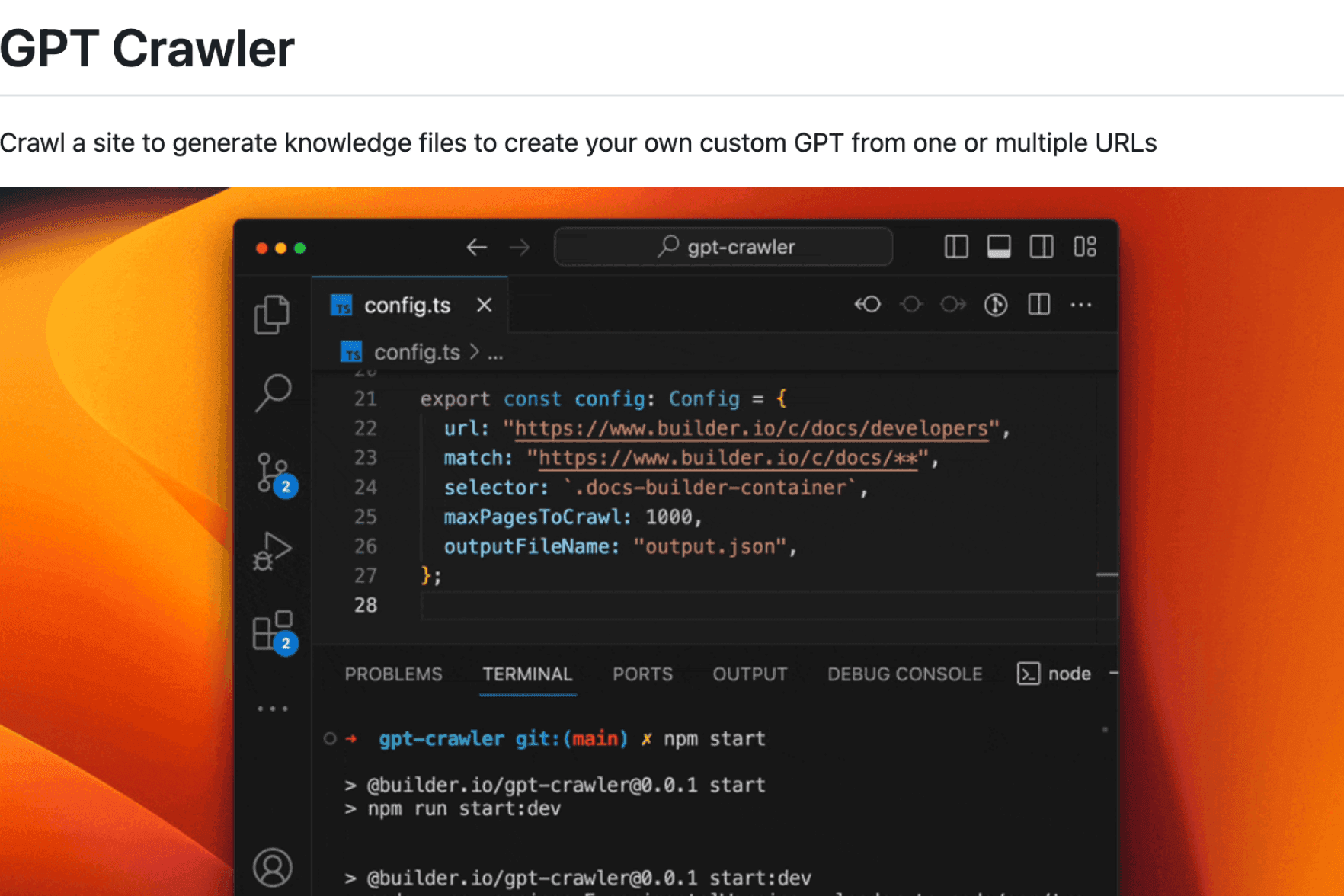
GPT-Crawler crawls documentation sites with a headless browser and automatically produces "knowledge files" you can upload to OpenAI Assistants or custom GPTs. Use it when you want a single JSON file that ChatGPT can ingest without extra tooling.
ScrapeGraphAI
ScrapeGraphAI pairs an open-source Python library (26k+ GitHub stars) with a hosted API: describe what you want in a natural-language prompt and its LLM-driven graph pipeline plans the extraction steps and returns structured JSON. The hosted version adds JavaScript rendering, anti-bot bypass, and site-wide crawling, with no proxies to manage.
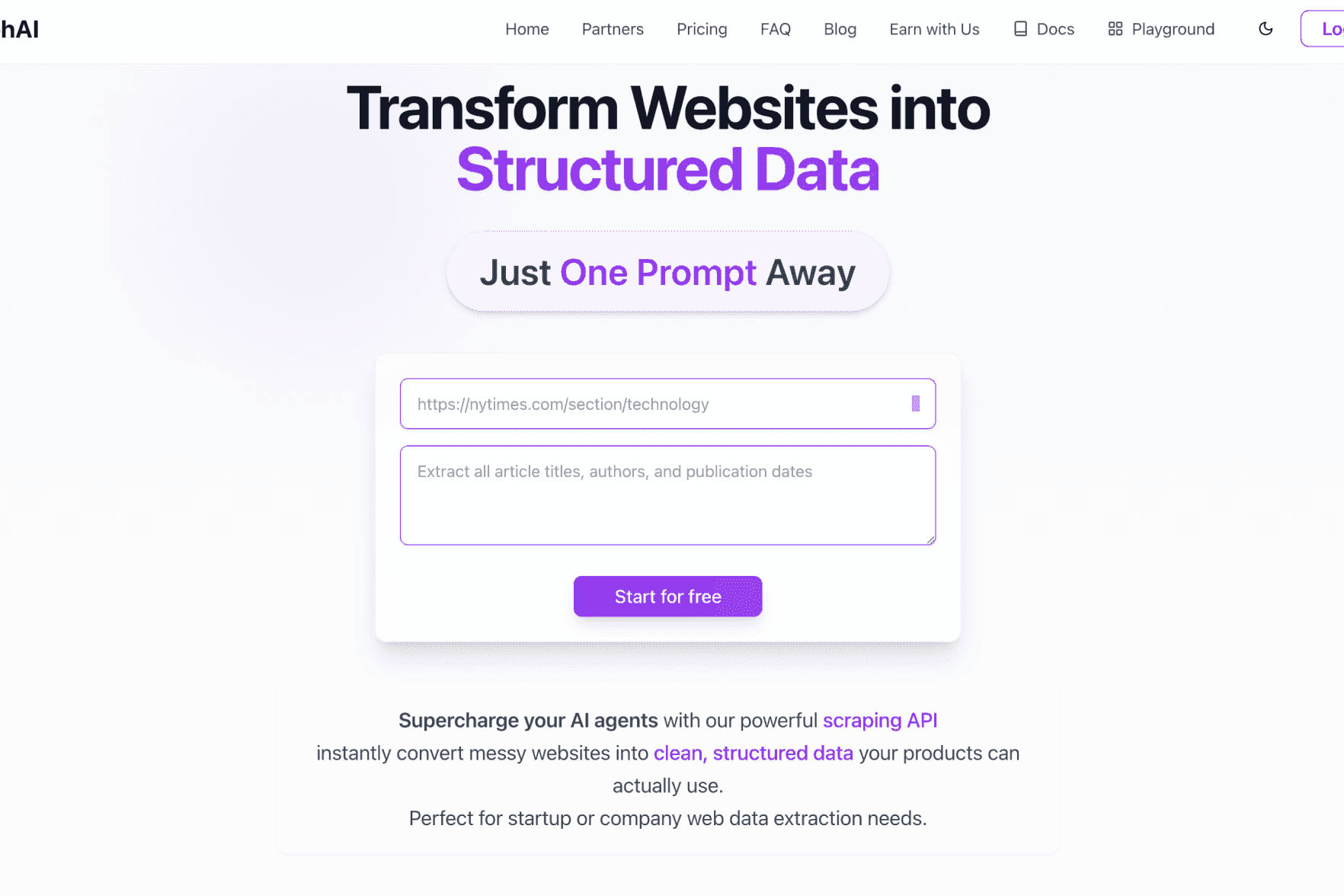
Skyvern
Skyvern automates browsers with computer vision. Instead of relying on DOM selectors, its agents "see" the page, click buttons, fill forms, and download files, surviving redesigns that break traditional crawlers. An API runs those agents in parallel, with CAPTCHA solving built in.
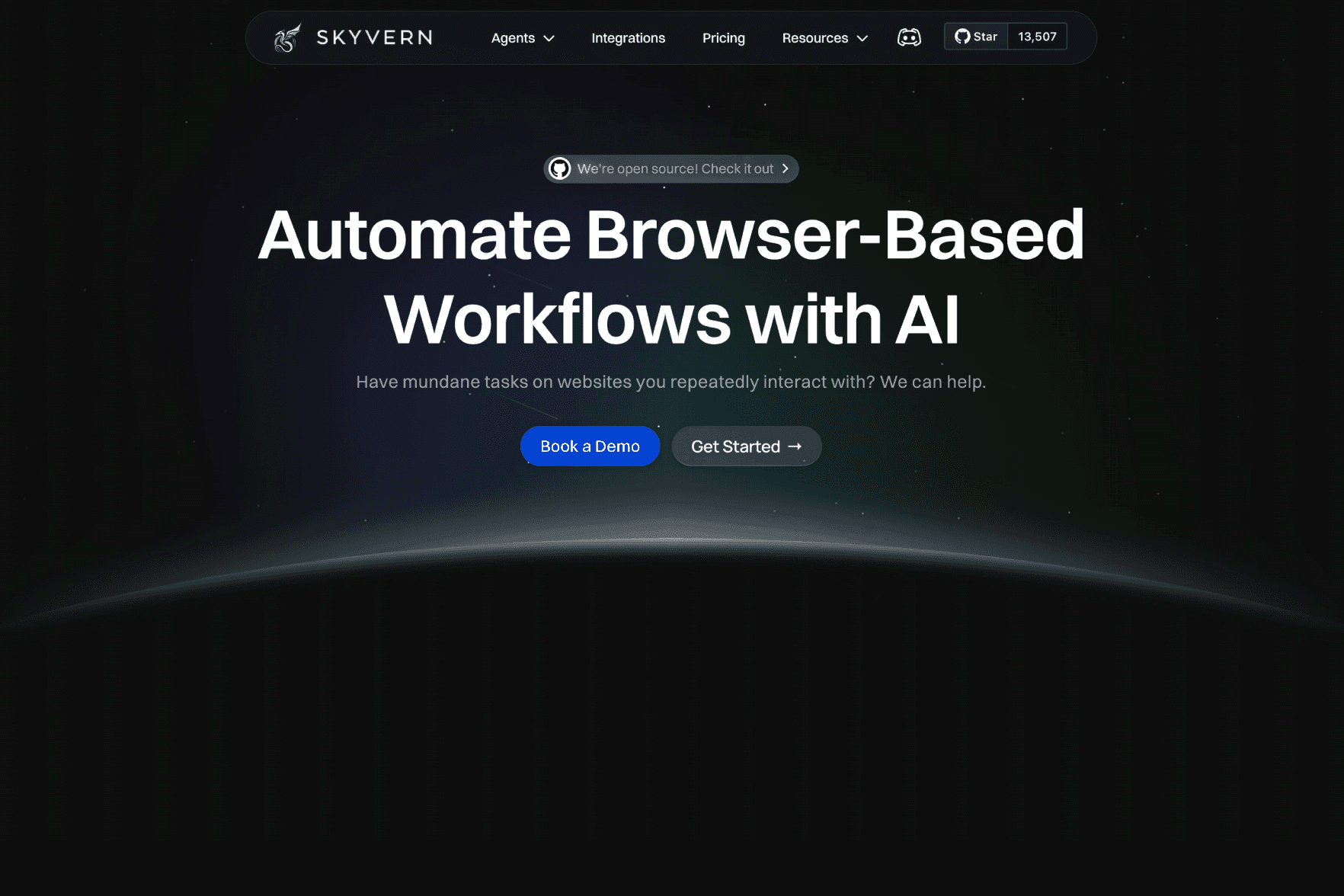
RAG Web Browser
RAG Web Browser starts from a search query: hand it a question and it runs the Google search, opens the top results in a headless browser, and returns each page as clean Markdown for your LLM. Point it at a single URL and it fetches that instead. It clears anti-scraping blocks with proxies and browser fingerprints, plugs into agents over MCP or OpenAPI, and is open source like Crawl4AI itself, so you can read or modify the code.
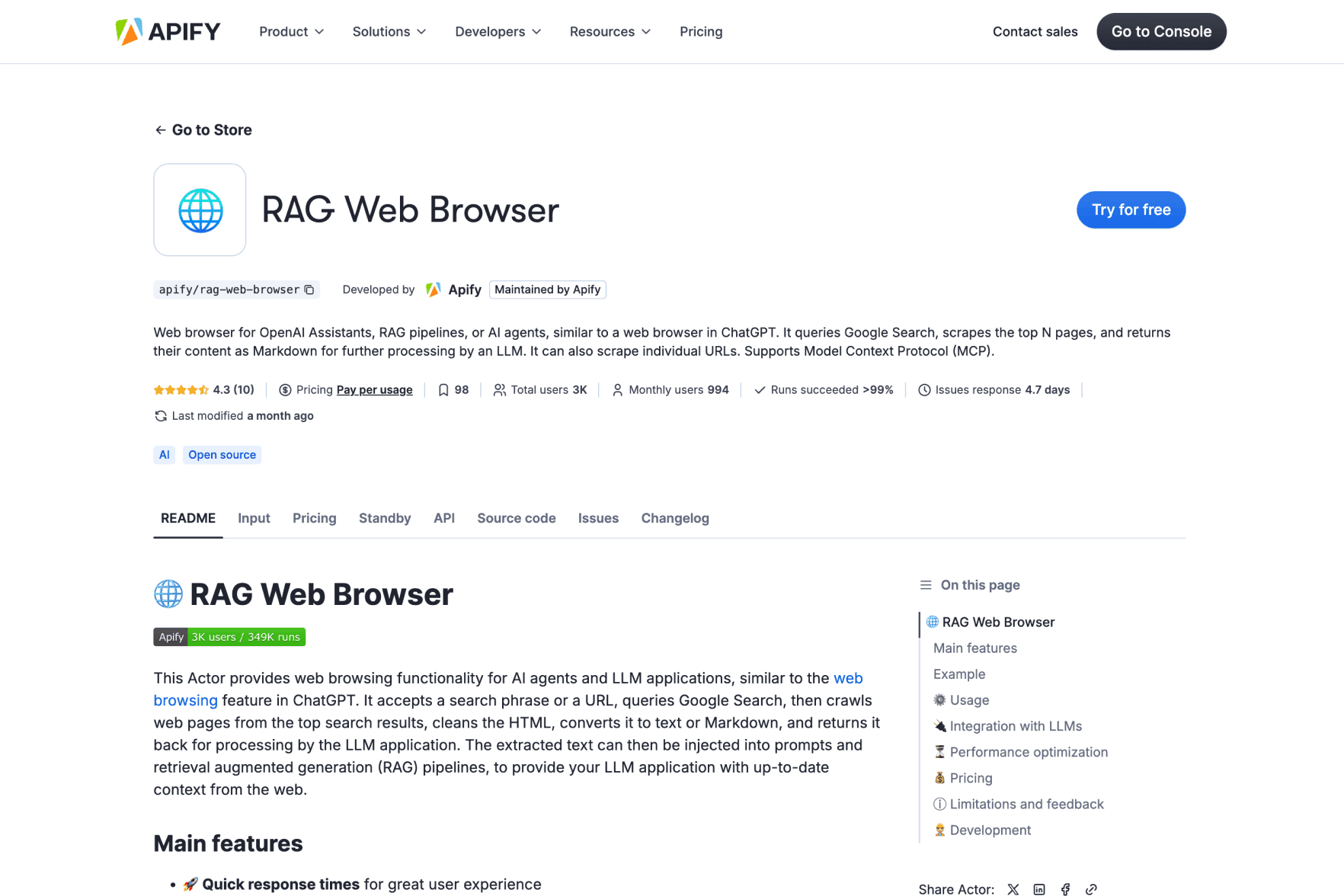
Website Content Crawler
AI optimization
Structured Markdown
JavaScript / anti-bot handling
Headless Firefox
Scalability
Cloud parallelism
Proxy rotation
Built-in
Best for
Production RAG & fine-tuning
AI optimization
JavaScript / anti-bot handling
Scalability
Proxy rotation
Best for
Website Content Crawler
Structured Markdown
Headless Firefox
Cloud parallelism
Built-in
Production RAG & fine-tuning
Firecrawl
Markdown cleaning
Headless browser
Hosted API + self-host core
External setup
Quick Markdown extraction
LLM Scraper
Schema-first JSON
Depends on runtime
Library-level
Schema-driven JSON
GPT-Crawler
Knowledge files
Headless browser
Cloud / self-host
No
Docs→GPT knowledge bases
Scrape GraphAI
Graph-reasoned extraction
Async browser
Async tasks
Yes
Complex flows & pagination
Skyvern
Vision-based actions
Full browser control
Distributed agents
Custom
Login-gated & visual flows
RAG Web Browser
RAG-optimised Markdown
Dynamic content
Apify infra
Yes
Search-first RAG
Your search ends here
Try Website Content Crawler and RAG Web Browser for free in Apify Store.