Web Search API for LLMs & AI Agents: Pages as Markdown
Pricing
Pay per event
Web Search API for LLMs & AI Agents: Pages as Markdown
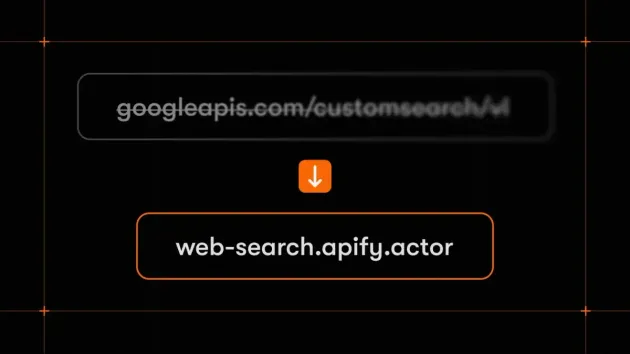
Web search API for LLMs: search queries or URLs in, top pages out as clean markdown for AI agents and RAG, payable per request via x402. Charged per search with results and per page delivered; failed pages are free. Each search also runs an Apify search actor, billed by Apify to your account.
Pricing
Pay per event
Rating
0.0
(0)
Developer

Frameskim Tools
Maintained by CommunityActor stats
0
Bookmarked
2
Total users
1
Monthly active users
4 days ago
Last modified
Categories
Features
Share
Web Search & Page Markdown for AI Agents
Give it a search query or your own URLs and get the top result pages back as clean markdown in one call, for AI agents, RAG pipelines and assistants that read the web. Searches run in an Apify actor and pages come through Apify's datacenter proxies, not your server's IP, so it also works for agents on a cloud server or VPS where search engines block scraping; a page that is still blocked is not charged. Pages keep the search engine's ranking, and agents can pay per request for each run on their own via x402. It is also an MCP server (/mcp) and HTTP API (/page) that returns one page as markdown per call, charged per page, without starting a run in your account; searches still need a run (see Server interface below).
- Search one or many queries and read the top 1 to 10 result pages of each as markdown.
- Turn your own list of URLs into markdown, no search needed.
- Main content only: menus, footers and cookie banners are left out; headings, lists, tables and links stay. Respects robots.txt.
- Payable by AI agents per request (x402): pay-per-event only, limited permissions.
- Charged per search with results and per page delivered; failed, blocked or empty pages are free. Each search also runs Apify's Google Search Results Scraper, billed by Apify to your account.
More: Web Search & Page Markdown on frameskim.dev
What you get
One dataset item per result page or URL:
sourceissearchfor a search result andurlfor a page you listed.rankis the position in the results (1 is the first);queryandrankarenullfor listed URLs.truncatedistruewhen the page passed 3 MB or the markdown passed 200,000 characters and was cut.- A page that could not be delivered has
errorinstead ofmarkdown, with the reason, and is not charged.
Input
| Field | What it does |
|---|---|
queries | Up to 20 queries per run. |
query | One query as plain text, handy for agents; runs first. |
maxResults | Pages to read per query, 1 to 10 (default 5). |
urls | Up to 50 pages to convert without searching. |
Example for the API or an agent: {"query": "markdown table syntax", "maxResults": 3}.
Pricing
This actor bills per event, nothing else (each search also runs an Apify actor that Apify bills apart, see below):
search: one per query that returned results.page: one per page delivered as markdown.
A query that fails or finds nothing, and every page that fails, is blocked by its site or has no readable text, is not charged. A query with at least one result is charged even if none of its pages can be delivered, and what was delivered stays charged if the run later stops or fails. If nothing is delivered, the run still ends as succeeded: each query or page that failed is in the dataset with its error, the status message gives the first reason, and nothing was charged. The run never charges more than the maximum you set; what does not fit comes back as an item that says so. Current prices are on the Pricing tab.
The search itself
Each query runs Apify's Google Search Results Scraper (apify/google-search-scraper) once, on your own Apify account, for one page of results. Apify bills that run to you apart, at that actor's prices (one search-page-scraped event at your plan's rate and one actor start), also when the query finds nothing. The run asks for one page with every paid add-on off (no ads, no AI overview, no AI engines, no HTML snapshots) and caps its time and charge. Apify does not count it in the maximum you set for this run, so this run takes what each search may cost off that maximum before it starts the next query. The search run, its input and its results stay in your account like any other run.
Server interface (HTTP and MCP)
The actor is also a multi-tenant Server Actor: send a request to its server URL (on the Server tab) with your Apify API token in Authorization: Bearer <token> and get one page back at once, without starting a run. You pay only the page event of each page delivered; no run starts in your account.
GET /page?url=<page URL>orPOST /pagewith{"url": "<page URL>"}:200withurl,title,markdownandtruncated. A page that cannot be delivered comes back as422with itserror, and a bad URL as400; neither is charged.POST /mcp: an MCP server (streamable HTTP, stateless) with one tool,web_page_markdown, that takesurl. Add the MCP URL from the Server tab to your agent with your token as the bearer.- Pages are read the same way as in runs (below), with up to 15 seconds per request. If your requests cost far more than the pages they deliver (for example many pages in a row that cannot be read), they get
429for a while. - Searches are not offered on the server interface: run the actor with
queriesfor them. - Requests and pages are not stored: the server writes no dataset, and its log has only the method, route and status of each request, never the URL, the page or who asked.
How pages are read
- Pages are fetched over HTTP with the user agent
FrameskimFetch. JavaScript is not run, so pages that only render in a browser may come back without text (and are not charged). robots.txtis respected forFrameskimFetchand for*, for the page and again on every redirect, with therobots.txtof the host it lands on. If a site'srobots.txtcannot be read because of a server error or timeout, its pages are skipped.- Each page gets 10 seconds, at most 5 redirects and 3 MB.
- Pages go through Apify's datacenter proxy, and a run without it stops instead of connecting directly. Before the page and each redirect, the addresses its host name resolves to are checked and private or local network addresses are refused. The proxy resolves the name again on its side, so through the proxy this check is best-effort, not a guarantee.
Limits
- One results page per query, so at most 10 results per query; results come from the United States edition of Google.
- No crawling: only the result pages and the URLs you list.
- The search interface runs in English; which results come back is up to the search engine.
Site owners
To keep your pages out, disallow FrameskimFetch in your robots.txt. Each run reads a host's robots.txt once, so a run already in progress may not see the change; runs that start after it read the new file. Rights holders and people whose personal data appears in a page can also write to support@frameskim.dev. Neither a robots.txt rule nor a request removes pages from datasets that users already hold.
Terms and privacy
Web Search & Page Markdown for AI Agents is operated by Emttn LLC and is not affiliated with, endorsed by or sponsored by any search engine or by the sites it reads. You need a lawful basis to request, fetch and use each page, and you are responsible for following Google's terms, each site's terms, copyright and privacy law; a public page or a robots.txt allow is not a license to its content. The markdown is an automatic extraction and may be incomplete or inaccurate. Terms: https://frameskim.dev/terms. Privacy: https://frameskim.dev/privacy. Questions: support@frameskim.dev.