

Gbif Species Occurrence Scraper
Pricing
from $2.99 / 1,000 results
Gbif Species Occurrence Scraper
Search species records and observation data worldwide. Export clean datasets including coordinates, dates, and taxonomy as JSON, CSV, or Excel.
Pricing
from $2.99 / 1,000 results
Rating
0.0
(0)
Developer

Kawsar
Maintained by CommunityActor stats
0
Bookmarked
2
Total users
1
Monthly active users
6 days ago
Last modified
Categories
Share
GBIF Scraper: Species & Occurrence Records
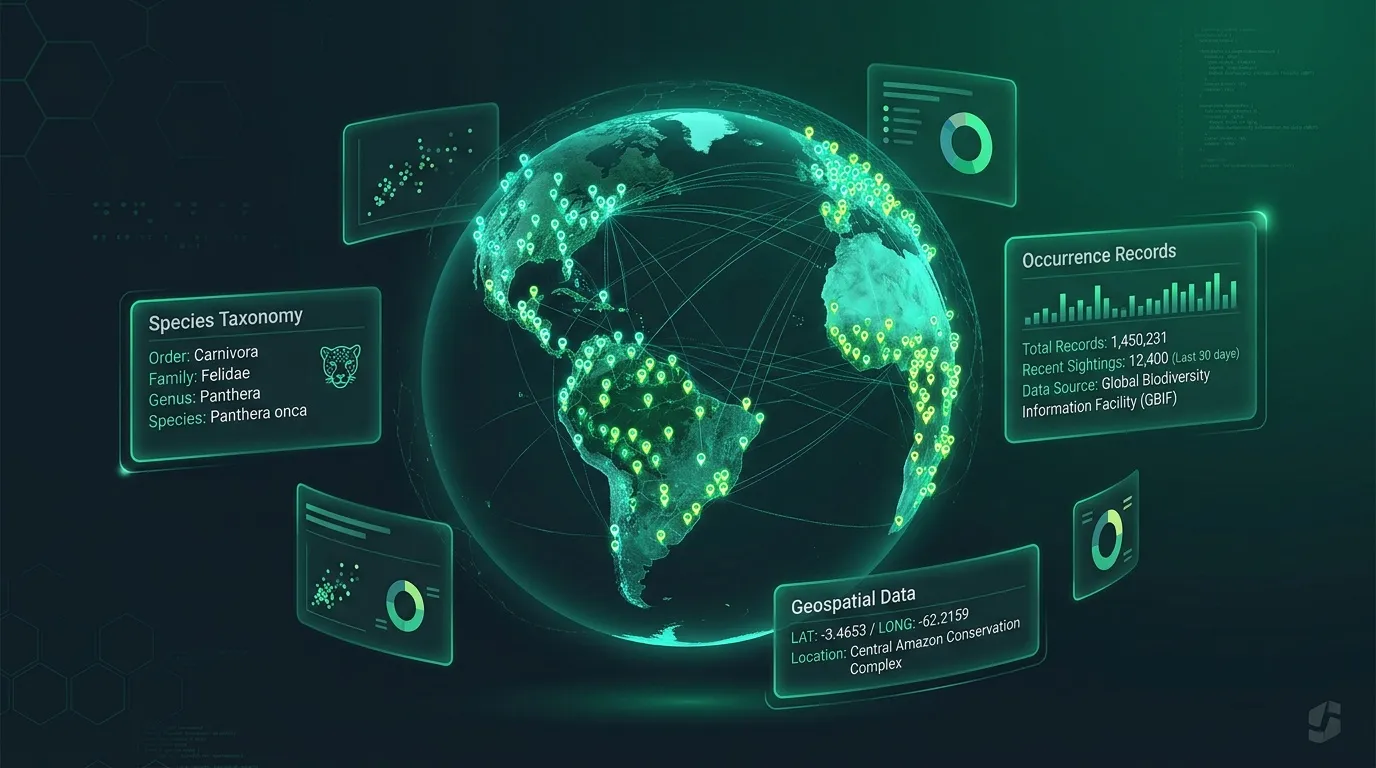
Search and extract taxonomic records and biodiversity observation data directly from global biodiversity registries. Gather detailed taxonomic classifications, geographic coordinates, country codes, event dates, and ecological attributes into structured datasets ready for export as JSON, CSV, or Excel.
Instead of navigating complex database web interfaces, you can collect species checklists and occurrence records in bulk for research, analysis, and mapping projects.
Use Cases
- Taxon lookup: Retrieve species matches and taxonomy data (such as kingdom, phylum, family, and genus) for targeted search terms.
- Occurrence export: Download species observation records complete with precise coordinates, country details, and event dates.
- Country filtering: Restrict occurrence extractions to specific ISO country codes for localized ecological studies.
- Checklist cleanup: Compare taxonomic status, rank, synonyms, and vernacular names across queries.
- Research handoffs: Collect structured biodiversity samples to share with colleagues or incorporate directly into analytical pipelines.
Extracted Data Points
Species Records
- GBIF keys, dataset keys, and parent taxonomic references
- Scientific names, taxonomic ranks, and statuses
- Higher taxonomy classification (kingdom, phylum, class, family, genus)
- Checklist details including habitats, vernacular names, and descriptions
Occurrence Records
- Observation keys and scientific names
- Geographic coordinates (latitude and longitude)
- Country names, ISO codes, and event dates
- Basis of record and publishing dataset metadata
Input Parameters
| Parameter | Type | Default | Description |
|---|---|---|---|
mode | String | species | Operating mode (species to search taxa, occurrences to search observation records). |
query | String | python | Search query (q in species mode, scientificName in occurrences mode). |
country | String | empty | ISO 3166-1 alpha-2 country code (used exclusively in occurrences mode). |
maxItems | Integer | 100 | Maximum number of data rows to save (up to 1,000). |
timeoutSecs | Integer | 300 | Overall execution limit in seconds. |
Example Input
Output Format
Species Output Example
How It Works
- Processes configuration parameters, applying species or occurrence search criteria and country filters.
- Paginates through query results efficiently while automatically skipping duplicate record keys.
- Handles temporary network disruptions using structured retry intervals.
- Records any unresolvable requests as clean error entries without interrupting the overall execution flow.
- Generates export-ready datasets available instantly in JSON, CSV, or Excel formats.
Frequently Asked Questions
Can I filter occurrence records by country?
Yes. Set the country parameter to a valid ISO 3166-1 alpha-2 code when running in occurrences mode.
What happens if a query yields no results?
An empty result set logs a completion note without generating error rows, allowing your workflow to finish cleanly.
Can I export datasets directly to CSV or Excel?
Yes. Completed datasets can be downloaded instantly in JSON, CSV, or Excel formats from your run overview.
Legal & Compliance
Trademark Notice
GBIF Species Occurrence and related names, logos, and trademarks belong to their respective owners. Their mention in this documentation is strictly to identify data compatibility and utility, and does not imply affiliation, sponsorship, or endorsement.
Disclaimer
This tool is an independent utility and is not affiliated with, endorsed by, or officially connected to third-party biodiversity database providers. Users are responsible for ensuring their usage complies with relevant terms of service, attribution requirements, and local regulations.
Is web scraping legal?
This tool collects publicly available biodiversity records without bypassing access controls. Collecting public data is standard practice, but proper compliance requires considering how the data is used:
- Personal data: Ensure dataset usage respects regional privacy regulations (such as GDPR or CCPA) when combining outputs with personal user records.
- Copyright & Terms: Respect the terms of use, usage limits, and licensing terms set by data providers.
- Legal advice: This summary is provided for general informational purposes and does not constitute formal legal counsel.
To learn more, read Apify's guide: Is web scraping legal?


