Australia Visa Processing Time Monitor
Pricing
from $10.00 / 1,000 visa processing-time lookups
Australia Visa Processing Time Monitor
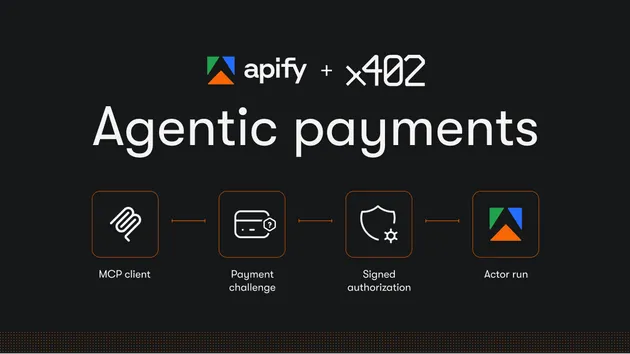
Returns Australia's official visa processing times per subclass and stream from Home Affairs, with monitor alerts when figures change and client-case tracking. Inputs: subclass/stream codes, clients with dates, monitorMode. Agent-ready: pay per event (x402 and MCP); not-found is charged.
Pricing
from $10.00 / 1,000 visa processing-time lookups
Rating
0.0
(0)
Developer

Adam Pearce
Maintained by CommunityActor stats
0
Bookmarked
2
Total users
1
Monthly active users
a month ago
Last modified
Categories
Share
What does Australia Visa Processing Time Monitor do?
Tracking a client through the Australian visa system and can't tell them how much longer to expect? This Actor looks up Australia's own official, published visa processing times (25th, 50th, 75th, and 90th percentile days to a decision) for any visa subclass and stream, straight from the Department of Home Affairs' Global Visa Processing Times data. Point it at one subclass for a quick check, a list for bulk checks across a whole caseload, turn on Monitor mode to get flagged only when Home Affairs actually updates its figures, or feed in your own client list with application dates to get a plain-English read on roughly where each one stands.
Data comes straight from the same JSON API that powers Home Affairs' own Global Visa Processing Times page, no scraping, no HTML parsing, no anti-bot fight. Run it via the Apify Console, the API, or on a schedule, and export results as JSON, CSV, or Excel.
Why use this Actor?
- Migration agents tracking dozens of visa subclasses across a growing client base, who need to answer "how long will mine take?" without manually re-checking a government page for every subclass, every client, every week. Client tracking mode turns your own caseload into a quick-glance table: who's early, who's around the typical wait, and who's past the point where an inquiry might be worth making.
- Immigration lawyers and consultancies who want a standing alert the moment a subclass they've quoted a client on moves faster or slower than expected.
- Applicants and sponsoring employers who want to watch their own subclass's processing time without refreshing a government page by hand.
- HR and mobility teams at companies sponsoring overseas hires, tracking Employer Nomination Scheme and skilled visa timelines across multiple candidates at once.
How to use Australia Visa Processing Time Monitor
- Click Try for free or Run on the Actor page.
- Don't know the exact subclass/stream codes? Turn on
listAvailableVisasand run once, free, to get the full current reference list (100+ pairs). - Enter a single
visaSubclassCode(andstreamCodeif that subclass has one) for a quick lookup, or a list oftargetsfor bulk checks. - To track subclasses over time, turn on
monitorMode, keep the sametargetsandwatchlistId, and schedule the Actor weekly or monthly (Home Affairs republishes roughly monthly, so daily adds no signal). Each run only charges for what actually changed. - Tracking a whole caseload? Fill in
clients, one row per client with their subclass, stream, and application date. You'll get the current percentiles plus a plain-English estimate of where each one likely stands and an expected decision window, worked out purely from the published statistics (see the FAQ on what this is and isn't). - View results in the Console table, or pull them via the API/dataset export.
Input
See the Input tab for the full schema. Key fields:
| Field | Description |
|---|---|
visaSubclassCode | A single subclass code to look up, e.g. 186. |
streamCode | That subclass's stream, if it has one, e.g. 3. Leave blank for subclasses with no stream. |
targets | A list for bulk lookup or Monitor mode, one per line, as subclassCode or subclassCode:streamCode. |
monitorMode | When true, compares against the last run and only reports what changed. |
watchlistId | Keeps separate Monitor mode histories if you run more than one watchlist. |
listAvailableVisas | Free reference lookup: returns every valid subclass/stream pair Home Affairs currently publishes. |
clients | Your own caseload: an array of {clientLabel, visaSubclassCode, streamCode, applicationDate} rows. Ignores every other input when used. |
Output
Each result includes the visa's identity and its full percentile spread. Example (a single record):
You can download the dataset in various formats such as JSON, HTML, CSV, or Excel.
Client tracking mode adds a plain-English estimate on top (a single record, trimmed):
Data table
| Field | What it is |
|---|---|
visaSubclassText, streamText | The visa's full name and stream, as Home Affairs labels it. |
found, notFoundReason | Whether a published figure exists for this pair, and why not if it doesn't. |
percentile25Days … percentile90Days | Days-to-decision at the 25th, 50th, 75th, and 90th percentile of applications processed. |
percentile25Text … percentile90Text | The same figures in Home Affairs' own human-readable form (e.g. "10 Months"). |
maxDays | The longest processing time Home Affairs quotes for this pair. |
processGuideNote | Any current note Home Affairs has attached (e.g. a backlog warning), where present. |
sourceUrl | Direct link to this visa's own page on immi.homeaffairs.gov.au. |
changeDetected, changeSummary | Monitor mode only: whether anything moved since the last check, and what. |
daysSinceApplication | Client tracking only: days between the application date you gave and today. |
estimatedProgressPercent, progressStage | Client tracking only: a statistical read on where the application likely stands, see the FAQ. |
expectedDecisionEarliest, expectedDecisionTypical, expectedDecisionLatest | Client tracking only: application date plus the 25th/50th/90th percentile days. |
Pricing / Cost estimation
Pay-per-event pricing, no subscription. A single lookup or bulk check costs $0.01 per subclass/stream checked, including a pair with no published figure, a confirmed "not found" is still a real, useful result telling you the code is wrong or unpublished. The listAvailableVisas reference lookup is always free. Watching 20 subclasses monthly in Monitor mode (matching how often Home Affairs actually updates these figures) costs roughly $0.04 to $1/month depending on how many actually move that month ($0.002 per no-change confirmation, $0.05 per real change caught). Client tracking costs $0.015 per client row checked, including a row with an invalid date or a not-found subclass, still a real, useful result.
Tips
- Run once with
listAvailableVisason to get the exact current codes before setting up a bulk lookup or a watchlist, subclass/stream pairs occasionally change. - Bulk lookups (
targets) are faster than repeated single-subclass runs, they're all fetched in one Actor run. - For ongoing monitoring, schedule the Actor (Apify's built-in Schedules) monthly rather than daily, Home Affairs republishes these figures roughly monthly, so a tighter schedule mostly just pays for extra no-change confirmations.
- Keep
watchlistIdconsistent across scheduled runs for the same list, changing it starts a fresh watch history.
FAQ
Is this legal? Doesn't this need a login or bypass a CAPTCHA? No login, no CAPTCHA. This Actor calls the same plain JSON endpoint Home Affairs' own public Global Visa Processing Times page uses to populate itself. Home Affairs' content defaults to a Creative Commons Attribution 3.0 Australia licence, with no resale or scraping prohibition found.
Does this track my own personal visa application? No, and this is deliberate. Home Affairs' personal case-status tools require your own logged-in portal access, this Actor only reports the aggregate, published processing-time figures per visa subclass, the same numbers everyone applying for that subclass can already see on the government's own page, just structured and monitorable.
What does "not found" mean here?
Either the subclass/stream code is wrong, or Home Affairs currently publishes no figure for that pair at all (not every subclass appears on the Global Visa Processing Times page). Run with listAvailableVisas on to confirm the exact valid codes.
How current is the data? Home Affairs updates these figures roughly monthly. This Actor always reads the live current figures, it never caches or bundles data of its own.
Is the client-tracking "progress %" and "expected decision" a real case status? No, and this matters: read it carefully before relying on it. Home Affairs doesn't publish a real-time status for any individual application on any endpoint we could find (see "Does this track my own personal visa application?" above), so nothing can tell you the actual state of a specific client's file. What client tracking mode gives you is a statistical estimate: it takes the days since the application date you provided and compares it against the published population percentiles for that subclass. "56% progress" means "168 of a typical 301-day wait have passed," not "this file is 56% processed." Treat it as a rough, honest read on whether a client is running early, typical, or later than most, useful for deciding who to check on, not a confirmed fact about any one file.
If this Actor saved you a manual check, a review on the Actor page helps a lot and helps decide what to build next. Found a bug or have a request, including support for another country's processing-time data? Use the Issues tab, replies are personal, not automated.
Data sourced from the Australian Government Department of Home Affairs' Global Visa Processing Times, licensed under Creative Commons Attribution 3.0 Australia. This Actor is not affiliated with or endorsed by the Department of Home Affairs.