Release notes evidence for AI coding agents
Under maintenancePricing
Pay per usage
Release notes evidence for AI coding agents
Under maintenanceExtract source-linked release-note passages for an AI agent checking a dependency upgrade.
Pricing
Pay per usage
Rating
0.0
(0)
Developer

Abdulrahman Baidaq
Maintained by CommunityActor stats
0
Bookmarked
1
Total users
0
Monthly active users
10 days ago
Last modified
Categories
Share
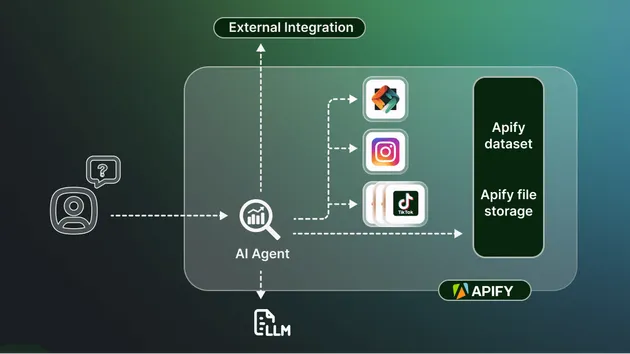
This Actor turns a small, explicit set of official release-note pages into source-linked evidence records. It is designed to be called by an AI coding agent through the Apify MCP server while the agent is checking a dependency upgrade.
Each record includes the source URL, heading path, detected version, exact excerpt, retrieval time, content hash, publication date when available, and warnings. The Actor does not claim that a passage is true merely because it was extracted; the agent still needs to interpret the source and present the link.
What it deliberately does not do
- It is not a general web search engine.
- It does not crawl arbitrary authenticated pages.
- It does not use a vector database or an LLM inside the Actor.
- It does not assign an uncalibrated confidence score.
- It does not replace reading the linked source.
Only use official pages that you are permitted to fetch. Check robots.txt, terms, rate limits, and applicable law. This implementation expects server-rendered HTML; a JavaScript-only release page needs a separate browser-based Actor.
Local tests
Example input
Deploy the Actor, then expose it to an AI client through the official Apify MCP server. The client can discover the input schema, call the Actor, read the dataset output, and use each sourceUrl as the citation target.
The article’s selected client is Codex. Apify documents Codex as a supported MCP client; the live transcript must still be captured by the author after deployment. examples/sample-local-record.json is local output only and is not a substitute for that transcript.