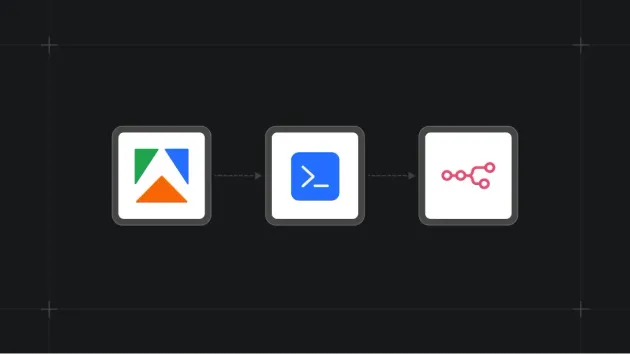
N8n Template Scraper
Pricing
from $3.99 / 1,000 results
N8n Template Scraper
Pricing
from $3.99 / 1,000 results
Rating
0.0
(0)
Developer
ScrapeFlow
Maintained by CommunityActor stats
0
Bookmarked
2
Total users
1
Monthly active users
8 days ago
Last modified
Categories
Share
A powerful Apify Actor that scrapes n8n workflow templates from the official n8n API. This actor supports category filtering, search queries, custom sorting, and intelligent proxy fallback to ensure reliable data collection.
Why Choose Us?
- Intelligent Proxy Management: Automatically falls back from no proxy → datacenter → residential proxy if requests are blocked, with 3 retries on residential proxy
- Category Filtering: Filter templates by category (AI, SecOps, Sales, IT Ops, Marketing, etc.)
- Search Support: Search workflows by keywords in apps, roles, or use cases
- Flexible Sorting: Sort by relevancy, popularity, or most recent in ascending/descending order
- Importable Workflows: Optionally fetch complete importable JSON for each workflow
- Deduplication: Automatically removes duplicate templates
- Concurrent Fetching: Fast parallel page fetching for efficient data collection
- Detailed Logging: Comprehensive logs to track progress and proxy state changes
Key Features
- ✅ Scrape n8n templates from the official API
- ✅ Category-based filtering (11 categories available)
- ✅ Search query support for keyword-based filtering
- ✅ Custom sorting (relevancy, popularity, most_recent) with direction control
- ✅ Automatic proxy fallback (no proxy → datacenter → residential with retries)
- ✅ Fetch importable workflow JSONs to separate datasets
- ✅ Intelligent retry logic with exponential backoff
- ✅ Automatic deduplication
- ✅ Concurrent page fetching for faster results
- ✅ Live data saving to Apify dataset
- ✅ Support for collecting all workflows (maxWorkflows = 0)
Input
JSON Example
Input Fields
-
category (string, optional): Category of workflows to be collected. Options:
"AI"- Artificial Intelligence workflows"SecOps"- Security Operations"Sales"- Sales automation"IT Ops"- IT Operations"Marketing"- Marketing automation"Document Ops"- Document operations"Engineering"- Engineering workflows"DevOps"- DevOps automation"HR"- Human Resources"Other"- Other categories"Support"- Support workflows
Default:
"AI" -
searchQuery (string, optional): Search for workflows by keywords in apps, roles, or use cases. Can be used with or without a category filter.
Default:
"Google" -
sortBy (string, optional): How to sort the workflows. Options:
"relevancy"- Sort by relevance (default)"popularity"- Sort by popularity"most_recent"- Sort by most recent
Default:
"relevancy" -
sortDirection (string, optional): Sort in ascending or descending order. Options:
"asc"- Ascending order"desc"- Descending order (default)
Default:
"desc" -
maxWorkflows (integer, optional): Maximum number of workflows to collect. Set to
0to collect all available workflows.Default:
10Minimum:
0 -
fetchImportableWorkflows (boolean, optional): If enabled, each workflow's importable JSON will be fetched and saved to its own dataset named
workflow-{id}. If disabled, only the list of workflows will be saved.Default:
true -
proxyConfiguration (object, optional): Proxy settings. By default, starts with no proxy (
useApifyProxy: false). The actor will automatically fallback to datacenter proxy, then residential proxy if requests are blocked. If residential proxy fails, it will retry 3 times before giving up.
Proxy Logic
The actor implements intelligent proxy fallback logic:
- Default: Starts with no proxy (direct connection)
- First Fallback: If the platform rejects or blocks the request, automatically falls back to datacenter proxy
- Second Fallback: If datacenter proxy fails, falls back to residential proxy
- Retry Logic: If residential proxy fails, retries 3 times with residential proxy
- Persistence: Once switched to residential proxy, sticks with it for all remaining requests
- Logging: All proxy state changes and retry attempts are clearly logged
All proxy events are logged with clear indicators:
- 🌐 No proxy (direct connection)
- 🔒 Datacenter proxy
- 🔒 Residential proxy
- ⚠️ Request blocked warnings
- 🔄 Fallback and retry attempts
- ✅ Successful proxy switches
Output
Main Dataset: n8n Templates
Each template in the dataset contains:
- id (number): Unique template ID
- name (string): Template name
- description (string): Template description
- totalViews (number): Number of views
- createdAt (string): Creation date (ISO format)
- purchaseUrl (string|null): Purchase URL if available
- user (object): Creator information (id, name, username, bio, verified, links, avatar)
- nodes (array): List of nodes used in the template
- url (string): Direct link to the template on n8n.io
Workflow JSON Datasets (if fetchImportableWorkflows is enabled)
If fetchImportableWorkflows is set to true, each workflow's complete importable JSON will be saved to a separate dataset named workflow-{id}. These datasets contain the full workflow configuration that can be imported directly into n8n.
Example Output
🚀 How to Use the Actor (via Apify Console)
- Log in at https://console.apify.com and go to Actors
- Find your actor (n8n-template-scraper) and click it
- Configure inputs:
- Select a category (optional)
- Enter a search query (optional)
- Choose sort by and sort direction
- Set maximum workflows (0 = collect all)
- Enable/disable fetching importable workflow JSONs
- Configure proxy settings (optional, defaults to no proxy)
- Click Start to run the actor
- Monitor logs in real time to see:
- Progress updates
- Proxy state changes
- Fallback attempts
- Retry attempts
- Access results in the OUTPUT tab
- Export results to JSON or CSV
- If importable workflows were fetched, find them in separate datasets named
workflow-{id}
Best Use Cases
- Market Research: Analyze popular n8n templates by category to understand automation trends
- Template Discovery: Find templates by category or search keywords
- Content Analysis: Study template structures and node usage patterns
- Workflow Import: Collect importable workflow JSONs for direct import into n8n
- Competitive Intelligence: Track template creators and their popular workflows
- Data Collection: Build a comprehensive database of n8n templates
- Category Analysis: Compare templates across different categories (AI, Sales, Marketing, etc.)
Frequently Asked Questions
Q: What happens if requests are blocked?
A: The actor automatically falls back: no proxy → datacenter proxy → residential proxy (with 3 retries). All proxy state changes are logged clearly.
Q: Can I filter by category and search at the same time?
A: Yes! You can use both category and searchQuery together to narrow down results.
Q: What does maxWorkflows = 0 mean?
A: Setting maxWorkflows to 0 will collect all available workflows matching your filters.
Q: What are importable workflow JSONs?
A: These are complete workflow configurations that can be directly imported into n8n. They're saved to separate datasets named workflow-{id}.
Q: How are duplicates handled?
A: Templates are automatically deduplicated based on their unique ID.
Q: How long does it take to fetch templates?
A: It depends on the number of templates and whether importable JSONs are fetched. Typically, 100 templates take 30-60 seconds, 1000 templates take 2-5 minutes.
Q: Can I use custom proxy?
A: Yes, you can configure a custom proxy in the proxyConfiguration object with customProxy containing hostname, port, username, and password.
Support and Feedback
For issues, questions, or feature requests, please contact us at dev.scraperengine@gmail.com.
Cautions
- Data is collected only from publicly available sources on the n8n API
- The actor respects rate limits and implements retry logic
- The end user is responsible for ensuring legal compliance with data usage
- Make sure you have sufficient Apify credits for large-scale scraping operations
- Fetching importable workflow JSONs increases execution time and API calls