Anything To Skill
Pricing
Pay per usage
Anything To Skill
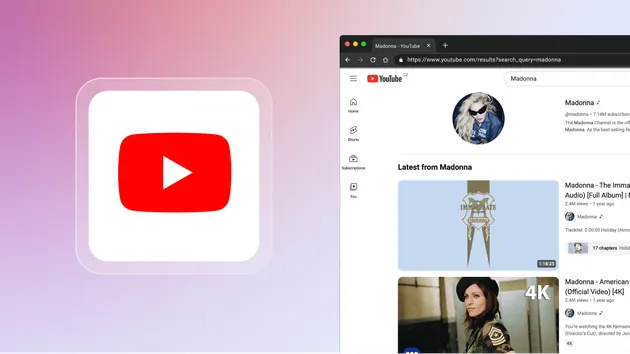
Transform YouTube videos and websites into AI agent skills that actually work.
Pricing
Pay per usage
Rating
0.0
(0)
Developer

Yann Feunteun
Maintained by CommunityActor stats
0
Bookmarked
1
Total users
0
Monthly active users
6 months ago
Last modified
Categories
Share
Anything to AI Skill Generator
Transform YouTube videos and websites into AI agent skills that actually work.
The Problem
The web contains millions of programming tutorials, but this knowledge is:
- Inaccessible to AI assistants — AI agents cannot watch videos or efficiently parse long pages
- Time-consuming to extract — A 10-minute video takes 10 minutes to watch; long docs take ages to read
- Often outdated — APIs change, libraries deprecate, best practices evolve
- Not actionable — Narrative format ("so what we're gonna do...") ≠ executable instructions
The Solution
This Actor uses a Claude agent with the extract-text skill to:
- Extract content from YouTube videos, playlists, or websites
- Identify technologies, frameworks, and libraries mentioned
- Verify against current documentation using RAG (Context7)
- Transform content into actionable instructions
- Generate a ready-to-use SKILL.md file
Input
| Field | Type | Required | Description |
|---|---|---|---|
urls | array | Yes | YouTube video/playlist URLs, website URLs, or any mix |
skillName | string | No | Name for the skill (auto-generated if not provided) |
prompt | string | No | Custom instructions (e.g., "Focus on deployment", "Beginner-friendly") |
anthropicApiKey | string | Yes | Your Anthropic API key |
context7ApiKey | string | Yes | Your Context7 API key for RAG verification |
verifyTechnologies | boolean | No | Check technologies against current docs (default: true) |
proxyConfiguration | object | No | Proxy settings for URL access |
maxRetries | integer | No | Max validation retries (default: 2, max: 5) |
Output
The Actor outputs:
- Dataset: JSON with skill metadata and content
- Key-Value Store: The generated
SKILL.mdfile (and a.zippackage for multi-file skills)
Dataset Schema
Example Usage
Single Video
Playlist with Custom Instructions
Multiple Sources (YouTube + Website)
How It Works
Skill Structure Decision
The agent automatically decides whether to generate a single file or multi-file skill based on content complexity:
Decision Criteria
| Criterion | Single File | Multi-File |
|---|---|---|
| Content length | Short / straightforward | Long / multiple topics |
| Code examples | 1-2 small snippets | Complete runnable scripts |
| Theory vs practice | Mostly practical | Heavy theory + practice |
| Estimated word count | < 2000 words | > 3000 words |
| Multiple workflows | No | Yes (different use cases) |
Multi-File Structure (Progressive Disclosure)
Following Anthropic's skill best practices:
Why this matters:
- SKILL.md is always loaded (~tokens cost)
- references/ only loaded when Claude needs them (saves tokens)
- scripts/ can be executed without loading into context
- assets/ copied to output, never loaded
Technology Verification
The agent uses Context7 RAG to verify that technologies mentioned in the content are still current:
- Checks library versions against latest documentation
- Identifies deprecated APIs or changed patterns
- Updates code examples to current best practices
Content Transformation
Video narration is transformed into actionable instructions:
| Video Content | Skill Content |
|---|---|
| "So basically what we're doing..." | (removed) |
| "You want to run this command..." | bash command |
| "The important thing here is..." | Prerequisites section |
| "If you get this error..." | Troubleshooting section |
Requirements
- Anthropic API Key: Get one at console.anthropic.com
- Context7 API Key: Get one at context7.com
Limitations
- YouTube videos without subtitles fall back to the video description
- English-focused (translation may reduce accuracy)
- Context7 coverage varies by library
Validation and Retries
If the generated skill fails validation, the Actor retries with the validation errors
included in the prompt (up to 2 retries). This helps the model self-correct and
produce a usable skill package. tools_used reports only the final attempt,
while tools_used_history includes tools from all attempts.
License
MIT