**Claude AI Web Automation**
Under maintenancePricing
from $0.65 / actor start
**Claude AI Web Automation**
Under maintenanceA real browser with Anthropic's Claude models to navigate any website and extract structured data — no CSS selectors or page-specific scraping code required.
Pricing
from $0.65 / actor start
Rating
0.0
(0)
Developer

Tin
Maintained by CommunityActor stats
0
Bookmarked
30
Total users
1
Monthly active users
20 hours ago
Last modified
Categories
Share
Claude AI Web Automation
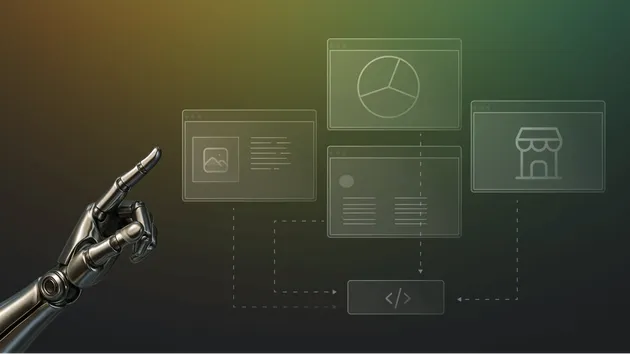
Claude AI Web Automation is an Apify Actor that drives a real browser with Anthropic's Claude models to navigate any website and extract structured data — no CSS selectors or page-specific scraping code required. Give it a starting URL and a plain-English instruction (e.g. "Open Sporting Goods > Golf, sort by newly listed, and scrape the first 5 listings") and the agent handles the search, navigation, pagination, and detail-page extraction for you.
Try it directly from the Input tab — fill in a target site and a prompt, hit Start, and the dataset will fill up with clean JSON. Run it on the Apify platform to take advantage of API access, scheduling, integrations (Zapier, Make, Slack), automatic proxy rotation, and run monitoring.
What does Claude AI Web Automation do?
The Actor combines four AI building blocks into a single end-to-end web scraper:
- Intent parsing — Claude reads your prompt and decides what action to perform, what fields to extract, and how many items you want.
- Browser automation — A Stagehand agent powered by Claude takes screenshots, clicks, types, and scrolls until it reaches the search results.
- Selector inference — Claude inspects the DOM of the results page and derives CSS selectors for every listing and the next-page link.
- Structured extraction — Each detail page is opened and Claude pulls the fields you asked for into a Zod-validated record.
Everything runs serverless on the Apify platform — no local infrastructure required.
Why use Claude AI Web Automation?
- No selectors, no glue code. Describe the task in English and the agent figures out the rest.
- Works across sites. The same Actor scrapes eBay, Etsy, news portals, real-estate listings, or any other public site.
- Resilient defaults. Residential proxy rotation, infinite-scroll handling, cross-page deduplication, and hard timeouts are all built in.
- Cheap models, big results. Uses
claude-haiku-4-5for parsing/selector derivation, keeping per-run costs low. - Structured output. Each record is a typed JSON object you can pipe into a sheet, database, or downstream Actor.
How to use Claude AI Web Automation
- Open the Actor page on Apify Console and click Try for free.
- In the Input tab, paste a starting URL (e.g.
https://www.ebay.com). - Write your prompt in plain English — what to navigate to and what to scrape.
- (Optional) Set
maxItemsto control how many detail records you want, andmaxStepsto bound the agent's reasoning loop. - (Optional) Provide explicit
selectorsand auniqueKeyPatternto skip the LLM selector-inference step on sites you already know. - Click Start and watch the run log. When it finishes, switch to the Output tab or call the dataset API.
Input
| Field | Type | Required | Description |
|---|---|---|---|
prompt | string | ✅ | What to do on the site and what to extract. Include a count if you want (e.g. "the first 10 results"). |
startUrl | string | ✅ | The URL the browser opens before the agent runs. |
maxItems | integer | — | Hard cap on detail records. Overrides any count parsed from the prompt. Default: 5. |
maxSteps | integer | — | Max reasoning steps for the pre-crawl agent. Default: 10. |
selectors | object | — | Optional listingLink and nextPage CSS selectors. If omitted, Claude derives them. |
uniqueKeyPattern | string | — | Optional regex with one capture group for deduping listings (e.g. /itm/(\d{9,}) for eBay). |
countryCode | string | — | Two-letter ISO code for residential proxy geolocation. Default: US. |
loginCookies | array | — | Cookies to inject before navigation, for authenticated scraping. Accepts Cookie-Editor / EditThisCookie exports or raw Playwright cookie objects. |
Example input
Output
Each detail page produces one JSON record in the default dataset. The fields are derived from your prompt — if you ask for "title, price, and shipping cost", you get exactly those plus the source URL.
You can download the dataset in JSON, CSV, Excel, HTML, XML, or RSS formats from the Storage tab or via the Apify API.
Data fields
| Field | Type | Description |
|---|---|---|
url | string | Canonical URL of the detail page. |
| (prompt-defined fields) | string / number / boolean | Whatever you asked the agent to extract. Currency-like fields (price, shipping, fee) are always returned as strings to preserve symbols and free-form text such as "Free shipping". |
Cost estimation
The Actor charges only the standard Apify platform costs (compute units + residential proxy traffic) plus a small Anthropic API spend. A typical run that scrapes 5 detail records on a clean site:
- Compute: ~0.02–0.05 CU (a few cents on a paid plan).
- Proxy traffic: a few MB of residential bandwidth.
- Anthropic tokens: roughly $0.01–$0.03 per run with
claude-haiku-4-5.
Apify's free tier covers many runs per month. Use maxItems and maxSteps to bound costs on slow or anti-bot-protected sites.
Tips and advanced options
- Be specific in the prompt. "Extract the title, price in USD, and number of reviews" beats "Extract product info".
- Pre-supply selectors for sites you scrape often — it skips an LLM call and makes runs faster and more deterministic.
- Bump
maxStepsfor multi-page flows (search → filter → sort → results often needs 8–12 steps). - Lower
maxStepsto fail fast when debugging a new site. - Pin a
countryCodethat matches the target site's primary market — pricing, currency, and availability often depend on geo. - Anti-bot pages. Some sites (eBay, Amazon, Cloudflare-protected portals) occasionally serve CAPTCHAs to residential proxies. Retry the run or switch country code if you see a challenge page in the logs.
- Authenticated scraping. Sign in to the target site in your normal browser, export the cookies with the Cookie-Editor extension, and paste the JSON array into
loginCookies. The Actor runs at concurrency 1 so the session is reused across all requests and is less likely to be flagged.
FAQ and support
Is web scraping legal? Scraping publicly available data is generally legal, but you must respect each site's Terms of Service and robots.txt and avoid extracting personal data without a lawful basis. You are responsible for how you use the output.
What model does it use? claude-haiku-4-5 for prompt parsing, selector derivation, and the Stagehand browser agent. You can change the model by editing src/main.js.
Can I run it on my laptop? Yes — clone the repo, run npm install, set ANTHROPIC_API_KEY in .env, and run apify run. Local runs use a local browser (no Apify proxy unless you pass credentials).
Where do I report issues? Use the Issues tab on the Actor page. For custom scraping projects, contact dtrungtin@gmail.com.
Related Actors
- OpenAI Web Scraper —
dtrungtin/openai-web-scraper