Advanced Social Media Agent avatar

Advanced Social Media Agent

Pricing

from $0.05 / 1,000 results

Go to Apify Store
Advanced Social Media Agent

Advanced Social Media Agent

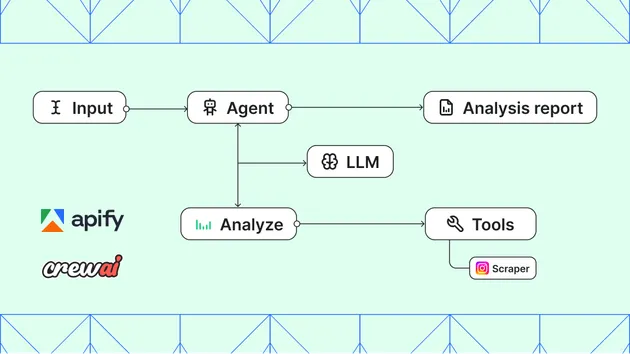
A production-grade AI agent built on cutting-edge research patterns for intelligent social media analysis on the Apify platform.

Pricing

from $0.05 / 1,000 results

Rating

0.0

(0)

Developer

Cody Churchwell

Cody Churchwell

Maintained by Community

Actor stats

0

Bookmarked

3

Total users

0

Monthly active users

a year ago

Last modified

Share

Advanced Social Media Analysis Agent

A production-grade AI agent built on cutting-edge research patterns for intelligent social media analysis on the Apify platform.

Architecture Overview

This agent implements state-of-the-art AI agent patterns based on research papers and production best practices:

Core Patterns Implemented

  1. ReAct (Reasoning + Acting) - Paper

    • Interleaves chain-of-thought reasoning with tool-using actions
    • Thought -> Action -> Observation cycle
    • 34% improvement over imitation learning on ALFWorld
  2. Reflexion (Self-Improvement) - Paper

    • Verbal reinforcement learning through self-reflection
    • Episodic memory for storing lessons learned
    • 91% pass@1 on HumanEval (vs GPT-4's 80%)
  3. 12-Factor Agents - GitHub

    • Production principles from 100+ SaaS builders
    • Small, focused agents (3-20 steps max)
    • Own your control flow
    • Compact errors into context for self-healing
  4. Multi-Tier Memory System

    • Working Memory: Current conversation context
    • Episodic Memory: Task-specific learnings
    • Semantic Memory: General knowledge
    • Procedural Memory: How to perform tasks
  5. Human-in-the-Loop

    • Approval gates for high-risk actions
    • Interrupt/resume capabilities
    • Confidence-based escalation

Features

  • Intelligent Reasoning: ReAct pattern for transparent decision-making
  • Self-Improvement: Reflexion pattern learns from each execution
  • Advanced Memory: Multi-tier memory system for context retention
  • Human-in-the-Loop: Approval gates for sensitive operations
  • Full Observability: Distributed tracing, metrics, cost tracking
  • Error Recovery: Self-healing with exponential backoff
  • Cost Control: Budget limits and usage tracking
  • Multiple Modes: Autonomous, Supervised, Interactive, Research

Project Structure

agent-actor/
β”œβ”€β”€ .actor/
β”‚ β”œβ”€β”€ actor.json # Actor configuration
β”‚ β”œβ”€β”€ input_schema.json # Input schema with UI
β”‚ β”œβ”€β”€ dataset_schema.json # Output schema
β”‚ β”œβ”€β”€ pay_per_event.json # Monetization config
β”‚ └── Dockerfile # Container setup
β”œβ”€β”€ src/
β”‚ β”œβ”€β”€ main.py # Entry point
β”‚ β”œβ”€β”€ core/
β”‚ β”‚ β”œβ”€β”€ agent.py # Main agent orchestrator
β”‚ β”‚ β”œβ”€β”€ state.py # State management
β”‚ β”‚ └── control_flow.py # Flow control engine
β”‚ β”œβ”€β”€ patterns/
β”‚ β”‚ β”œβ”€β”€ react.py # ReAct implementation
β”‚ β”‚ └── reflection.py # Reflexion implementation
β”‚ β”œβ”€β”€ memory/
β”‚ β”‚ └── memory_system.py # Multi-tier memory
β”‚ β”œβ”€β”€ tools/
β”‚ β”‚ β”œβ”€β”€ instagram.py # Instagram scraper tool
β”‚ β”‚ └── analysis.py # Analysis tools
β”‚ └── observability/
β”‚ └── tracing.py # Tracing & metrics
└── requirements.txt

Usage

Basic Usage

from src.core.agent import AgentBuilder, AgentMode
# Build the agent
agent = (AgentBuilder()
.with_name("SocialMediaAnalyzer")
.with_mode(AgentMode.SUPERVISED)
.with_memory()
.with_reflection()
.with_budget(1.0) # $1 USD limit
.with_tools(instagram_tools)
.with_tools(analysis_tools)
.build(llm_client))
# Run a task
result = await agent.run(
task="Analyze the last 10 posts from @openai and summarize AI trends"
)
print(f"Success: {result.success}")
print(f"Response: {result.output}")
print(f"Cost: ${result.cost_usd:.4f}")

Input Configuration

ParameterDescriptionDefault
queryThe task for the agentRequired
modelNameLLM model to usegpt-4o
modeOperating modesupervised
maxStepsMaximum reasoning steps20
budgetLimitCost limit in USDNone
enableMemoryEnable memory systemtrue
enableReflectionEnable self-reflectiontrue

Agent Modes

  • Autonomous: Full autonomy within defined constraints
  • Supervised: Requires approval for important/risky actions
  • Interactive: Step-by-step execution with human guidance
  • Research: Read-only mode, no side effects

Architecture Deep Dive

State Management (Factor 5 & 12)

# State is the single source of truth
# Agent is a pure function: (state, event) => new_state
class AgentState:
events: List[AgentEvent] # Append-only event log
reasoning_chain: List[Step] # ReAct reasoning trace
conversation: ConversationCtx # Short-term context
reflections: List[Reflection] # Self-improvement learnings

Control Flow (Factor 8)

# Own your control flow - deterministic routing
async def handle_next_step(thread):
next_step = await determine_next_step(thread)
if next_step.intent == 'request_clarification':
# INTERRUPT: Break loop, wait for human
await send_message_to_human(next_step)
break
elif next_step.intent == 'fetch_data':
# SYNC: Execute and continue
result = await fetch_data(next_step)
thread.events.append(result)
continue
elif next_step.intent == 'deploy':
# HIGH-RISK: Request approval
await request_human_approval(next_step)
break

Error Recovery (Factor 9)

consecutive_errors = 0
while True:
try:
result = await handle_step(thread, step)
consecutive_errors = 0 # Reset on success
except Exception as e:
consecutive_errors += 1
if consecutive_errors < 3:
# Self-healing: add error to context for LLM
thread.events.append({"type": "error", "data": format_error(e)})
continue
else:
# Escalate to human after threshold
await escalate_to_human()
break

Memory System

β”Œβ”€β”€β”€β”€β”€β”€β”€β”€β”€β”€β”€β”€β”€β”€β”€β”€β”€β”€β”€β”€β”€β”€β”€β”€β”€β”€β”€β”€β”€β”€β”€β”€β”€β”€β”€β”€β”€β”€β”€β”€β”€β”€β”€β”€β”€β”€β”€β”€β”€β”€β”€β”€β”€β”€β”€β”€β”€β”
β”‚ Memory System β”‚
β”œβ”€β”€β”€β”€β”€β”€β”€β”€β”€β”€β”€β”€β”€β”€β”€β”€β”€β”€β”€β”€β”€β”€β”€β”€β”€β”€β”€β”€β”€β”€β”€β”€β”€β”€β”€β”€β”€β”€β”€β”€β”€β”€β”€β”€β”€β”€β”€β”€β”€β”€β”€β”€β”€β”€β”€β”€β”€β”€
β”‚ Working Memory (Short-term) β”‚
β”‚ β”œβ”€β”€ Current goal β”‚
β”‚ β”œβ”€β”€ Active plan β”‚
β”‚ β”œβ”€β”€ Recent events (20 items) β”‚
β”‚ └── Entity tracking β”‚
β”œβ”€β”€β”€β”€β”€β”€β”€β”€β”€β”€β”€β”€β”€β”€β”€β”€β”€β”€β”€β”€β”€β”€β”€β”€β”€β”€β”€β”€β”€β”€β”€β”€β”€β”€β”€β”€β”€β”€β”€β”€β”€β”€β”€β”€β”€β”€β”€β”€β”€β”€β”€β”€β”€β”€β”€β”€β”€β”€
β”‚ Episodic Memory (Medium-term) β”‚
β”‚ β”œβ”€β”€ Past task experiences β”‚
β”‚ β”œβ”€β”€ Success/failure patterns β”‚
β”‚ └── Specific event memories β”‚
β”œβ”€β”€β”€β”€β”€β”€β”€β”€β”€β”€β”€β”€β”€β”€β”€β”€β”€β”€β”€β”€β”€β”€β”€β”€β”€β”€β”€β”€β”€β”€β”€β”€β”€β”€β”€β”€β”€β”€β”€β”€β”€β”€β”€β”€β”€β”€β”€β”€β”€β”€β”€β”€β”€β”€β”€β”€β”€β”€
β”‚ Semantic Memory (Long-term) β”‚
β”‚ β”œβ”€β”€ General knowledge/facts β”‚
β”‚ β”œβ”€β”€ Consolidated learnings β”‚
β”‚ └── Entity relationships β”‚
β”œβ”€β”€β”€β”€β”€β”€β”€β”€β”€β”€β”€β”€β”€β”€β”€β”€β”€β”€β”€β”€β”€β”€β”€β”€β”€β”€β”€β”€β”€β”€β”€β”€β”€β”€β”€β”€β”€β”€β”€β”€β”€β”€β”€β”€β”€β”€β”€β”€β”€β”€β”€β”€β”€β”€β”€β”€β”€β”€
β”‚ Procedural Memory β”‚
β”‚ β”œβ”€β”€ How to perform tasks β”‚
β”‚ β”œβ”€β”€ Tool usage patterns β”‚
β”‚ └── Strategy templates β”‚
β””β”€β”€β”€β”€β”€β”€β”€β”€β”€β”€β”€β”€β”€β”€β”€β”€β”€β”€β”€β”€β”€β”€β”€β”€β”€β”€β”€β”€β”€β”€β”€β”€β”€β”€β”€β”€β”€β”€β”€β”€β”€β”€β”€β”€β”€β”€β”€β”€β”€β”€β”€β”€β”€β”€β”€β”€β”€β”˜

Observability

The agent includes comprehensive observability:

  • Distributed Tracing: Track every step with span hierarchy
  • Metrics Collection: Counters, gauges, histograms, timers
  • Cost Tracking: Per-model, per-operation cost breakdown
  • Structured Logging: JSON logs for aggregation
# Get execution summary
summary = agent.get_observability_summary()
# Returns:
{
"trace": {
"total_spans": 15,
"total_duration_ms": 12500,
"total_tokens": 8432,
"total_cost_usd": 0.0847
},
"metrics": {
"tool_calls_success": 5,
"tool_calls_error": 1
},
"costs": {
"cost_by_model": {"gpt-4o": 0.0847},
"cost_by_operation": {"generate": 0.0647, "analyze": 0.02}
}
}

Best Practices (from 12-Factor Agents)

  1. Small, Focused Agents: 3-20 steps max per agent
  2. Own Your Context Window: Custom formats for efficiency
  3. Tools Are Structured Outputs: Function calling IS structured output
  4. Contact Humans with Tools: Human interaction as first-class tool
  5. Compact Errors: Self-healing with formatted error context
  6. Stateless Reducer: Agent = pure function (state, event) => state

References

Development

# Install dependencies
pip install -r requirements.txt
# Run locally
apify run
# Deploy to Apify
apify push

License

MIT License