
Knowledgebase TOC Builder
Pricing
from $4.90 / 1,000 page auditeds
Knowledgebase TOC Builder
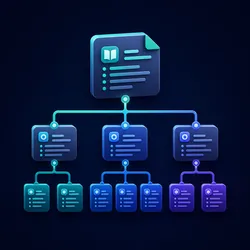
Build a structured table of contents from knowledge base pages, crawled article inventories, headings, breadcrumbs, categories, sections, and article URLs.

Store Positioning
Store title: Knowledgebase TOC Builder
Short description: Build a structured table of contents from knowledge base pages, crawled article inventories, headings, breadcrumbs, categories, sections, and article URLs.
SEO title: Knowledgebase TOC Builder — technical SEO, web, and domain audit
SEO description: Build a structured table of contents from knowledge base pages, crawled article inventories, headings, breadcrumbs, categories, sections, and article URLs. Use it to find crawlability, indexability, security, metadata, and page-quality issues with evidence-backed rows and audit reports.
Categories: SEO_TOOLS
Keywords: knowledgebase, toc, builder, structured data, web/domain audit
Pay-Per-Event Pricing
This actor uses pay-per-event pricing. Event prices include Apify platform usage; users are not expected to pay a separate platform-usage pass-through charge for the configured pricing model.
- Tier: W1 — Web/domain audit
- Primary event:
page-auditedat $0.00490 base - Default max charge: $10.00
- Store discounts: FREE/BRONZE base, SILVER discounted, GOLD deepest approved discount
Event set:
actor-start: base $0.00500, GOLD $0.00400. Knowledgebase Toc Builder: charged when actor start is completed. The price includes Apify platform usage; no separate usage pass-through is intended.page-audited: base $0.00490, GOLD $0.00392. Knowledgebase Toc Builder: charged when page audited is completed. The price includes Apify platform usage; no separate usage pass-through is intended.record-extracted: base $0.00372, GOLD $0.00298. Knowledgebase Toc Builder: charged when record extracted is completed. The price includes Apify platform usage; no separate usage pass-through is intended.finding-emitted: base $0.00372, GOLD $0.00298. Knowledgebase Toc Builder: charged when finding emitted is completed. The price includes Apify platform usage; no separate usage pass-through is intended.audit-report-generated: base $0.05000, GOLD $0.04000. Knowledgebase Toc Builder: charged when audit report generated is completed. The price includes Apify platform usage; no separate usage pass-through is intended.
The actor accepts actor-start before work, accepts the primary event before each dataset row, and accepts the configured report event before writing report files. If maxChargeUsd or the live PPE limit blocks a charge, the corresponding row or report is not written.
Public Task Concepts
- Build a Knowledgebase TOC stakeholder brief from source rows
- Prioritize Knowledgebase TOC findings with evidence and confidence
- Summarize Knowledgebase TOC metrics into recommended actions
- Prepare a Knowledgebase TOC source table with uncertainty notes
- Export Knowledgebase TOC decision rows for review
Build a structured table of contents from knowledge base pages, crawled article inventories, headings, breadcrumbs, categories, sections, and article URLs.
What it does
- Accept article URLs, sitemap rows, crawler output JSON/CSV, raw HTML, or structured article lists.
- Extract headings, anchors, breadcrumbs, category hints, section hints, URL paths, and article titles.
- Build a hierarchical TOC with parent/child nodes, sort order, depth, slug/anchor references, and confidence scores.
- Detect orphan pages, duplicate titles, missing headings, shallow articles, and inconsistent hierarchy.
- Generate Markdown, JSON, and CSV TOC outputs.
What it does not do
- No article rewriting, content generation, private portal crawling unless content is supplied, or editorial decision-making without review.
- No guarantee inferred hierarchy matches official information architecture.
Input fields
Primary inputs from the locked actor spec: articleUrls, articleRows, rawHtmlInputs, sitemapUrls, titleSelectors, headingSelectors, breadcrumbSelectors, tocMode, maxDepth, inferHierarchyFromUrls, includeHeadingAnchors, detectOrphans, timeoutMs. maxChargeUsd keeps runs capped during production use.
Output fields
Dataset rows include: nodeId, parentNodeId, sourceUrl, nodeType, nodeTitle, nodeSlug, depth, orderIndex, headingText, headingLevel, anchor, breadcrumbPath, inferredCategory, confidence, warning.
Starter example
Use examples/input.tiny.json as a small starter input. Keep the first run capped and review the dataset before increasing limits.
Public task examples
- Run Knowledgebase TOC Builder on supplied sample data: Run Knowledgebase TOC Builder on supplied sample data using a small bounded input.
- Generate a Knowledgebase TOC Builder QA report: Generate a Knowledgebase TOC Builder QA report using a small bounded input.
- Find invalid rows with Knowledgebase TOC Builder: Find invalid rows with Knowledgebase TOC Builder using a small bounded input.
- Create a capped local endpoint readiness check for Knowledgebase TOC Builder: Create a capped local endpoint readiness check for Knowledgebase TOC Builder using a small bounded input.
- Prepare Knowledgebase TOC Builder output for downstream automation: Prepare Knowledgebase TOC Builder output for downstream automation using a small bounded input.
Public source provenance
The starter input builds a bounded table of contents from the public GitHub Docs article at https://docs.github.com/en/get-started/start-your-journey/about-github-and-git.
Reports
knowledgebase-toc.mdknowledgebase-toc.jsonknowledgebase-toc.csvtoc-gap-report.jsonorphan-article-report.csv
Limitations and safe use
Start with supplied-input runs, then enable live endpoints only with tight caps, domain allowlists, and no secrets in public examples.


