

Patent Evidence Normalizer
Pricing
from $4.25 / 1,000 authorized patent evidence records
Patent Evidence Normalizer
Normalize buyer-owned, rights-holder-authorized, PatentsView CC BY 4.0, or licensed patent exports into provenance-linked evidence rows with stable identity, freshness, confidence gaps, review priority, and current-run settlement. No source fetch, login, legal conclusion, or automated decision.
Pricing
from $4.25 / 1,000 authorized patent evidence records
Rating
5.0
(1)
Developer

Tim Zinin
Maintained by CommunityActor stats
0
Bookmarked
9
Total users
0
Monthly active users
24 days ago
Last modified
Categories
Share
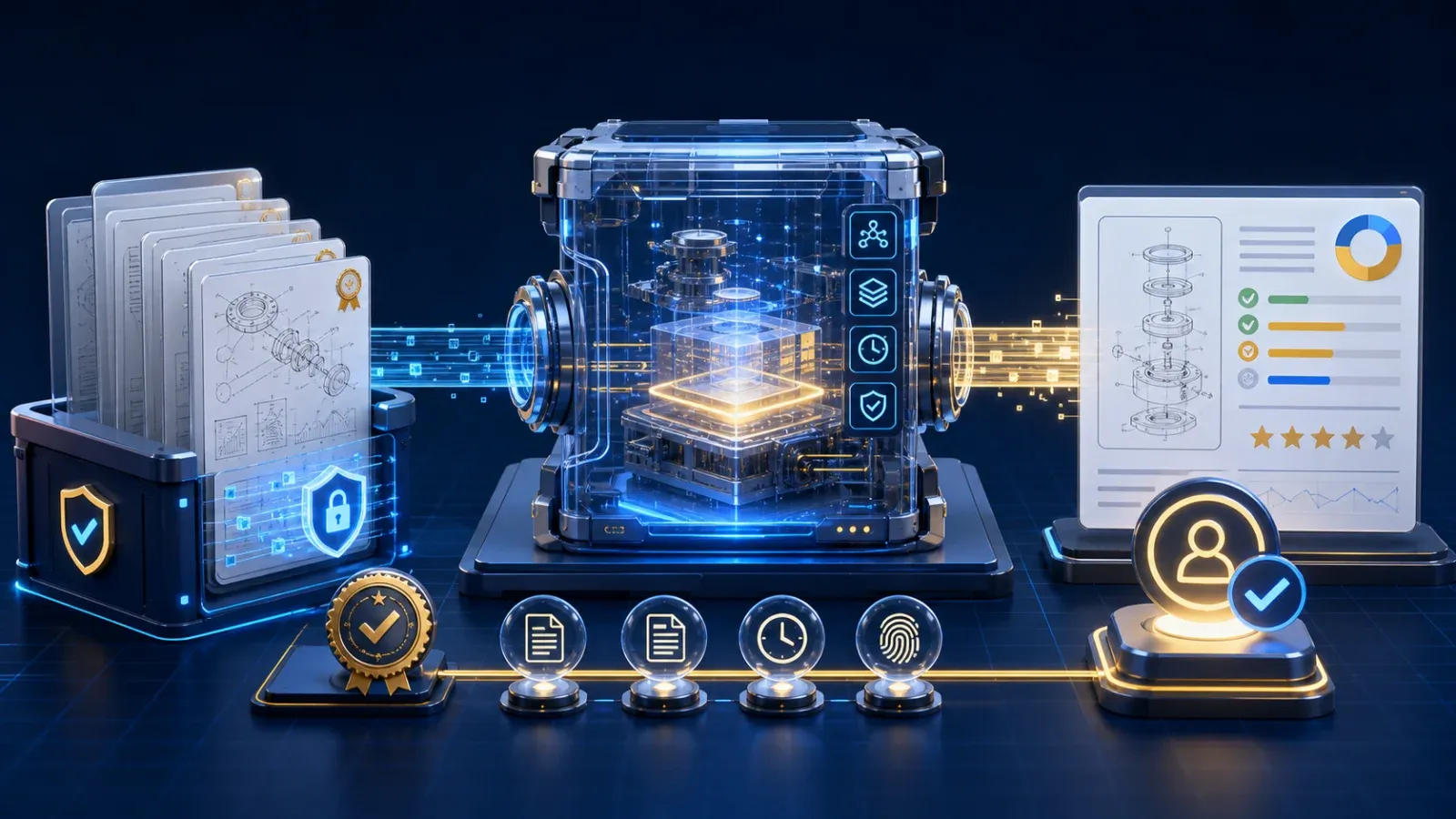
Turn patent records you are authorized to use into stable, provenance-linked evidence rows for research queues, portfolio reviews, competitive-intelligence workflows, and data-quality operations.
This Actor does not scrape Google Patents, does not call PatentsView, does not log in to a patent office, and does not make legal conclusions. You supply a buyer-owned, rights-holder-authorized, PatentsView CC BY 4.0, or otherwise licensed export. The Actor validates the records, suppresses duplicates before billing, preserves attribution and change disclosures, adds freshness and evidence limitations, and writes a current-run settlement receipt to OUTPUT.
What you get
For every eligible supplied patent record, the Actor delivers one normalized Dataset row with:
- the legacy product fields:
sourceQuery,found,matched,patentId,title,patentDate,assignee,abstractSnippet,url,summary, andcheckedAt; - a stable
entityIdand deterministicstableIdfor downstream joins; - the buyer-declared source context and supplied jurisdiction/status;
- the recorded source name, source URL, licence statement, retrieval time, and description of transformations;
- freshness derived only from the supplied retrieval timestamp and the threshold you set;
- evidence confidence with an explicit basis and gap list;
- an evidence-only decision boundary, priority, and human-review action;
safeToAutomate:falsebecause a normalized record is not a legal conclusion;- settlement-neutral Dataset billing metadata; and
- a canonical row digest.
The run also writes a current-run KVS record named OUTPUT. It reconciles requested, unique, duplicate, invalid, attempted, successful, failed, delivered, paid, free, withheld, unknown-delivery, unknown-settlement, partial, budget-stop, fatal-error, and replay-safety state.
Who uses it
Competitive-intelligence analysts
Normalize exports from an approved patent-data source before joining them with product, company, technology, or market datasets. Preserve the source and licence boundary next to every row so downstream users can see what was and was not verified.
Patent operations teams
Create a clean intake layer for a review queue. The Actor can reject malformed records, suppress duplicate (sourceName, patentId) pairs before billing, and attach a stable identity and recommended human-review step.
Product and R&D teams
Convert a permitted search export into a consistent technical-reading list. Use the output to route candidate documents to subject-matter experts. Do not use the confidence score as a legal-risk score.
Data engineering teams
Use the closed input and Dataset contracts as a boundary between upstream exports and downstream warehouses. The request, input, row, and run receipts provide deterministic reconciliation without copying an API secret into Dataset or OUTPUT.
Agencies and research vendors
Process records only when the buyer has a documented right to provide and commercially use them. The Actor records the buyer-declared rights context but does not independently validate the agreement.
What it does not give you
- No Google Patents XHR access.
- No live PatentsView API call.
- No patent-office login or browser automation.
- No article, claim, family, citation, prosecution-history, legal-status, assignment, or maintenance-fee verification.
- No novelty, validity, infringement, enforceability, ownership, inventorship, or freedom-to-operate opinion.
- No guarantee that an assignee string identifies the current owner.
- No guarantee that a supplied date or status is current.
- No guarantee that a recorded HTTPS URL is reachable, official, safe, or unchanged; URLs are recorded but never fetched.
- No hidden enrichment, LLM inference, identity lookup, or external matching.
- No monitoring baseline between runs. Each run is a supplied-export snapshot.
- No permission to use a source. The buyer remains responsible for source access, licence, attribution, privacy, and purpose.
How the workflow works
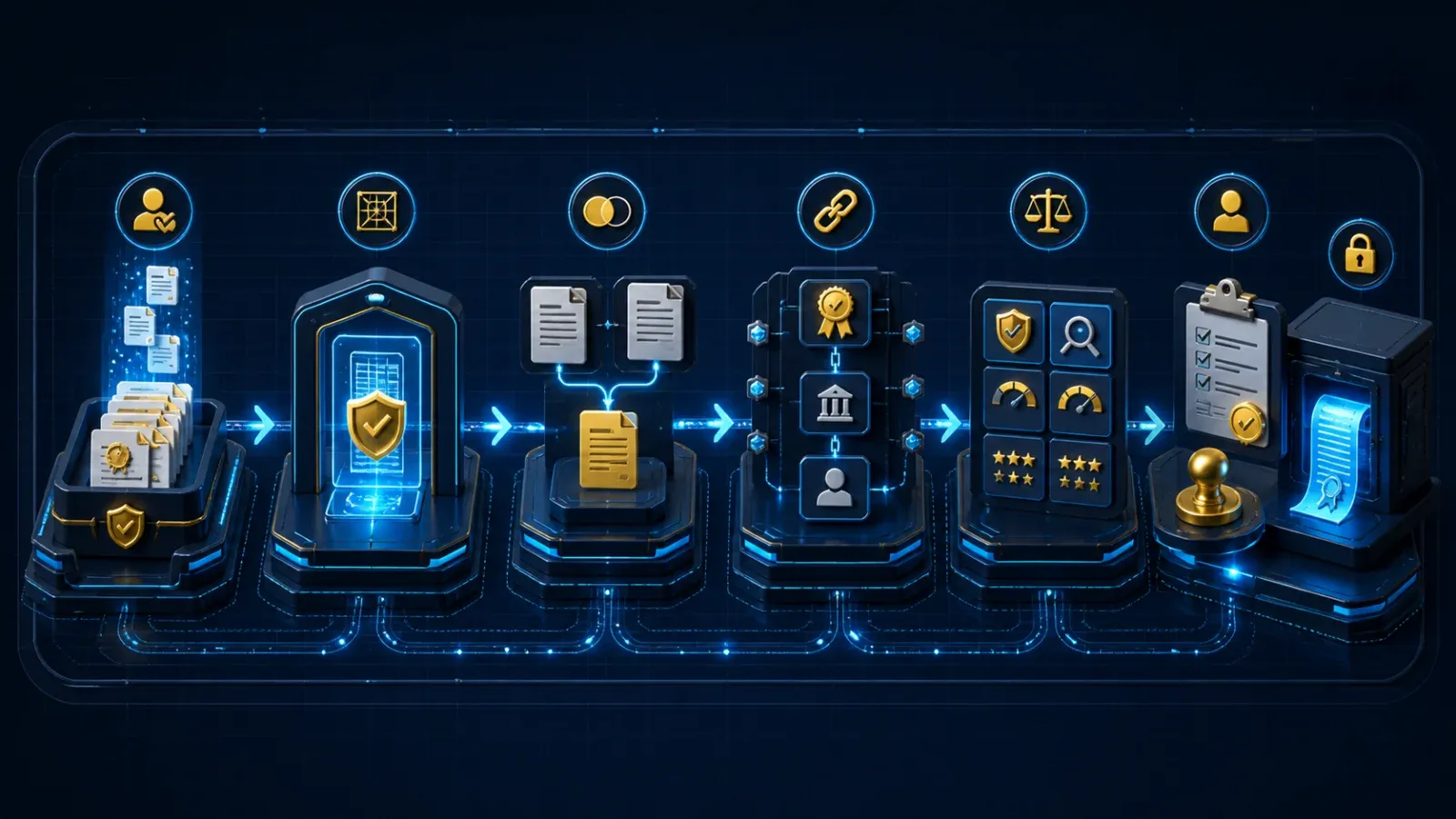
- Submit an authorized export. Provide 1–100 records and confirm that you may process and commercially use them.
- Validate the closed contract. The Actor rejects unknown fields, control characters, impossible dates, credentialed URLs, non-HTTPS URLs, malformed identifiers, unsupported source contexts, and records missing attribution.
- Suppress duplicates. Records with the same case-insensitive
(sourceName, patentId)identity are delivered at most once per run. A free diagnostic reports duplicate suppression. - Build evidence rows. Legacy fields are preserved. Provenance, licence, freshness, confidence gaps, actionability, and settlement-neutral billing intent are added.
- Check the buyer's run cap. The run validates the exact PAY_PER_EVENT map and verifies that another result fits before each paid push.
- Deliver and settle atomically. One linked Dataset push uses the named event
result-found. The Actor checks the named counter before and after and requires an exact+1delta plus the SDK aggregate receipt. - Write
OUTPUT. The final KVS receipt binds the current run, Dataset URL, work counts, delivery counts, event counters, partial/failure state, and replay boundary. - Review the evidence. Open the recorded source and route material questions to qualified patent counsel or an authorized patent professional.
How to run
Use the Input tab or submit JSON through the Apify API.
The example is a contract fixture, not a claim that the identifier or company represents a current real-world patent. Replace every supplied field with data from your authorized export.
Input contract
The runtime accepts exactly one of two modes.
Mode A: authorized patent records
This is the public product path.
| Field | Required | Contract |
|---|---|---|
schemaVersion | No | When supplied, exactly 2.0. |
authorization | Yes | Exact confirmation string shown in the schema. It records buyer intent; it is not independent licence verification. |
sourceContext | Yes | One of four closed rights contexts. |
watchName | No | 1–80 nonblank characters; defaults to patent-evidence-review. |
freshnessDays | No | Integer 1–3650; defaults to 30. |
patents | Yes | Array of 1–100 closed patent record objects. |
Accepted sourceContext values:
buyer_owned_patent_exportrights_holder_authorized_exportpatentsview_cc_by_4_exportother_licensed_patent_export
The source context is a declaration. Keep the underlying contract, licence, export receipt, or permission outside this Dataset according to your own records policy.
Patent record fields
| Field | Required | Maximum | Meaning |
|---|---|---|---|
sourceQuery | No | 200 | Buyer-supplied query or batch label. |
patentId | Yes | 100 | Stable source identifier using letters, digits, ., _, /, or -. |
title | Yes | 500 | Supplied title. |
patentDate | No | ISO date | Calendar-valid YYYY-MM-DD; semantics depend on the source. |
assignee | No | 300 | Supplied assignee string, not independently verified current ownership. |
abstractSnippet | No | 1,000 | Supplied excerpt. Do not include unnecessary personal or confidential data. |
url | No | 2,000 | Recorded HTTPS patent URL; never fetched. Credentials, ports, and fragments are rejected. |
jurisdiction | No | 40 | Supplied jurisdiction label. |
recordStatus | No | enum | granted, published, application, or unknown. Defaults to unknown. |
sourceName | Yes | 200 | Human-readable source/export name. |
sourceUrl | Yes | 2,000 | Recorded HTTPS source documentation or export origin. Never fetched. |
sourceLicense | Yes | 700 | Rights or licence statement that applies to the supplied record. |
changesMade | Yes | 500 | Your transformation disclosure: selection, normalization, truncation, joining, or other changes. |
sourceRetrievedAt | No | ISO time | Buyer-supplied retrieval timestamp used only for freshness. |
Mode B: legacy queries
Older integrations may continue to send:
The fields remain accepted so an existing integration receives a structured response instead of an opaque schema rejection. The Actor no longer sends those queries to Google Patents or PatentsView. It writes one free migration diagnostic that explains how to submit an authorized export.
If patentsviewApiKey is still supplied, Apify stores it in the run's secret INPUT because that is how Actor inputs work. This Actor does not read, transmit, log, or copy the key into Dataset or OUTPUT. Remove the legacy key from Tasks and integrations after migrating.
Do not mix patents and queries in one run.
Pricing
This Actor uses PAY_PER_EVENT pricing. The automatic Actor-start event is separate from delivered patent evidence.
The paid unit is:
one normalized patent evidence record successfully delivered to the Dataset with a confirmed
result-foundsettlement
Current six-tier event prices expected by the runtime:
| Tier | Actor start | One delivered patent evidence record |
|---|---|---|
| FREE | $0.00500 | $0.00500 |
| BRONZE | $0.00475 | $0.00475 |
| SILVER | $0.00450 | $0.00450 |
| GOLD | $0.00425 | $0.00425 |
| PLATINUM | $0.00410 | $0.00410 |
| DIAMOND | $0.00400 | $0.00400 |
The Actor fails closed if the platform pricing map contains extra events, omits either required event, or differs from an approved tier. The default Dataset event must not be priced separately.
No result-found event is intentionally emitted for:
- legacy-query migration diagnostics;
- rejected records;
- duplicate records suppressed before delivery;
- records withheld before a push because the run charge cap cannot cover another unit;
- pre-push counter failures;
- input, identity, pricing, or KVS failures.
A linked push can have an outcome that cannot be safely classified after an SDK or platform failure. In that case OUTPUT records unknown_delivery, settlement_unknown, or settlement_anomaly, marks the run failed and replaySafe:false after a push attempt, and forbids blind retry. It does not falsely promise that the outcome was free.
Cost examples
At the FREE tier, a run that confirms two delivered records costs the automatic $0.005 start event plus 2 × $0.005 result events, before any separate platform compute or storage charges shown by Apify. At the DIAMOND tier, the same event arithmetic is $0.004 + 2 × $0.004. These are event-price examples, not a forecast of your total bill or usage.
Use maxTotalChargeUsd on the run to create a hard buyer-controlled cap. The Actor checks the current spent amount and next result price before every paid row. A final linked push may report that the charge limit is reached while still confirming that final row; OUTPUT distinguishes a confirmed final row from remaining withheld work.
Happy, partial, and failure output
Happy-path Dataset row
The full canonical row ships as examples/dataset-item.json. Dataset billing fields describe intent; current-run OUTPUT proves settlement. The release workflow binds each accepted artifact with wrappers like these; the wrapper keys are release evidence, not Dataset fields:
Partial and free diagnostic output
Free diagnostic rows have recordType:"patent_evidence_advisory", found:false, matched:0, null patent fields, confidence.score:0, and billing.billingEligible:false. They are delivered through an ordinary Dataset write without a named result event.
Three free diagnostic classes are currently reachable:
failureType | Why it appears | Recommended response |
|---|---|---|
legacy_queries | The request used the old search-query contract. | Export records from an authorized source and submit them through patents. |
invalid_patent_records | One or more supplied records failed the closed normalizer. | Correct only the rejected records; valid unique records may still be processed. |
duplicate_patent_records | Multiple records resolved to the same case-insensitive (sourceName, patentId) identity. | Inspect upstream deduplication if the duplicates were unexpected. |
Example excerpt:
When a batch includes diagnostics and paid results, the terminal status is PARTIAL. That does not mean a confirmed paid row is untrustworthy. It means the run also contains non-result, withheld, or failed work that must be considered during reconciliation.
Failure output
Failures before Dataset delivery are written to the current run's OUTPUT whenever the default KVS is available. Examples include:
run_identity_unavailabledataset_identity_unavailableinput_not_objectunknown_input_propertyauthorization_not_confirmedsource_context_requiredpatent_count_invalidpricing_misconfiguredpre_push_failedfree_diagnostic_write_failedoutput_write_failedexit_failed
Post-push failure classes require special handling:
unknown_delivery
The linked pushData call threw. The Actor cannot prove whether the platform stored or charged the row. The run stops. replaySafe is false. Do not retry automatically.
settlement_unknown
The linked push returned, but the named counter or aggregate settlement evidence could not be read or validated. A positive bounded SDK aggregate proves that the Dataset callback completed, but named-event settlement remains unknown. The run stops and requires manual reconciliation.
settlement_anomaly
The returned Dataset/counter/aggregate facts contradict the allowed settlement lattice. The run stops. Do not reinterpret the row as paid or free from the Dataset metadata alone.
Failure truth lives in both the platform run status and the terminal receipt. If both primary and bounded recovery KVS writes fail, the platform failure status is the remaining authority. Never infer success from the absence of OUTPUT.
Current-run OUTPUT receipt
The terminal KVS record has these top-level fields:
| Field | Meaning |
|---|---|
schemaVersion | Receipt contract version 2.0.0. |
kind | Closed product identifier authorized_patent_evidence_output. |
status | COMPLETE, PARTIAL, or FAILED. |
runId | Current hosted Actor run identity. A missing identity fails before Dataset delivery. |
requestDigest | Digest of the normalized request without a raw legacy key or raw legacy query strings. |
watchName | Buyer-provided batch label. |
input | Requested, unique, duplicate, invalid, and legacy query counts. |
run | Work, delivery, settlement, partial, budget, fatal, and replay counters. |
delivery | Named event, before/after counters, exact confirmed delta, Dataset writes, and last attempt. |
source | Zero-network mode and buyer-declared source context. |
errors | Bounded code/message diagnostics. |
resultsUrl | Current run's default Dataset API URL. |
startedAt, completedAt | UTC run timestamps. |
terminal | KVS write and exit outcome. |
input counters
requestedCount: modern patent records received.uniqueCount: valid unique modern patent records eligible for work.duplicateCount: valid modern records suppressed by(sourceName, patentId).invalidCount: modern records rejected by normalization.legacyQueryCount: old query values received. Their raw strings are not copied into the receipt.
For modern input:
Legacy queries are kept in a separate counter because they do not represent patent result work.
run counters
attemptedCount: unique patent rows whose paid-delivery operation began.successfulCount: rows with a confirmed named result settlement.failedCount: attempted rows without confirmed success.deliveredRowCount: confirmed Dataset writes, including free diagnostics and a known Dataset write with unresolved named settlement.paidRowCount: exact confirmed named result events.freeRowCount: confirmed free diagnostic Dataset writes.withheldRowCount: unique normalized patent rows that were definitely not attempted/delivered.unknownDeliveryCount: linked operations for which Dataset delivery itself is unknown.unknownSettlementCount: known or potentially known Dataset delivery with unresolved settlement.normalizedPatentCount: confirmed paid normalized patent records.partial: true when diagnostics, withheld work, failed work, unknown state, budget stop, or fatal error exists.budgetStopped: true when the buyer's cap prevents more work or a confirmed final row exhausts the event limit.fatalError: terminal failure code or null.replaySafe: true only while no Dataset push attempt can create duplicate delivery. A new normal run can still incur a new automatic start event.safeToAutomate: always false for substantive patent decisions.
delivery fields
eventName: exactlyresult-found.attemptedPushCount: all Dataset push attempts, including free diagnostics.resultChargeCountBefore: named event counter before result work.resultChargeCountAfter: last known named event counter.confirmedEventDelta: sum of exact named+1settlements.confirmedDatasetWrites: known Dataset writes.lastAttempt: closed settlement facts for the most recent Dataset operation.
For a successful one-row canary, status is COMPLETE; requested, unique, attempted,
successful, delivered, paid, and normalized counts are all 1; free, withheld,
unknown, and failed counts are 0; and the named counter moves exactly 0 → 1.
The receipt also binds the current run/Dataset, records networkRequestsMade:0, and
sets replaySafe:false because a new run can deliver and charge the row again.
Field dictionary
Legacy compatibility fields
| Field | Exact meaning |
|---|---|
sourceQuery | Optional supplied grouping label; never executed. |
found | True for a structurally accepted record, not an independently found patent. |
matched | 1 for an evidence row and 0 for a free advisory; not a source total. |
patentId, title | Supplied identifier/title after closed validation; existence and status are unverified. |
patentDate | Calendar-valid supplied date whose legal meaning remains source-defined. |
assignee | Supplied text, not proof of current ownership. |
abstractSnippet | Optional supplied excerpt, capped at 1,000 characters; transformations belong in changesMade. |
url | Recorded HTTPS reference without credentials, port, or fragment; never fetched or endorsed. |
summary | Deterministic review summary, not legal analysis. |
checkedAt | Actor processing time, not publication or source-retrieval time. |
Identity fields
| Field | Exact meaning |
|---|---|
stableId | Deterministic hash of lowercased sourceName + patentId; useful for joins, not a family identifier. |
entityId | Supplied patentId for evidence rows; null for diagnostics. |
rowDigest | SHA-256 of the closed row before the digest field; integrity signal, not source-authenticity proof. |
Evidence and decision fields
| Field | Exact meaning |
|---|---|
sourceContext | Buyer-declared closed rights context; the underlying agreement is not verified. |
jurisdiction, recordStatus | Supplied labels, never inferred or checked against a live register. |
decision | review_required for evidence or no_eligible_result for diagnostics; always human-reviewed. |
freshness | Age of the supplied retrieval timestamp against freshnessDays, not legal currency of the patent. |
change | Always not_measured; v2.0 stores no cross-run baseline. |
confidence | Mechanical evidence completeness and gaps, never legal, technical, market, or investment confidence. |
evidence | Source name/URL/licence/change disclosure, retrieval time, digests, and zero-network fact. |
recommendedAction, priority | Human routing derived from evidence/freshness, not patent value or legal risk. |
failureDiagnostics | Null for evidence; closed reason/stage/retry detail for a free advisory. |
billing | Pre-settlement eligibility/intent; current-run OUTPUT is authoritative for settlement. |
Evidence and boundaries
The Actor can establish these mechanical facts:
- the request passed the closed runtime validator;
- unknown fields and malformed values were rejected;
- duplicates were removed with the documented identity key;
- the Dataset row includes the recorded licence and transformation statements;
- the record digest matches the canonical delivered row;
- the runtime made zero external network requests;
- the current-run result counter changed exactly as recorded when settlement is confirmed.
The Actor cannot establish:
- that the buyer had authority to export or submit the data;
- that the source licence statement is correct or applies to every field;
- that the patent office record exists or is current;
- that a named assignee currently owns any right;
- that a document is relevant to a product or technology;
- that a claim is valid, infringed, enforceable, essential, licensed, expired, abandoned, or in force;
- that a portfolio is complete;
- that an omitted record is absent from an authoritative source;
- that a source URL is safe or official;
- that a confidence score supports automated action.
safeToAutomate:false is therefore a contract invariant, not a conservative suggestion.
Sources and rights
Buyer-owned or authorized exports
Use buyer_owned_patent_export or rights_holder_authorized_export only when you have a documented right to process and commercially use the supplied records. A website being public or technically accessible is not itself a redistribution licence.
PatentsView exports
PatentsView documentation identifies the PatentSearch data/API licence as CC BY 4.0. A buyer using patentsview_cc_by_4_export must preserve appropriate credit, a licence reference, and an indication of changes. That is why sourceName, sourceUrl, sourceLicense, and changesMade are required.
Relevant source documentation:
PatentsView research data is not a substitute for an official patent-office record or professional legal research. API availability, keys, limits, data coverage, and licence terms can change; verify them when obtaining the export.
Recorded patent links
The optional url field can point to an authorized source page. The Actor records but never fetches it. A Google Patents URL in a buyer-supplied record does not cause a Google request and does not grant permission to scrape or redistribute Google content.
Other licensed sources
Use other_licensed_patent_export only when the source agreement permits the intended downstream processing and delivery. Put a concise rights statement in sourceLicense and describe transformations in changesMade. Keep the full agreement in your own records rather than copying confidential contract text into public Dataset rows.
Privacy and responsible use
Patent records can contain inventor, applicant, assignee, representative, address, or other person-linked data. Even public-record information can remain personal data when it identifies or profiles a person.
Before running:
- confirm a lawful purpose and your role under applicable privacy law;
- submit only fields needed for that purpose;
- avoid home addresses, personal contact details, signatures, sensitive inferences, and confidential annotations;
- do not use the Actor to deanonymize, harass, profile, score, or target inventors;
- do not use a supplied assignee or inventor string as an employment, credit, insurance, housing, eligibility, or reputation decision;
- set Dataset/KVS retention and deletion policies appropriate to your organization;
- restrict access to runs and exports;
- document correction, objection, and deletion handling where required;
- review downstream joins that can turn an otherwise ordinary record into sensitive profiling.
The Actor does not intentionally log a legacy API key or copy it to results. However, Apify stores Actor input in the run KVS. Do not submit patentsviewApiKey; remove it from legacy Tasks. Rotate any secret that was exposed outside a secret input field.
Decision routing
Route 1: recent, complete evidence row
Use when freshness.status is fresh, provenance fields are complete, and gaps are limited to the universal no-verification/no-legal-analysis boundary.
Action: open the source, confirm the document identity and relevant passages, then add it to a human research queue.
Route 2: stale or timestamp-unknown evidence row
Use when freshness.status is stale or unknown.
Action: refresh the export from the authorized source before relying on status, assignee, or timing.
Route 3: incomplete content
Use when abstractSnippet, patentDate, assignee, jurisdiction, or url is null.
Action: decide whether those fields are necessary. Do not fill them with guesses. Obtain a better authorized export if required.
Route 4: duplicate diagnostic
Action: compare upstream records. If two rows represent different publications or jurisdictions, give them distinct source identifiers. Do not defeat deduplication by adding random suffixes.
Route 5: legacy migration diagnostic
Action: replace queries and any stored key with an authorized export. Keep the old Task only long enough to migrate consumers.
Route 6: unknown delivery or settlement
Action: stop automation. Reconcile the current run ID, Dataset, KVS OUTPUT, platform charged events, and logs. Do not submit the same input again until you know whether the prior operation landed and charged.
Commercial playbooks
Portfolio intake normalization
- Obtain a permitted export from the portfolio system or licensed source.
- Map its identifier, title, date, assignee, excerpt, status, and provenance fields to the v2.0 input.
- Use a stable
watchNamefor the intake batch. - Run with a cap that covers the expected unique record count plus the automatic start event.
- Reconcile
requestedCount,uniqueCount,duplicateCount, andinvalidCountbefore importing results. - Send
review_requiredrows to the portfolio team; do not treat the Actor's priority as a legal priority.
Competitive landscape reading list
- Perform the search in a source your organization is authorized to use.
- Export only the records and excerpts required for the research purpose.
- Record the exact source name, source URL, licence, retrieval time, and transformations.
- Normalize the export with this Actor.
- Group downstream by buyer-declared technology labels, not by invented semantic classifications from this Actor.
- Ask a subject-matter expert to review the actual documents.
Research vendor delivery QA
- Require the vendor to identify the source and rights basis.
- Run the delivered export through the closed schema.
- Inspect invalid and duplicate diagnostics.
- Compare the Dataset row count with
OUTPUT.run.deliveredRowCount. - Verify that all paid rows retain attribution and transformation statements.
- Reject any delivery that claims external verification this Actor did not perform.
Data warehouse ingestion
- Store
rowDigest,stableId,entityId,requestDigest, andrunIdas reconciliation keys. - Store the whole
evidenceobject or an equivalent normalized provenance table. - Keep
billingas intent metadata and join settlement from the current-run receipt. - Preserve nulls; do not turn missing assignee/date/status into confident values.
- Version consumers against
schemaVersionand reject unexpected major versions.
Integration recipes
Start a run with the Apify API
Keep the token in an environment variable or secret manager. Do not place it in source code, logs, screenshots, or Dataset fields.
Poll the run
Wait for a terminal platform status. Do not assume a started request succeeded.
Read the current-run receipt
Require the receipt runId to equal the platform run ID. For a complete one-row result require status:COMPLETE, paidRowCount:1, confirmedEventDelta:1, unknownDeliveryCount:0, unknownSettlementCount:0, and no fatal error.
Read Dataset rows
For an automated pipeline, validate each item against contract/dataset-item.schema.json and the semantic rules represented by validateRow. Structural JSON Schema alone cannot recompute the canonical row digest.
Webhook handling
If you attach an Apify run webhook:
- authenticate the webhook according to your integration policy;
- use the webhook only as a signal to read the platform run record;
- require a terminal run status;
- read current-run
OUTPUT; - verify the run/Dataset/KVS identities;
- accept paid records only after exact settlement reconciliation;
- route partial and failed runs to review;
- never automatically retry an ambiguous post-push outcome.
Schedule handling
Each scheduled run processes a new supplied snapshot. The Actor does not fetch new data and does not maintain a baseline. Your upstream system must update the patents array before each scheduled run. Reusing the same input creates another delivery attempt and another automatic start event.
Operating guide
Before the first production run
- Archive the source/licence evidence.
- Decide which fields are necessary.
- Remove personal or confidential data that is not necessary.
- Validate the export against the example schema locally.
- Set an Apify retention policy.
- Choose a run cap based on the maximum unique record count.
- Confirm downstream consumers understand that the product does not verify patents or make legal decisions.
After every run
- Confirm the exact Actor build and run status.
- Read
OUTPUTfrom the current KVS. - Compare Dataset length with
deliveredRowCount. - Compare paid rows with
confirmedEventDelta. - Inspect
freeRowCount,withheldRowCount, and unknown counters. - Review every
failureDiagnosticsobject. - Confirm
source.networkRequestsMadeis zero. - Retain the run ID and hashes needed by your audit policy.
When the batch is partial
Do not discard the whole batch automatically. First identify why partial is true. A free duplicate diagnostic can coexist with valid confirmed paid rows. A budget stop means some normalized records were withheld. An unknown settlement requires manual reconciliation. A fatal input or identity failure means no paid work should have been attempted.
When a source export changes format
Do not map new fields by guessing. Update your exporter or adapter, keep the old fixture, add a new fixture, and verify the normalization. Unknown input fields fail closed so silent source drift cannot become a paid row.
When you need change monitoring
Store normalized rows in your own authorized system and compare stable fields under a documented diff contract. This Actor intentionally reports change.status:not_measured; it does not pretend that a supplied single snapshot proves a change.
When you need legal analysis
Use qualified counsel or an authorized patent professional. Give them the official documents and complete context. A Dataset row is an intake record, not a legal work product.
Acceptance checklist
Before treating a run as an accepted commercial delivery, require all applicable checks:
- Platform run used the intended immutable build.
- Platform status is terminal and consistent with
OUTPUT.status. -
OUTPUT.runIdequals the current run ID. -
OUTPUT.resultsUrlpoints to the current default Dataset. - Source mode is
buyer_authorized_export_only. - Network requests and platform logins are both zero.
- Input work counters reconcile exactly.
- Attempted work reconciles to successful plus failed.
- Dataset rows reconcile to paid plus free plus any explicitly unresolved settlement row.
- Confirmed named event delta equals paid row count.
- No unknown delivery or settlement exists for an automatically accepted run.
- Every paid row has a source name, source URL, licence, change disclosure, and row digest.
- Every row says
safeToAutomate:false. - Duplicate, invalid, and legacy diagnostics are free of the named result event.
- Logs contain no secret and no unexplained source or settlement error.
- The buyer's rights, privacy, and retention controls are documented outside the Actor.
FAQ
| Question | Answer |
|---|---|
| Does it search patents? | No. It normalizes supplied records; legacy queries create a free migration diagnostic and zero external requests. |
| Can I use a PatentsView export? | Yes only when your use satisfies current access and CC BY 4.0 terms. Preserve attribution, licence, and changesMade. |
| Does it use my legacy API key? | No. The field is accepted for compatibility but never read or sent. Remove old keys because Apify persists run input. |
| Does a recorded URL prove permission or current ownership? | No. URLs are never fetched; assignee/status values remain supplied evidence requiring authoritative review. |
| Is confidence legal confidence? | No. It measures mechanical evidence completeness only. safeToAutomate remains false for substantive decisions. |
| Are duplicates or invalid records billed? | They emit no named result event. A free diagnostic can report suppression/rejection while valid unique records continue. |
| What happens at the cap? | The Actor checks before each paid push. Definitely unattempted work is withheld; a final confirmed row remains paid even if it exhausts the event limit. |
| Can I retry a failed run? | Read the platform run and current-run OUTPUT first. Never blindly retry unknown delivery, settlement, or anomaly states. |
| Can it replace counsel or process secrets? | No. It is not legal advice. Do not submit confidential, privileged, export-controlled, or trade-secret material without approval. |
| What proves billing? | Current-run OUTPUT reconciled with platform events. Dataset billing fields express eligibility/intent only. Missing OUTPUT is not success proof. |
Version and compatibility policy
Version 2.0 changes the product from live external search to normalization of authorized exports. It preserves the technical Actor slug and legacy Dataset fields. It also accepts the old query-shaped input and returns a structured free migration diagnostic rather than attempting the removed Google/PatentsView network path.
New fields are additive to the legacy Dataset names. Downstream consumers should select fields by name, preserve unknown additive fields, and gate material behavior on schemaVersion and recordType. The v2 contract is closed for inputs and runtime outputs to prevent silent source drift.
Future breaking changes will use a new major schema version. A new runtime must not silently reinterpret an existing field or change the paid unit.
Support information to include
When reporting a problem, include:
- Actor run ID;
- immutable build ID;
OUTPUT.statusandfatalError;- Dataset and KVS IDs;
- request digest, not secret input;
- counts from
input,run, anddelivery; - relevant bounded log lines with personal data removed;
- whether the issue occurred before or after a linked push attempt.
Do not include API tokens, PatentsView keys, private licence agreements, confidential patent text, personal contact details, or full raw platform responses.


