Cron Expression Parser & Next Runs
Pricing
from $0.001 / cron parsed
Cron Expression Parser & Next Runs
Validate cron expressions, explain them in plain English, and compute the next N run times in any timezone. Sanity-check schedules across many jobs at once.
Pricing
from $0.001 / cron parsed
Rating
0.0
(0)
Developer

hiper soft
Maintained by CommunityActor stats
0
Bookmarked
2
Total users
1
Monthly active users
a month ago
Last modified
Categories
Share
Validate cron expressions, explain them in plain English, and list their next run times — in any timezone, for many expressions at once. Sanity-check schedules across all your jobs before they go live.
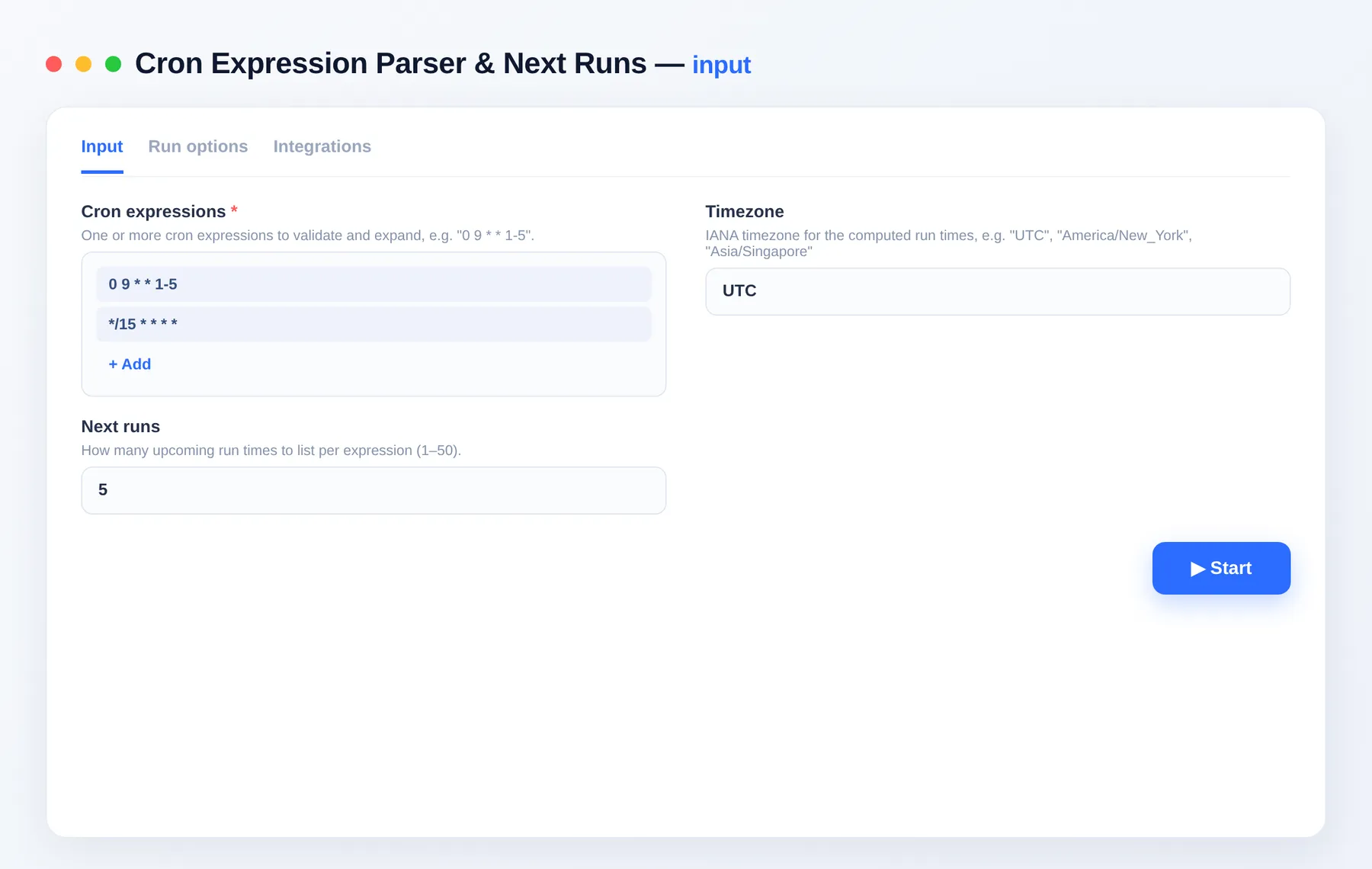
What it does
- Validates each cron expression and flags bad ones.
- Explains it in plain English (e.g. "At 09:00, Monday through Friday").
- Computes the next N run times in your chosen IANA timezone.
Use cases
- DevOps — audit cron schedules across many jobs and timezones.
- Docs & dashboards — turn cron strings into human-readable descriptions.
- Debugging — confirm exactly when a schedule will fire next.
Input
| Field | Type | Description |
|---|---|---|
expressions | array | Cron expressions to validate and expand. |
timezone | string | IANA timezone (e.g. UTC, Asia/Singapore). |
count | integer | Upcoming run times to list per expression (1–50). |
Output
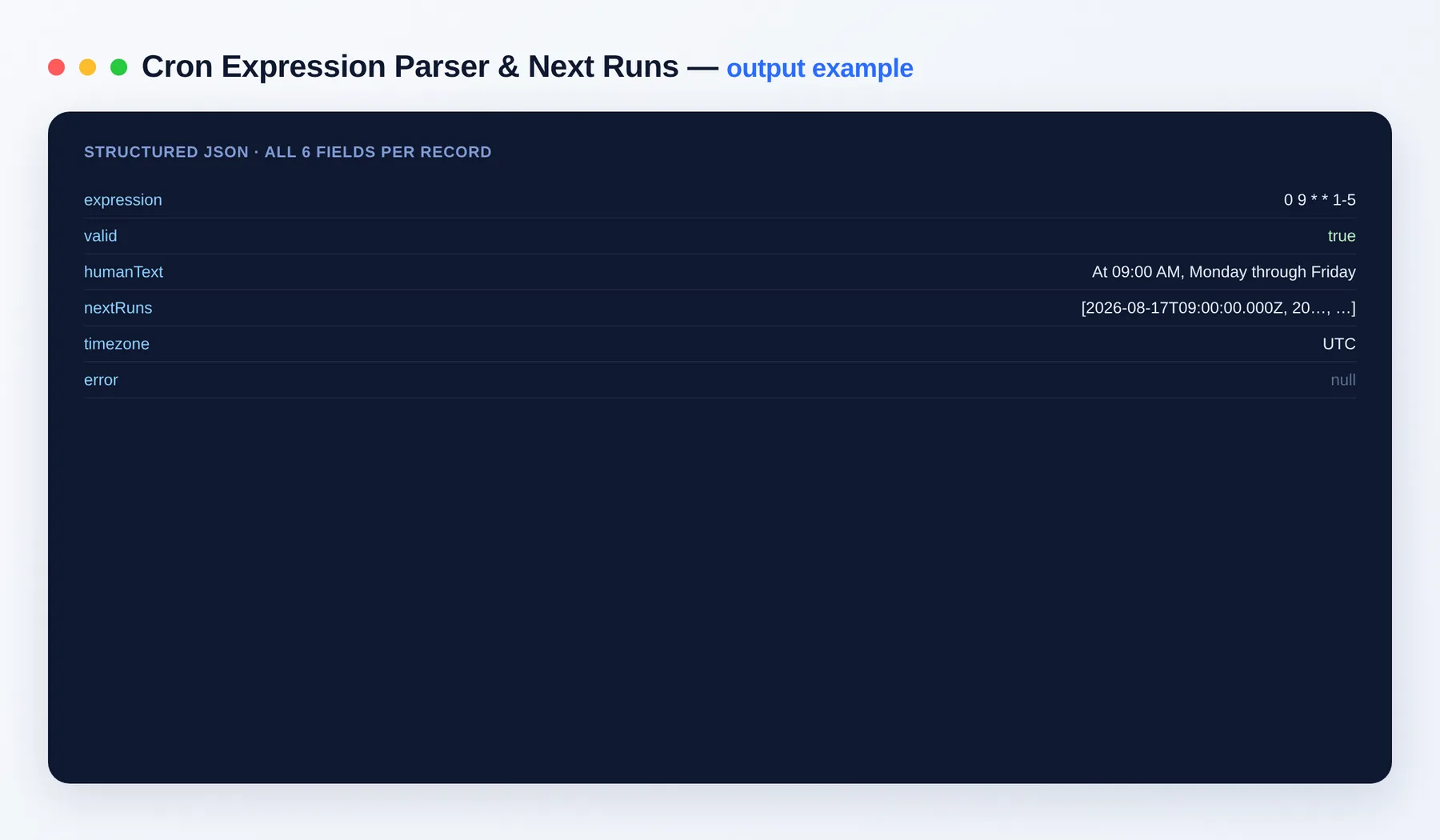
Output schema
| Field | Type | Description |
|---|---|---|
expression | string | The cron expression. |
valid | boolean | Whether it parsed successfully. |
humanText | string | Plain-English description. |
nextRuns | array | Next run times (ISO). |
FAQ
Which cron syntax is supported? Standard 5-field cron plus common extensions (steps, ranges, lists).
Can I automate it? Yes — via integrations on the Apify platform and the Apify API.
Notes
Original clean-room implementation.