STRING Protein Interactions Scraper
Pricing
from $7.50 / 1,000 results
STRING Protein Interactions Scraper
Collects protein-protein interactions from the STRING database for a given list of identifiers and an NCBI taxon ID, returning each interaction as a flat row with combined and evidence scores.
Pricing
from $7.50 / 1,000 results
Rating
0.0
(0)
Developer

ParseForge
Maintained by Apify PartnerActor stats
0
Bookmarked
2
Total users
1
Monthly active users
a month ago
Last modified
Categories
Share

STRING Protein Interactions Scraper
Scrape protein interaction networks from STRING for any protein or species. Get interaction partners, scores, and experimental evidence in a flat table. No API key required. Export to CSV, JSON, Excel, or XML.
STRING's web interface is built for browsing one protein at a time, not for pulling interaction networks in bulk. This Actor queries the STRING database directly for the proteins you specify, collects every interaction partner with its combined score and evidence channels, and returns them as clean rows. It works for any NCBI taxon ID, from human (9606) to mouse (10090) and beyond.
| Who uses it | What they scrape STRING for |
|---|---|
| Bioinformaticians | Build interaction networks for pathway analysis without manual STRING exports |
| Computational biologists | Fetch interaction data for hundreds of proteins in one run for downstream modeling |
| Drug discovery researchers | Identify potential off-target interactions by pulling networks for a drug's protein targets |
| Systems biologists | Assemble species-wide interactomes by querying all proteins of a given organism |
What it does
This Actor collects protein-protein interactions from the STRING database for given protein identifiers and a species, and returns each interaction as a flat row with scores and evidence.
- 🔬 Bulk protein queries: pass a list of protein identifiers, one per line, and get interactions for all of them in a single run.
- 🧬 Species filtering: set the NCBI taxon ID to restrict results to a specific organism, such as 9606 for human or 10090 for mouse.
- 📊 Score and evidence fields: each interaction includes the combined score and per-channel evidence scores from STRING.
- 📥 Flat table output: every interaction is one row, ready for CSV, JSON, Excel, or XML export.
Results export to CSV, JSON, Excel, or XML, or straight from the API.
What you can do with STRING data
🧬 Build a protein interaction network for a gene list.
A bioinformatician pastes a list of 200 candidate genes from a differential expression study, sets the species to human, and gets all pairwise interactions to construct a network in Cytoscape.
🔍 Find interaction partners for a single protein.
A researcher queries TP53 with the default settings and receives the top 10 interaction partners with scores, enough to see which proteins are most strongly connected to p53.
🧪 Compare interactomes across species.
A systems biologist runs the Actor twice with the same protein list but different taxon IDs (human and mouse) and compares the interaction sets to find conserved and species-specific edges.
📈 Feed interaction data into machine learning models.
A computational biologist collects interactions for all proteins in a pathway and uses the combined scores as features for a model that predicts protein function.
Why choose this scraper
| What you get | |
|---|---|
| No API key | Uses STRING's public web interface, so you don't need to register for an API token |
| Bulk queries | Fetch interactions for many proteins in one run instead of one-by-one on the website |
| Evidence scores | Get the combined score and individual evidence channel scores for each interaction |
| Species-specific | Filter by NCBI taxon ID to get interactions only within your organism of interest |
How it compares
The AI Video Data Extractor is not a direct competitor because it scrapes video platforms, not protein interaction databases. This Actor is the only one on Apify that targets STRING.
| Feature | ParseForge | AI Video Data Extractor |
|---|---|---|
| Scrapes STRING protein interactions | Yes | Not listed |
| Accepts protein identifiers | Yes | Not listed |
| Species filtering by NCBI taxon ID | Yes | Not listed |
| Returns interaction scores and evidence | Yes | Not listed |
| No API key required | Yes | Not listed |
Configure the run
Drive the Actor with protein identifiers and an NCBI taxon ID, and set a maximum number of interactions to collect per run. The Input tab lists every parameter.
A first run with the defaults:
A larger pull:
Pricing
Pay-per-result: $0.0085 per result collected. You pay only for the results written to your dataset.
| Results collected | Approximate cost |
|---|---|
| 100 results | $0.85 |
| 1,000 results | $8.50 |
| 10,000 results | $85.00 |
New Apify accounts start with $5 in free credit.
Free users
Free-plan runs return up to 10 results as a preview. Upgrade your Apify plan to collect up to 1,000,000 results per run.
Run it
- Create a free Apify account with $5 in credit.
- Open the STRING Protein Interactions Scraper.
- Set your inputs and any filters, then click Start.
- Export the results as CSV, Excel, JSON, or XML from the Dataset tab.
Run it programmatically through the Apify API (run-sync-get-dataset-items) or the ApifyClient for JavaScript and Python.
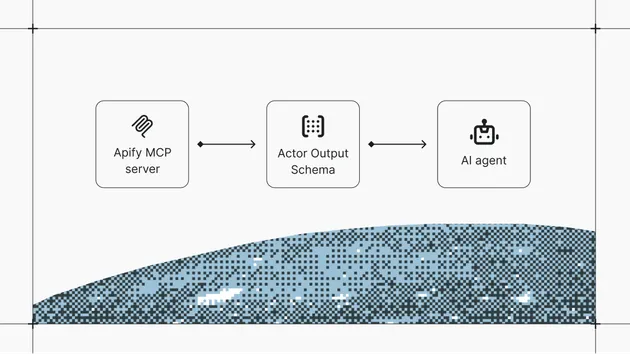
Use with AI agents (MCP)
Give an AI agent live access to STRING through the Model Context Protocol. Add the Actor to Claude, Cursor, or any MCP client:
Then prompt it in plain language to run the scraper and read back the results.
Troubleshooting
Why am I getting no results?
Check that your protein identifiers are spelled correctly and that the species taxon ID matches the organism those proteins belong to. STRING may not have interactions for very obscure proteins or species.
Why are some interactions missing?
STRING only returns interactions that meet a minimum confidence threshold. If you need low-confidence interactions, you may need to adjust the threshold on the STRING website directly; this Actor uses the default threshold.
The run is slow for many proteins.
The Actor queries STRING sequentially for each protein. Reduce the number of proteins or increase the timeout. You can also split your list into multiple runs.
I get an error about invalid taxon ID.
Make sure the species field contains a valid NCBI taxon ID as an integer. Common IDs are 9606 (human), 10090 (mouse), 4932 (yeast), 3702 (arabidopsis).
FAQ
| Question | Answer |
|---|---|
| What protein identifier format does STRING accept? | STRING accepts common names like TP53, Ensembl IDs, UniProt accessions, and more. The Actor passes your identifiers directly to STRING, so any format that works on the STRING website will work here. |
| How do I specify the species? | Use the NCBI taxon ID in the species field. For example, 9606 is human, 10090 is mouse, and 4932 is yeast. You can find the taxon ID for your organism on the NCBI Taxonomy website. |
| Can I get more than 10 interactions per protein? | Yes, set the maximum interactions field to a higher number. The Actor will collect up to that many interactions per run, limited by what STRING returns for your query. |
| Does this Actor require an API key? | No, it uses STRING's public web interface, so no registration or API key is needed. |
| What does the combined score mean? | The combined score is STRING's confidence score for an interaction, ranging from 0 to 1. Higher scores indicate more evidence. The Actor also returns individual evidence channel scores such as experiments, databases, and text mining. |
| Can I scrape interactions for all proteins of a species? | You would need to provide the full list of protein identifiers for that species. The Actor does not automatically enumerate all proteins, but you can generate such a list from a proteome database and pass it in. |
| Is there a limit on how many proteins I can query? | There is no hard limit in the Actor, but very large lists may take longer and could hit STRING's rate limits. Start with a few hundred proteins and scale up as needed. |
| What output formats are supported? | The Actor returns data in a structured format that can be exported to CSV, JSON, Excel, or XML from the Apify platform. |
Related actors
Browse the full ParseForge collection for more scrapers.
🆘 Need help? Email parseforge@protonmail.com with your run ID, your input, and what you expected.
⚠️ Disclaimer. This Actor is unofficial and is not affiliated with, endorsed by, or sponsored by STRING Consortium. It collects only publicly available data. You are responsible for using the collected data in compliance with the source's terms of service and applicable data-protection laws, including GDPR, CCPA, and PIPL. Do not use it to collect personal data unlawfully.