
Osv Vulnerability Scraper
Pricing
from $2.99 / 1,000 results
Osv Vulnerability Scraper
Extract known vulnerabilities, severities, and metadata for packages, CVEs, or GHSA IDs. Scrape open-source security data effortlessly and export clean results as JSON, CSV, or Excel datasets.
Pricing
from $2.99 / 1,000 results
Rating
0.0
(0)
Developer

B2B Lead Generation
Maintained by CommunityActor stats
0
Bookmarked
2
Total users
1
Monthly active users
4 days ago
Last modified
Categories
Share
OSV Vulnerability Scraper: Open Source Vulnerabilities by Package
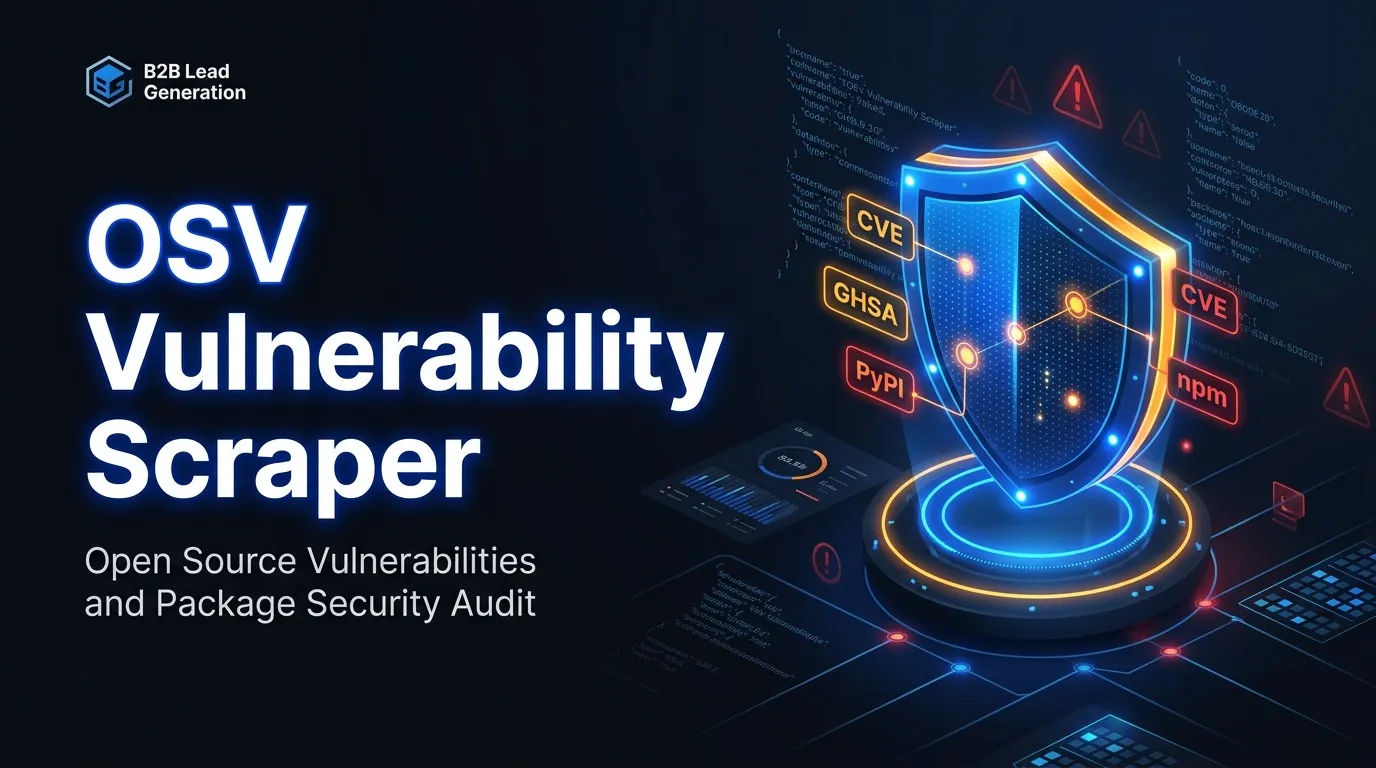
This tool reads package vulnerability records and writes one clean row per vulnerability. Pick a package, an identifier, or a batch of packages, set your item cap, and export your data as JSON, CSV, or Excel directly from the Apify dataset.
Use cases
- Dependency review: provide a package name, ecosystem, and version to collect known vulnerabilities.
- Advisory lookup: paste an advisory identifier to keep summaries, aliases, and severity vectors.
- Batch audit: send several packages in a single query batch and hydrate each record.
- Ticket export: cap your run and drop the dataset straight into an issue tracker or spreadsheet.
What data does this tool extract?
Three flexible modes let you target exactly what you need:
package_vulns: Query vulnerabilities by ecosystem, package name, and optional version, automatically following pagination tokens.vuln_details: Retrieve specific vulnerability records by identifier.batch_audit: Run batch queries and automatically pull full details for every matched identifier.
Runs pause briefly between calls to keep requests smooth, and duplicate identifiers within the same run are automatically filtered out. Failed calls generate clear error records instead of stopping your workflow.
Input
| Parameter | Type | Default | Description |
|---|---|---|---|
mode | string | package_vulns | Choose between package query, vulnerability identifier lookup, or batch audit. |
packages | array | PyPI jinja2 2.4.1 | Target packages with ecosystem, name, and optional version. |
vulnIds | array | GHSA-462w-v97r-4m45 | Specific vulnerability identifiers to look up. |
maxItems | integer | 100 | Maximum vulnerability rows to save (minimum 1, maximum 1000). |
requestDelaySecs | number | 1 | Pause duration between requests. |
userAgent | string | BigiByteActorResearch/1.0 | Custom client identification sent with requests. |
timeoutSecs | integer | 300 | Maximum run duration in seconds (up to 3600). |
requestTimeoutSecs | integer | 30 | Timeout per individual request. |
proxyConfiguration | object | Disabled | Optional proxy settings. |
Example input
Output example
FAQ
Can I export CSV? Yes. Apify allows you to export your dataset as JSON, CSV, or Excel instantly.
What happens if a vulnerability identifier cannot be found? You receive a single error row containing the status and message, while successful records continue to process normally.
How many vulnerabilities can a single run save?
maxItems defaults to 100 and can be adjusted up to 1000.
Is web scraping legal?
This actor collects publicly available vulnerability information without bypassing access controls or requiring credentials. However, how you use the collected data matters:
- Personal data: If results contain personal information, ensure compliance with relevant privacy regulations like GDPR or CCPA.
- Copyright: Avoid republishing copyrighted text or descriptions without permission.
- Terms of use: Respect rate limits and usage guidelines.
- Legal advice: This overview is for informational purposes and does not constitute legal advice. For more details, read Apify's guide on Is web scraping legal?


