YouTube Keyword Rank Tracker
Pricing
Pay per usage
Go to Apify Store
YouTube Keyword Rank Tracker
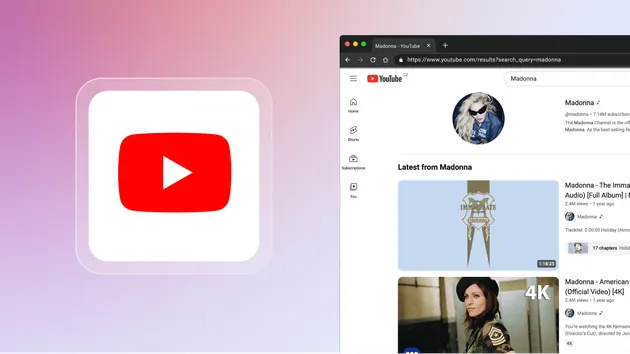
Searches YouTube for a list of keywords and returns the ranked organic video results in the same order a real user would see them, for a given country.

YouTube Keyword Rank Tracker
Pricing
Pay per usage
Searches YouTube for a list of keywords and returns the ranked organic video results in the same order a real user would see them, for a given country.
You can access the YouTube Keyword Rank Tracker programmatically from your own applications by using the Apify API. You can also choose the language preference from below. To use the Apify API, you’ll need an Apify account and your API token, found in API & Integrations in Apify Console.
{ "openapi": "3.0.1", "info": { "version": "0.1", "x-build-id": "TjuK8do19sbx0iaya" }, "servers": [ { "url": "https://api.apify.com/v2" } ], "paths": { "/acts/sarangofficial64~youtube-keyword-rank-tracker/run-sync-get-dataset-items": { "post": { "operationId": "run-sync-get-dataset-items-sarangofficial64-youtube-keyword-rank-tracker", "x-openai-isConsequential": false, "summary": "Executes an Actor, waits for its completion, and returns Actor's dataset items in response.", "tags": [ "Run Actor" ], "requestBody": { "required": true, "content": { "application/json": { "schema": { "$ref": "#/components/schemas/inputSchema" } } } }, "parameters": [ { "name": "token", "in": "query", "required": true, "schema": { "type": "string" }, "description": "Enter your Apify token here" } ], "responses": { "200": { "description": "OK" } } } }, "/acts/sarangofficial64~youtube-keyword-rank-tracker/runs": { "post": { "operationId": "runs-sync-sarangofficial64-youtube-keyword-rank-tracker", "x-openai-isConsequential": false, "summary": "Executes an Actor and returns information about the initiated run in response.", "tags": [ "Run Actor" ], "requestBody": { "required": true, "content": { "application/json": { "schema": { "$ref": "#/components/schemas/inputSchema" } } } }, "parameters": [ { "name": "token", "in": "query", "required": true, "schema": { "type": "string" }, "description": "Enter your Apify token here" } ], "responses": { "200": { "description": "OK", "content": { "application/json": { "schema": { "$ref": "#/components/schemas/runsResponseSchema" } } } } } } }, "/acts/sarangofficial64~youtube-keyword-rank-tracker/run-sync": { "post": { "operationId": "run-sync-sarangofficial64-youtube-keyword-rank-tracker", "x-openai-isConsequential": false, "summary": "Executes an Actor, waits for completion, and returns the OUTPUT from Key-value store in response.", "tags": [ "Run Actor" ], "requestBody": { "required": true, "content": { "application/json": { "schema": { "$ref": "#/components/schemas/inputSchema" } } } }, "parameters": [ { "name": "token", "in": "query", "required": true, "schema": { "type": "string" }, "description": "Enter your Apify token here" } ], "responses": { "200": { "description": "OK" } } } } }, "components": { "schemas": { "inputSchema": { "type": "object", "required": [ "keywords", "proxyConfiguration" ], "properties": { "keywords": { "title": "Keywords", "type": "array", "description": "List of search keywords to look up on YouTube. One search will be run per keyword.", "items": { "type": "string" } }, "country": { "title": "Country", "type": "string", "description": "Country to simulate the search from. Sets the Apify Proxy exit country and the browser locale/fingerprint, and is the country the Actor VERIFIES against YouTube's own resolved GL on every page (a mismatch retires the session and retries). It is deliberately NOT sent as a 'gl' URL parameter - a real user typing a keyword has no such parameter, and YouTube resolves the country from the exit IP by itself. Use the ISO 3166-1 alpha-2 code, e.g. IN for India.", "default": "IN" }, "language": { "title": "Language", "type": "string", "description": "Language hint, combined with Country into the browser locale (e.g. en + IN = en-IN) used for the fingerprint and Accept-Language header. Not sent as an 'hl' URL parameter: YouTube resolves HL itself, and for a real Indian user it resolves 'en-IN', not a bare 'en'.", "default": "en" }, "maxResultsPerKeyword": { "title": "Max results per keyword", "minimum": 1, "maximum": 200, "type": "integer", "description": "How many DISTINCT video results to collect per keyword, counted in the same top-to-bottom order a user would scroll through. Shorts are not counted (they are ignored by design), and videos YouTube repeats further down the feed are collapsed to their first appearance. This is a guarantee, not a target: if fewer are returned, the Actor will not call it a content shortage unless two independent proxy sessions confirm it - check 'status' in KEYWORD_SUMMARIES.", "default": 20 }, "proxyConfiguration": { "title": "Proxy configuration", "type": "object", "description": "Required. Use Apify Proxy with the 'RESIDENTIAL' group and the matching country selected below for the most accurate, geo-consistent results.", "default": { "useApifyProxy": true, "apifyProxyGroups": [ "RESIDENTIAL" ], "apifyProxyCountry": "IN" } }, "maxRequestRetries": { "title": "Max retries per keyword", "minimum": 0, "type": "integer", "description": "How many extra attempts (each with a FRESH proxy session) a keyword gets. Used both to recover from a failed page load and to corroborate a short result count: a shortfall is only reported as a real content shortage once two independent sessions independently run out of results at the same count. Lower values make short counts less trustworthy.", "default": 5 }, "navigationTimeoutSecs": { "title": "Navigation timeout (seconds)", "minimum": 10, "type": "integer", "description": "Max time to wait for the YouTube search page to load per attempt. Residential proxies can be slow; do not set this too low.", "default": 90 }, "resultsTimeoutSecs": { "title": "First results timeout (seconds)", "minimum": 5, "type": "integer", "description": "Max time to wait for the first video result to render after the page loads. If it expires, the attempt is abandoned, a diagnostic snapshot (screenshot + page state) is stored in the key-value store under DIAG-*, and the keyword is retried with a fresh proxy session.", "default": 45 }, "loadBudgetSecs": { "title": "Result loading budget (seconds)", "minimum": 30, "type": "integer", "description": "Max time to spend scrolling to load results for one attempt. YouTube India result pages are dominated by Shorts (measured: 160 Shorts vs 35 videos on one keyword), and the video count can sit frozen for several scrolls while a block of Shorts streams in, so reaching a high target legitimately takes many scrolls. Raise this for large maxResultsPerKeyword values; a run that stops on this budget is reported as a shortfall, never as a content shortage.", "default": 240 } } }, "runsResponseSchema": { "type": "object", "properties": { "data": { "type": "object", "properties": { "id": { "type": "string" }, "actId": { "type": "string" }, "userId": { "type": "string" }, "startedAt": { "type": "string", "format": "date-time", "example": "2025-01-08T00:00:00.000Z" }, "finishedAt": { "type": "string", "format": "date-time", "example": "2025-01-08T00:00:00.000Z" }, "status": { "type": "string", "example": "READY" }, "meta": { "type": "object", "properties": { "origin": { "type": "string", "example": "API" }, "userAgent": { "type": "string" } } }, "stats": { "type": "object", "properties": { "inputBodyLen": { "type": "integer", "example": 2000 }, "rebootCount": { "type": "integer", "example": 0 }, "restartCount": { "type": "integer", "example": 0 }, "resurrectCount": { "type": "integer", "example": 0 }, "computeUnits": { "type": "integer", "example": 0 } } }, "options": { "type": "object", "properties": { "build": { "type": "string", "example": "latest" }, "timeoutSecs": { "type": "integer", "example": 300 }, "memoryMbytes": { "type": "integer", "example": 1024 }, "diskMbytes": { "type": "integer", "example": 2048 } } }, "buildId": { "type": "string" }, "defaultKeyValueStoreId": { "type": "string" }, "defaultDatasetId": { "type": "string" }, "defaultRequestQueueId": { "type": "string" }, "buildNumber": { "type": "string", "example": "1.0.0" }, "containerUrl": { "type": "string" }, "usage": { "type": "object", "properties": { "ACTOR_COMPUTE_UNITS": { "type": "integer", "example": 0 }, "DATASET_READS": { "type": "integer", "example": 0 }, "DATASET_WRITES": { "type": "integer", "example": 0 }, "KEY_VALUE_STORE_READS": { "type": "integer", "example": 0 }, "KEY_VALUE_STORE_WRITES": { "type": "integer", "example": 1 }, "KEY_VALUE_STORE_LISTS": { "type": "integer", "example": 0 }, "REQUEST_QUEUE_READS": { "type": "integer", "example": 0 }, "REQUEST_QUEUE_WRITES": { "type": "integer", "example": 0 }, "DATA_TRANSFER_INTERNAL_GBYTES": { "type": "integer", "example": 0 }, "DATA_TRANSFER_EXTERNAL_GBYTES": { "type": "integer", "example": 0 }, "PROXY_RESIDENTIAL_TRANSFER_GBYTES": { "type": "integer", "example": 0 }, "PROXY_SERPS": { "type": "integer", "example": 0 }, "PROXY_UNBLOCKER_UNITS": { "type": "integer", "example": 0 } } }, "usageTotalUsd": { "type": "number", "example": 0.00005 }, "usageUsd": { "type": "object", "properties": { "ACTOR_COMPUTE_UNITS": { "type": "integer", "example": 0 }, "DATASET_READS": { "type": "integer", "example": 0 }, "DATASET_WRITES": { "type": "integer", "example": 0 }, "KEY_VALUE_STORE_READS": { "type": "integer", "example": 0 }, "KEY_VALUE_STORE_WRITES": { "type": "number", "example": 0.00005 }, "KEY_VALUE_STORE_LISTS": { "type": "integer", "example": 0 }, "REQUEST_QUEUE_READS": { "type": "integer", "example": 0 }, "REQUEST_QUEUE_WRITES": { "type": "integer", "example": 0 }, "DATA_TRANSFER_INTERNAL_GBYTES": { "type": "integer", "example": 0 }, "DATA_TRANSFER_EXTERNAL_GBYTES": { "type": "integer", "example": 0 }, "PROXY_RESIDENTIAL_TRANSFER_GBYTES": { "type": "integer", "example": 0 }, "PROXY_SERPS": { "type": "integer", "example": 0 }, "PROXY_UNBLOCKER_UNITS": { "type": "integer", "example": 0 } } } } } } } } }}OpenAPI is a standard for designing and describing RESTful APIs, allowing developers to define API structure, endpoints, and data formats in a machine-readable way. It simplifies API development, integration, and documentation.
OpenAPI is effective when used with AI agents and GPTs by standardizing how these systems interact with various APIs, for reliable integrations and efficient communication.
By defining machine-readable API specifications, OpenAPI allows AI models like GPTs to understand and use varied data sources, improving accuracy. This accelerates development, reduces errors, and provides context-aware responses, making OpenAPI a core component for AI applications.
You can download the OpenAPI definitions for YouTube Keyword Rank Tracker from the options below:
If you’d like to learn more about how OpenAPI powers GPTs, read our blog post.
You can also check out our other API clients: