

X (Twitter) Brand Monitoring with AI Analysis | $0.0003/Tweet
Pricing
from $0.0003 / analyzed tweet
X (Twitter) Brand Monitoring with AI Analysis | $0.0003/Tweet
Twitter brand monitoring with AI, AI costs included. Track brand mentions on X with relevance, sentiment & customer-experience answers, plus changes since your last run. It costs from $0.0003 per analyzed tweet. World's fastest & cheapest X (Twitter) scraper service. Not affiliated with X Corp.
Pricing
from $0.0003 / analyzed tweet
Rating
5.0
(2)
Developer

Xquik
Maintained by CommunityActor stats
1
Bookmarked
2
Total users
1
Monthly active users
4 hours ago
Last modified
Categories
Share
English · Español · Türkçe · 简体中文 · 日本語 · 한국어 · Deutsch · Français · Italiano
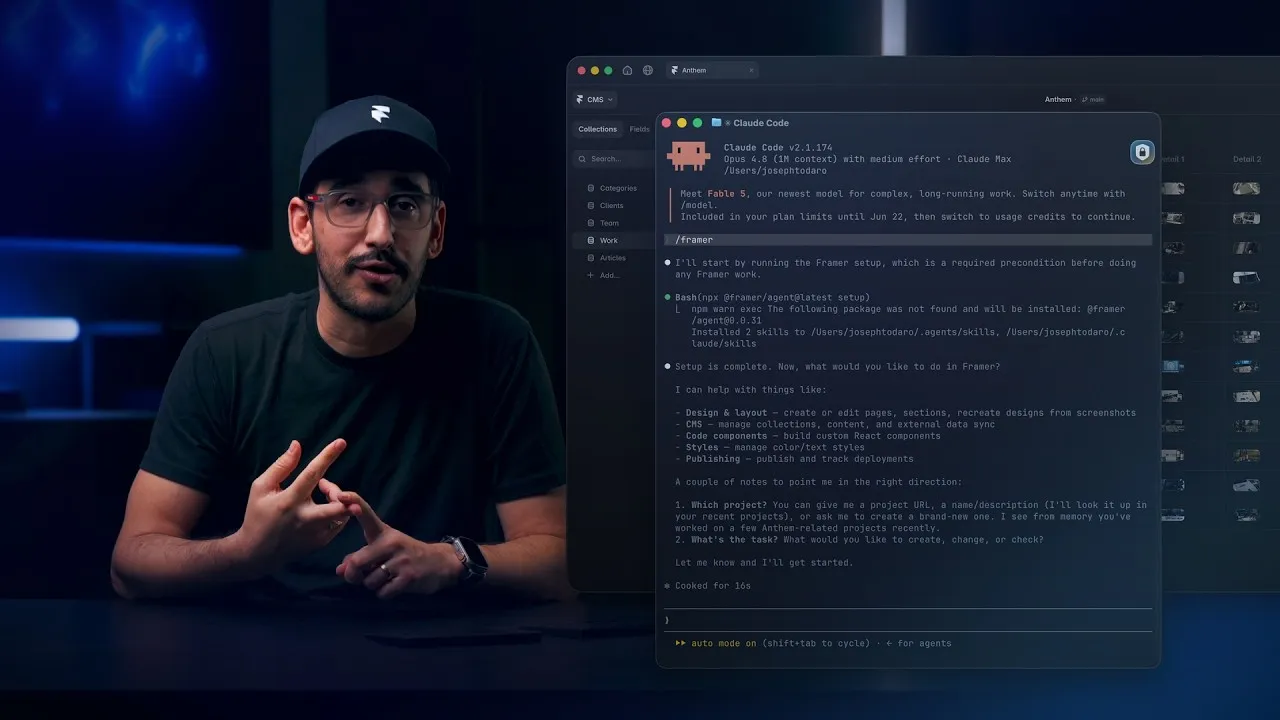
Watch how Framer uses Xquik scrapers
with Claude Code, Codex, Cursor & more, from 6:07.
Xquik is the world's fastest & cheapest X (Twitter) scraper service with the most complete X data. Xquik's X (Twitter) Brand Monitoring tracks your brand mentions with relevance, sentiment & customer-experience answers. Most other Apify Actors charge before filtering or deduplicating. Xquik charges only for delivered, unique, filter-matching results. AI costs are included in the per-tweet price. You need no AI account, tokens or key.
Monitor brand mentions on X (Twitter) & track sentiment changes between runs. Xquik's X (Twitter) Brand Monitoring with AI Analysis collects every matching tweet. It answers relevance, sentiment & customer-experience questions for each post with AI. It compares those answers with an earlier dataset, so you see what changed. Every row keeps the original tweet data. Exports, reviews & follow-up analysis need no second scrape.
Watch a brand, a product line or a campaign for complaints, praise & purchase questions. Brief support & marketing teams from real posts. Keep a history of how customers talk about you from run to run.
- Every field of the source tweet. Text, author, counts, media, links, quoted & replied posts stay beside the answers.
- Typed answers. Each row has a relevance probability, a sentiment category with probabilities & a customer-experience category.
- Change tracking. Runs compare by decision, so small probability shifts do not count as changes.
- Filter-first billing. You pay only for unique, filter-matching tweets with a successful analysis.
Xquik is an independent third-party service. Not affiliated with X Corp. "Twitter" and "X" are trademarks of X Corp.
How to monitor a brand on X
New to Apify? Create a free account first. The free plan needs no credit card & gives $5 to spend each month. At $0.0003 per analyzed tweet, $5 pays for up to 16,000 analyzed tweets before platform usage. Then come back here & press Try for free.
- Add search terms, profile handles, tweet URLs or tweet IDs. For example,
search
(Sony OR "WH-1000XM5") headphones lang:en. - Set
maxItems& the extraction filters your task needs. Examples include date bounds, minimum likes & reply exclusion. - Put your brand names & aliases under
analysis.targets& describe the brand inanalysis.context. - Start the run, then keep the dataset ID for your next comparison.
- On the next run, add
monitor.baselineDatasetIdwith that ID. Keep questions, targets, context & context limits unchanged so answers stay comparable. The comparison reads that dataset, so it works even when that run skipped its summary.
Targets guide classification. They do not create search queries or remove irrelevant tweets. Choose search terms & filters that match your research.
What the monitor answers
| Question | Answer |
|---|---|
| Brand relevance | Probability that the tweet discusses your target |
| Sentiment | Positive, negative, mixed, neutral or unclear |
| Customer experience | Customer, prospect, observer or unclear |
Use relevance probabilities to review ambiguous namesakes. Sentiment describes the author's expressed attitude toward the target.
How comparisons work
| Comparison status | Meaning |
|---|---|
first_run | No baseline was supplied |
new_to_baseline | This tweet ID was absent from the baseline |
unchanged | Every comparable decision matches |
changed | At least 1 decision differs |
not_comparable | Metadata, IDs or matching settings are missing |
analysis_unavailable | This tweet has no successful analysis |
Answers compare by decision. A choice answer compares by its category. A
score answer compares by its nearest level. A probability answer compares by
its yes-or-no decision at 0.5. A decision counts as changed only when it moves
clearly. Near ties between runs stay unchanged, & so do shifts that keep the
same decision. So small AI differences between runs do not show up as changes.
changes lists each changed question with its previous & current decision.
Changes may come from AI variation, new context or edited source data. They do
not prove changed facts, & an absent tweet does not prove deletion.
The baseline limit, maxBaselineRows, defaults to 100,000 rows. Duplicate tweet
IDs, loading failures & changing dataset sizes stop comparison before
collection. They never become an empty baseline.
Analyze your own text
Paste your own drafts, replies, reviews or notes in texts. Xquik's X (Twitter)
Brand Monitoring analyzes them. It fetches nothing from X.
- Each text becomes 1 row with the same
analysisanswers as a tweet. tweet.idistext:1,text:2& so on, &tweet.typeistext.- Each analyzed text costs the same $0.0003 as an analyzed tweet.
- With
textsset, the run analyzes only those texts. Run X targets separately.
How much does it cost to monitor a brand on X?
Xquik's X (Twitter) Brand Monitoring costs from $0.0003 per analyzed tweet. It charges no start fee. The price includes collection & AI costs. You need no AI account, tokens or key. The price covers up to 8 questions & 64,000 bytes of context per tweet. Each question definition may use up to 8,000 bytes.
For more volume, pick an Apify plan with more prepaid usage.
Extraction filters & deduplication run before analysis. You never pay for filtered-out or duplicate rows. Failed analyses, skipped analyses & diagnostic rows have no result charge. Apify bills platform usage for compute, storage & transfer separately at your plan's rates. The Pricing tab shows it.
Input & output examples
The input above is copy-ready. An abbreviated output row looks like this.
Each result contains tweet, analysis & monitor. Answers include types,
question versions & available probabilities. analysis.contextAvailability
reports missing quote, reply, author & media context. A row with a failed or
skipped analysis keeps the collected tweet & a reason. Its answer list is
empty.
Free diagnostics in the key-value store explain invalid inputs, missing results & interrupted collection. The run report separates collected rows, charged analyses & pending charges.
Run summary & flat answers
A run writes an analysis-summary record to its key-value store in 3 cases.
- It hits a problem or is large.
- Its comparison finds a changed, new or not comparable tweet.
- It has
alwaysSaveRunRecordson.
Other runs skip the record, including the first run of a series. Their status
names the top answer, like Top sentiment is negative in 2 of 5 results. A
comparison without a change states No change since the earlier run. A run that
hits a problem or is large also writes run-report. So does a run with
alwaysSaveRunRecords on. run-report repeats the summary under
results.analysisSummary.
The summary counts analyzed, failed & skipped rows. It sums engagement & summarizes every question.
targetsreports mentions, share of voice & engagement per brand or alias.- Each
targetsentry hastop, its 3 most engaged mentions per answer category. Use it to alert on the strongest negative & positive mentions. - Each
targetsentry haschoices, the answer split among tweets that mention that brand. - The
sentimentblock lists the 3 most engaged positive & negative mentions undertop. relevancecounts the mentions that are about the brand.monitor.changedRowslists tweets whose decisions moved since the baseline. Send them to a webhook or an alert.- With
monitor.baselineDatasetIdset, themonitorblock counts comparison statuses. It lists up to 50 changed rows. - Every row lists
sourceDomains, the hostnames it links to.
The summary rounds numbers to 4 decimals. An empty run reports counts of 0 &
null means.
Every result row also carries answers, a flat map keyed by question ID. Each
value is the chosen category, score or probability. The Flat answers dataset
view & CSV or Excel exports show 1 column per question. The columns sit beside
the tweet, so spreadsheets need no JSON parsing. Failed & skipped rows carry an
empty map.
Task examples
Choose from 50 public tasks. Each starts from a real English search & a bounded
maxItems. It includes ready-made targets, context & the overview dataset view.
Edit the search or targets before running.
- Monitor Nike brand mentions on X
- Monitor Starbucks brand mentions on X
- Monitor Tesla brand mentions on X
- Monitor Spotify brand mentions on X
- Monitor Netflix brand mentions on X
- Monitor Airbnb brand mentions on X
- Monitor Uber brand mentions on X
- Monitor Peloton brand mentions on X
- Monitor Shopify brand mentions on X
- Monitor Notion brand mentions on X
- Monitor Duolingo brand mentions on X
- Monitor Lululemon brand mentions on X
The remaining tasks cover more brands, topics & markets on the Actor page.
Related Xquik Actors
Every Xquik Actor shares the same extraction engine, filter-first billing & diagnostics. Pick the one that matches the data you need.
- X Tweet Scraper scrapes tweets from searches, profile timelines, Lists & tweet IDs with 50+ filters & flat exports. Use it when you need tweet data without analysis. From $0.00015 per row.
- X Profile Scraper scrapes profiles plus their posts, replies, media & followers from handles, IDs or URLs. Use it when you start from accounts rather than searches. From $0.00015 per row.
- X Reply Scraper scrapes replies, comments & whole conversations under posts with 25+ filters. Use it when you need the discussion beneath tweets. From $0.00015 per row.
- X Engagement Scraper scrapes replies, quotes, retweeters & threads for post URLs or IDs in bulk. Use it when you measure who engaged with posts. From $0.00015 per row.
- X Quote Tweets Scraper scrapes the quote tweets of posts with text, media, counts, authors & 11 filters. Use it when you study who quoted posts & what they said. From $0.00015 per tweet.
- X Follower Scraper scrapes followers, following, List members, subscribers & Community members as profile rows. Use it when you need audience or member lists. From $0.00015 per profile.
- X User Search Scraper searches users by handle, bio & location with follower, verification, age & location filters. Use it when you build account lists from search. From $0.00015 per profile.
- X Account Location Scraper checks where accounts are based with X's "Account based in" label, "connected via" & username changes. Use it when you vet where accounts are based. From $0.00015 per account.
- X Email Scraper gets the emails, phones & links accounts publish on their profiles, from handles, followers or user searches. Use it when you need the emails profiles publish. From $0.00015 per profile.
- X List Scraper scrapes List posts, members & followers from List URLs or IDs. Use it when a curated List defines your sources. From $0.00015 per row.
- X Community Scraper scrapes Community info, posts, searches, members & moderators. Use it when your sources are X Communities. From $0.00015 per row.
- X Space Scraper finds Spaces by keyword & reads their titles, states, times, listener counts, hosts & speakers. It also reads broadcasts by URL or ID. Use it when you track live audio & video on X. From $0.00015 per Space or broadcast.
- X Trends Scraper scrapes real-time trends by location with rank, volume, query & WOEID. Use it when you track what is trending where. From $0.00015 per trend.
- X Jobs Scraper scrapes X job listings by keyword, place, workplace, seniority & company, with salaries & apply links. Use it when you collect job openings posted on X. From $0.00015 per job.
- X Article Scraper scrapes long-form X Articles as Markdown & text with covers, authors, dates & metrics. Use it when you need article bodies, not tweets. From $0.00015 per article.
- X Media Downloader extracts or stores photos, videos & GIFs from posts or profiles with MP4 & metadata options. Use it when you need the media files themselves. From $0.00015 per media row.
- X Tweet Sentiment Analysis with AI labels attitude, intensity & sarcasm probability for every tweet with AI. Use it when you need general sentiment on any topic. From $0.0003 per analyzed tweet.
- X (Twitter) Stock & Crypto AI Trading Signals labels bullish, bearish, neutral or mixed stance, content type, conviction & asset relevance with AI. Use it when you follow stocks, crypto or trading talk. From $0.0003 per analyzed tweet.
- X (Twitter) News Monitor with AI Analysis labels news posts by format, source attribution & topic relevance with AI. Use it when you separate reporting from commentary. From $0.0003 per analyzed tweet.
- X Tweet Classifier with AI Analysis answers your own category, score & yes/no questions for every tweet with AI. Use it when the preset analyses do not fit your labels. From $0.0003 per analyzed tweet.
- X Tweet Viral Score Analyzer with AI estimates a Viral Score from 0 to 100 & a verdict for every tweet from 8 AI trait answers. Use it when you study why tweets spread or flop. From $0.0003 per analyzed tweet.
FAQ & support
Answers to common questions, then where to get help.
Do I need an AI account, X API key or login?
No. Xquik's X (Twitter) Brand Monitoring includes AI costs in its price. You need no AI account, tokens or key. You also need no X API key, login or credentials.
Can I use my own questions?
Yes. Custom analysis.questions replace the defaults. Send 1 to 8 choice,
score or probability questions. Choice questions accept 2 to 255 categories.
Score questions need at least 2 ordered levels. Keep the same questions across
runs you want to compare.
Why did a row come back with a failed or skipped analysis?
analysis.status is failed or skipped. The Actor collected & delivered the
tweet, but the AI analysis did not complete. analysis.reason names the cause.
context_limit means your context & targets leave no room for the tweet.
service_unavailable means the analysis service was briefly unavailable. These
rows carry no result charge. Shorten analysis.context or rerun the affected
IDs.
The Actor still analyzes a tweet longer than maxContextBytes. It cuts quoted &
replied-to posts first, then the tweet. analysis.contextAvailability.postText
is then truncated. Raise maxContextBytes up to 64,000 to keep more text.
Does the analysis verify facts?
No. Answers describe what the post expresses & how the post frames it. Probabilities express AI confidence, not truth. Review important classifications against the original tweet, which every row keeps.
Which languages work?
Extraction supports every language X serves. We validate analysis on English
customer scenarios first. Other supported languages return answers with the same
structure. unclear categories & probabilities show uncertainty in every
language.
How do I limit cost?
Filters, deduplication & maxItems run before analysis. You pay only for
unique, filter-matching tweets. Use precise search operators, date bounds &
engagement floors. Start with a small maxItems to check answer quality before
a large run.
Is it legal to analyze X data?
The Actor requests public X fields. Results can contain personal data. Confirm a lawful purpose & follow applicable privacy rules. Ask qualified counsel when uncertain.
Can I use the API, schedules & integrations?
Yes. See the API tab
for Python, JavaScript & cURL examples. Use Apify
schedules for recurring runs. Pass
the previous dataset ID as monitor.baselineDatasetId to see what changed.
Apify integrations also connect runs to webhooks, Make, Zapier, n8n & Google
Sheets.
Where do I get help?
Open an issue in the Issues tab with the run ID. Free diagnostics in the key-value store explain runs that need attention. A run that gets no row back says why in its status.


